
















































Coinbase Premium Gap Turns Negative: US Selling Still Weighs on BTC
The “Coinbase Premium Gap Negative” means Bitcoin (BTC) costs less on Coinbase than it does on overseas exchanges. Plain English: US buyers are not exactly storming the gates. Sellers have more control. That is the read.
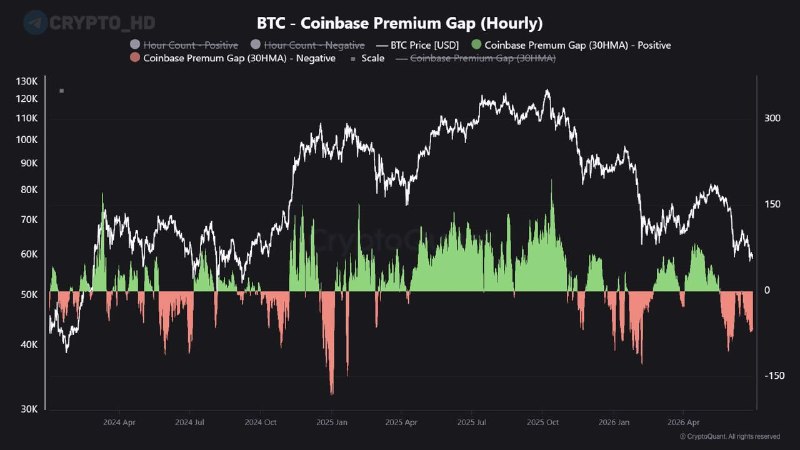
The Coinbase Premium Gap has now stayed negative for its longest run in 2 years. Most quick takes stop there and call it bearish. That is only half right. It is bad for Bitcoin’s near term price action, yes, but the important part is where the weakness is showing up: Coinbase, not just some thin offshore venue. When BTC is cheaper on Coinbase than on exchanges like Binance, demand from US investors usually looks weak. And for Bitcoin, US demand still matters. A lot.
CryptoQuant data shows the gap has been negative for more than a quick blip. The metric tracks the price difference between BTC on Coinbase and BTC on non US exchanges. Negative reading, simple implication: Coinbase traders are selling harder, or they are buying with less urgency. Maybe both. I’ll be honest: this is the kind of signal I would not ignore, because the longest negative stretch in the past 2 years is harder to dismiss as random exchange noise.
Why does this matter? Because US money often helps set the tone for risk assets, including Bitcoin. If US institutions and retail traders are stepping back, BTC has to climb without much help from one of its biggest markets. We have seen the opposite setup before. During the early 2023 banking crisis, Bitcoin jumped more than 20% in a week as parts of traditional finance looked shaky. This time, the Coinbase data does not show the same rush into BTC. Yes, this cuts against the easy bull case around a possible Fed rate cut. Even if the macro backdrop improves, Bitcoin may not react as strongly as bulls expect. Without a strong US bid, the rally gets harder.
The weak Coinbase premium may also point to leftover regulatory stress in the US. I would be careful here. It is not tied to one SEC ruling or one ETF headline, so pushing that argument too far gets sloppy fast. Still, Coinbase is a regulated US exchange, and soft buying there can say something about how cautious American investors feel. The market has dealt with staking crackdowns and lawsuits against exchanges. It has also had to trade through a messy fight over crypto rules. That background can make buyers hesitate, even when BTC trades at a discount. Spot Bitcoin ETFs helped push BTC above $45,000 in January, but ETF flows cooled at points after that, and the regulatory picture stayed uneven. My take: the negative premium suggests US traders are less willing to buy the dip than traders elsewhere.
What this means
The negative Coinbase Premium Gap points to weak conviction from US buyers. Not panic. Weak conviction. That makes a large BTC rally harder. Sellers seem to have the upper hand in the US market right now, which could limit upside moves and leave Bitcoin more exposed if broader market sentiment turns lower. For the short to medium term, this leans bearish, especially if the streak keeps running past its current 2 year extreme.
So what should traders watch? First, whether the Coinbase Premium Gap moves back above zero. That would be a cleaner sign that US demand is returning. Inflation reports matter too, and Federal Reserve comments on rates can shift risk appetite quickly. Regulation cannot be ignored either. New US crypto legislation, exchange lawsuits, or major legal updates could calm buyers down or make them even more cautious. Is $65,000 the magic line? No. But a sustained move above $65,000 would be one sign that demand is coming back with real weight behind it.