
















































Garlinghouse pitches XRP to institutions, citing speed over Bitcoin
Ripple CEO Brad Garlinghouse recently compared XRP with Bitcoin, arguing that XRP’s faster transactions and lower fees make it a better fit for institutional payments. His pitch is blunt. Ripple wants financial firms using XRP for cross-border transfers—a market where trillions of dollars move between countries. My take: this is less a crypto argument than an infrastructure sales job.
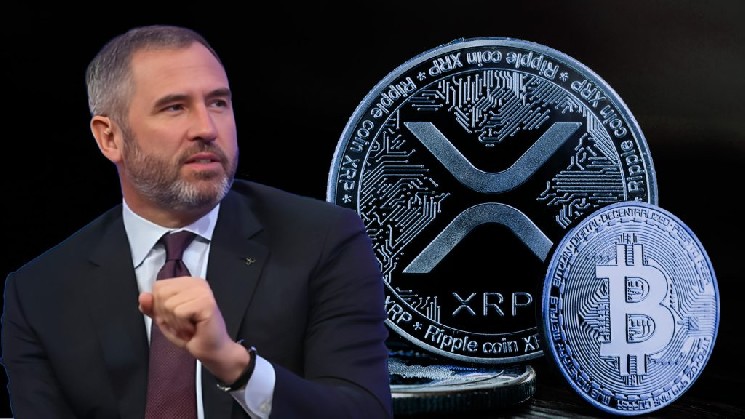
Speaking at a recent event, Garlinghouse criticized the current payment system. International transfers can be slow and costly. They can also be difficult to track, with money sometimes remaining in transit for weeks while people repeatedly check where it has gone. We all know that complaint. But Garlinghouse made the sharper point: many payment systems still cannot communicate properly with each other.
Ripple says XRP can solve that problem. According to Garlinghouse, an XRP transaction takes about four seconds from anywhere and costs “a very, very small amount per transaction.” Payment customers, he believes, mostly care about speed and cost. Bitcoin, by comparison, can take roughly 10 minutes to process a transaction, with fees sometimes reaching $10. Is that the whole comparison? No. Garlinghouse said he was not taking a shot at Bitcoin, yet the numbers plainly frame XRP as the more practical option for routine transfers. I’ll be honest: it still sounds like a shot.
Ripple’s interest in institutions reveals more about its strategy than another spell of retail enthusiasm. Bitcoin is widely viewed as digital gold or a store of value. Ripple wants XRP embedded in the systems that move money around the world. It is courting banks and other financial institutions—not individual traders chasing the next price surge. Most crypto pitches focus on upside. That’s only half the story here. Garlinghouse said the aim is to solve a “real problem in the current financial system.” If major institutions start using XRP as a bridge currency, demand might become more consistent and less tied to crypto’s usual speculative swings. That is the bet. For now, though, it remains a sizeable if.
Garlinghouse may have stopped short of openly criticizing Bitcoin, but his comparison assigns the assets separate roles. Investors often treat Bitcoin as a haven during inflation or geopolitical tension. After the January 2020 strike that killed Qasem Soleimani, for instance, BTC gained 8% within 72 hours. XRP has the more practical sales pitch: help financial institutions move money faster. Why does this matter? Because the catalysts differ. Federal Reserve rate decisions and inflation reports may influence Bitcoin, while XRP relies more heavily on adoption along international payment routes. If a major bank introduced an XRP payment service, the price reaction could be faster and easier to connect to that specific event than a move caused by a general crypto rally. I read that distinction as central, not cosmetic.
What this means
Garlinghouse’s remarks suggest Ripple has not strayed from its original plan. It wants XRP to become a widely used institutional tool for quick, inexpensive international payments. That does not require XRP to replace Bitcoin as a store of value. Counter to the usual crypto framing, the two assets do not need to fight for the same job. Ripple is pursuing a different—and very large—piece of the financial system. Actual usage will tell investors far more than upbeat market chatter. If a major bank or payment processor adopts Ripple’s On-Demand Liquidity service and moves meaningful volume through XRP, the token’s utility argument gets stronger. No volume? Little proof. A partnership announcement with no transactions behind it proves little.
Investors should follow Ripple’s agreements with large financial firms, then check whether those deals produce real activity. Regulation will shape the outcome too, particularly for cross-border transfers. New rules could help XRP gain traction. They could also bring adoption to a halt. FOMC meetings and CME data can move crypto prices across the board, but XRP’s longer-term prospects depend more on payment volume and use within traditional finance. Is one busy remittance route enough to settle the debate? Not entirely, but a route between two large economies would make a useful test. If XRP can measurably reduce transfer costs there, skeptics will have a tougher case. My view: evidence from that kind of route beats a dozen polished announcements.
FAQ: Ripple, XRP, and institutional adoption
- What is Ripple’s primary goal for XRP?
- Garlinghouse says Ripple wants institutions to use XRP for fast, inexpensive cross-border payments. The company is trying to reduce the delays and costs found in traditional financial systems. That’s the core pitch.
- How does Garlinghouse compare XRP to Bitcoin?
- He compares their transaction times and fees. Garlinghouse says an XRP transaction takes about four seconds, while a Bitcoin transaction takes roughly 10 minutes. He also says XRP costs far less to use. Simple comparison. Clear intent.
- What is XRP’s biggest advantage for institutional adoption?
- Garlinghouse points to cost and settlement time. He says XRP can complete an international transaction in about four seconds for “a very, very small amount per transaction.” For institutions moving money repeatedly, those two figures are the practical claim that matters.
- Why does Ripple focus on institutional adoption over retail speculation?
- Ripple wants financial firms to use XRP as a bridge currency during everyday operations. Regular institutional use could create more stable demand than brief waves of interest among retail traders. That sounds less exciting than speculation. It may be more consequential.
- What would a major bank integrating XRP mean?
- A major bank launching an XRP payment service would provide solid evidence that institutions have found a practical use for the token. XRP’s price could react quickly. Still, the size and volume of the service would be more important than the announcement itself.
- How does XRP’s value proposition differ from Bitcoin’s?
- Garlinghouse describes Bitcoin as digital gold and a store of value. Ripple designed XRP to move money between financial institutions and through international payment routes. In other words, one pitch emphasizes holding value; the other emphasizes moving it.
- What metrics should investors monitor for XRP’s future?
- Investors should track institutional transaction volume and active bank integrations. They should also watch regulatory changes involving international payments. Partnership announcements mean much less when they do not lead to actual use.