
















































Grayscale: Bitcoin Looks Undervalued as ETFs Cushion the Downside
Grayscale analysts say Bitcoin (BTC) is trading below fair value. I would be careful with that. This is not a clean “buy the dip” message, and treating it like one misses the point. The argument is narrower: some on-chain measures make BTC look cheap, but the market may not need to replay the kind of ugly bottom it hit after FTX collapsed in November 2022.
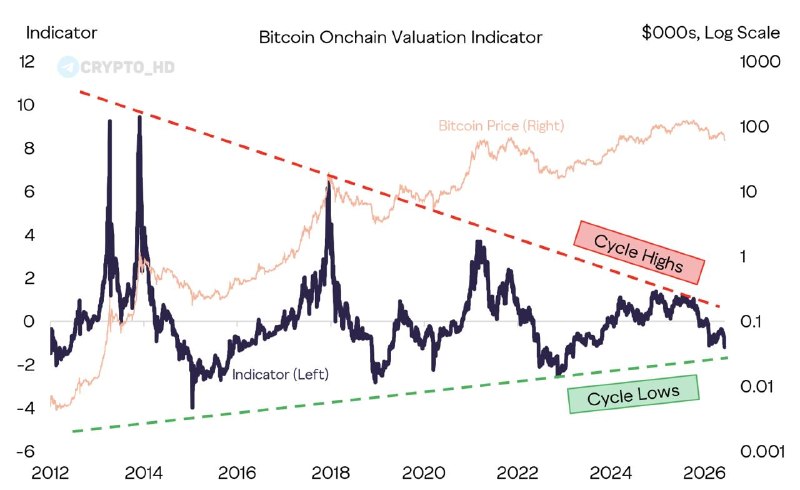
In its latest analysis, Grayscale says BTC looks “cheap” across several on-chain metrics. Prices, though, have not reached the extremes seen at older cycle lows. Most cycle commentary jumps straight from “cheap” to “bottom.” That is only half right. Grayscale is saying the selloff could be less severe because this is not the same market investors dealt with a few years ago. Spot Bitcoin ETFs now exist. Institutional demand is larger. Trading and custody rails are sturdier, and market infrastructure is less fragile than it was.
That is the part I would watch. Crypto can still get shoved around by leverage, mood swings, macro headlines, and one bad weekend of positioning. But the buyer base has changed. Why does this matter? Because since U.S. spot Bitcoin ETFs started trading in January 2024, BTC has had a regulated path into traditional portfolios. That does not make Bitcoin tame. Nothing about this asset is tame. Still, some buyers are pension funds, advisors, and asset managers, not just retail traders chasing a weekend breakout. My take: ETF inflows are the cleanest signal here. They show that bigger players still want exposure even when the chart looks ugly. That demand can slow selloffs. Sometimes it can help form a floor. Grayscale seems to be pointing toward long term accumulation, not pretending Bitcoin has become low risk.
Two things matter now. First, the CLARITY bill in the U.S. Senate. Regulation still hangs over the market, and capital does not like guessing. Clearer rules could make institutions more comfortable holding BTC or offering BTC exposure. A messy or stalled bill could do the opposite. ETFs helped. They did not fix the wider regulatory problem. Second, leverage. Large BTC holders using borrowed money can turn a normal selloff into forced selling if prices fall far enough. We have seen that movie before. Liquidations move fast, and valuation models do not stop them. Counter to the usual advice, the key signal may not be whether BTC is “cheap.” It may be whether big leveraged holders can avoid getting flushed out.
What this means
Grayscale is arguing that the Bitcoin cycle may be changing. BTC may be below fair value without needing to revisit the worst levels from earlier bear markets. Big claim. Not crazy. Spot ETFs, deeper liquidity, more institutional ownership, and a broader buyer base make Bitcoin harder to compare with its 2018 or 2022 version. Yes, that contradicts the usual “Bitcoin always cycles the same way” framing. Bear with me: the market still panics, but it now has more buyers waiting underneath. For traders, crowded shorts could get painful if ETF demand stays firm. For longer term investors, pullbacks may look more like accumulation zones than full capitulation, as long as leverage stays under control.
Investors should watch the CLARITY bill in the Senate because the outcome could affect how much institutional money moves into BTC. On-chain liquidation data matters too. Skip the noise. A sudden jump there would be a warning sign, not background noise. ETF flow data is another useful tell: steady inflows would support Grayscale’s view, while heavy outflows would weaken it quickly. Is $60,000 just a round-number obsession? Partly, yes. But for price levels, $60,000 is the line everyone will watch. A clear break below it could open more downside. A steady hold above it would make Grayscale’s softer-downturn argument easier to believe.