















































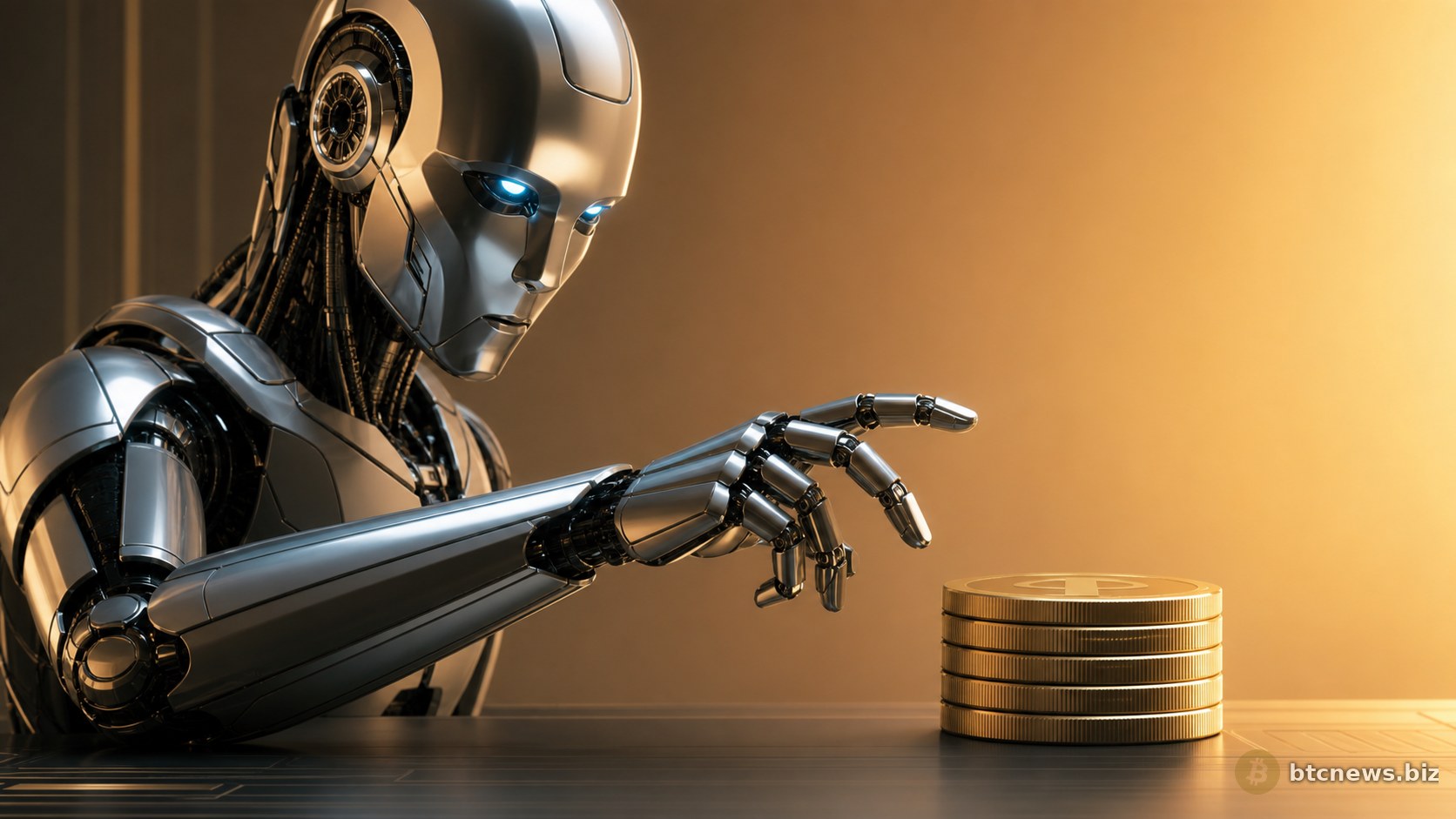
Tether’s NEURA Robotics Bet Means More AI Spending and a Wider USDT Use Case
Tether is leading a funding round of up to $1.4 billion for NEURA Robotics, the German company building humanoid robots and industrial automation systems. This is not a small side bet. Announced on June 11, 2026, the deal pushes one of crypto’s most profitable companies deeper into AI and robotics. My take: the money is only half the story. The sharper question for traders is whether USDT can become useful inside machines, not just on exchanges.

The round values NEURA at about $7 billion and is expected to include strategic and financial investors. Tether is investing through its investment arm, using profits and excess reserves it has been putting into AI, energy, and digital infrastructure. It has looked at NEURA before. In November 2025, reports said Tether was considering a 1 billion euro investment, about $1.15 billion, at a possible valuation between $9.3 billion and $11.6 billion. The new announcement does not say how much Tether itself is putting into this round. That omission matters.
NEURA Robotics was founded in 2019 and is based in Metzingen, Germany. It makes humanoid robots, robotic arms, autonomous mobile robots, and AI systems for industrial and commercial customers. The company is also building Neuraverse, a software platform for connecting robots, AI models, data, and services. For crypto investors, the practical part is much narrower. NEURA plans to add Tether’s Wallet Development Kit to its robotic systems. In plain English, robots could receive payments and make transactions within preset limits, using stablecoins such as USDT. Is that futuristic fluff? Not entirely. The companies also plan to use Tether’s QVAC AI runtime, which runs models on devices instead of sending everything through cloud servers.
This is where the story gets less theoretical. Tether reported $1.04 billion in net profit for the first quarter of 2026, and its excess reserves reached $8.23 billion. That gives it serious room to spend outside the core USDT business. The NEURA deal shows Tether trying to put that money into systems where stablecoins might do actual work. Most stablecoin coverage still treats USDT as an exchange rail. That’s only half right. If the Wallet Development Kit ends up inside NEURA robots, USDT could move beyond its usual role as a trading pair or DeFi liquidity asset. A robot paying for charging sounds odd at first. Replacement parts, maintenance, access fees. Less odd. Those are boring payment flows, and boring payment flows are exactly where stablecoins can make sense. USDT already has about 59% of the global stablecoin market, so even a small machine payment market would matter if it becomes real.
Tether has also been pushing QVAC harder this year. In March 2026, it introduced a training framework that lets AI models run on consumer hardware, including smartphones and non-Nvidia chips. Two months later, it announced QVAC MedPsy, a group of medical AI models built for direct device deployment. Put that beside the NEURA investment and the plan is clear enough: Tether wants local AI systems with payments attached. I’ll be honest: that sounds cleaner on paper than it will be in deployment. It fits the blockchain crowd’s preference for less centralized infrastructure, though I would not treat it as proven yet. Paolo Ardoino said in a January 2025 interview that AI humanoid robots could become common within the next decade. This deal makes that comment look less casual. For crypto traders, the bigger read is that stablecoin profits are being recycled into AI and robotics. That does not automatically make BTC or ETH go up. Markets are not that polite. But it does show that crypto companies now have enough cash to buy into industries far outside trading.
What this means
Tether’s investment in NEURA Robotics links blockchain payments, AI software, and physical machines more tightly. The useful part is not the “AI plus crypto” buzz. We have had enough of that. The useful part would be robots using Tether’s Wallet Development Kit to send and receive payments without a human approving every transaction. Why does this matter? Because machine-to-machine payments need limits, identity, settlement, and failure handling before they become anything more than a demo. Counter to the usual advice, I would not judge this first by the funding round size. I would judge it by whether USDT actually leaves a wallet inside a robot and settles a real task. If that works, USDT gets a use case outside exchange liquidity and DeFi pools. It could also put pressure on other stablecoin issuers to show where their coins are used, not just how much supply they have.
The next thing to watch is simple: working examples. Investors should look for NEURA robots actually making USDT transactions, along with details on how the Wallet Development Kit handles limits and security. Reversals and failures matter too. QVAC deployment matters too, especially if NEURA can show robots running AI models locally instead of relying on cloud infrastructure. Yes, this sounds narrower than the headline. Good. Big checks make headlines. Product integration decides whether this becomes a real USDT story. Tether’s next financial report will be worth reading as well. The numbers to watch are profits, excess reserves, and any detail on how much capital is going into AI and robotics.
FAQ
- What is Tether’s role in NEURA Robotics’ funding round?
- Tether is leading NEURA Robotics’ funding round, which could reach up to $1.4 billion, according to the announcement.
- What is the valuation of NEURA Robotics after this funding round?
- NEURA Robotics is valued at about $7 billion after the round, according to the announcement.
- What kind of products does NEURA Robotics develop?
- NEURA Robotics develops humanoid robots, robotic arms, autonomous mobile robots, and AI systems for industrial and commercial use, according to the company.
- How will Tether’s technology be integrated into NEURA Robotics’ products?
- NEURA Robotics plans to add Tether’s Wallet Development Kit for payments and use Tether’s QVAC AI runtime for AI processing on devices, according to the companies’ joint statement.
- Why does this investment matter for USDT?
- The investment could give USDT another payment use case if NEURA’s robots start using the stablecoin for transactions.
- What is Tether’s broader strategy in AI?
- Tether is building local AI tools through its QVAC platform, including frameworks for consumer hardware and medical AI models, according to Tether’s public statements.
- What financial reserves allow Tether to make investments like this?
- Tether reported $1.04 billion in net profit in Q1 2026 and $8.23 billion in excess reserves, according to its financial reports.
- When did Tether first consider investing in NEURA Robotics?
- Reports from November 2025 said Tether was considering a 1 billion euro investment in NEURA Robotics, according to previous media coverage.
- What is the “Neuraverse”?
- Neuraverse is NEURA Robotics’ software platform for connecting robots, AI models, data, and services, according to the company.
- How does this investment fit Tether CEO Paolo Ardoino’s view of robotics?
- Paolo Ardoino said in January 2025 that AI humanoid robots could become common within a decade. The NEURA investment fits that view.