
















































NovaBox Ethereum hack: 56.73 ETH stolen from dividend pool
The NovaBox Ethereum hack drained 56.73 ETH from the project’s dividend pool and affected 133 users. NovaBox, a small Ethereum DeFi project, lost 56.73 ETH, worth about $92,000 at the time, after an attacker pulled funds from its dividend pool. In crypto terms, $92,000 is not a headline-shaking disaster. I’ll be honest: that framing is cold comfort if you were one of the 133 users watching the pool get drained. Small DeFi protocols can still do real damage.
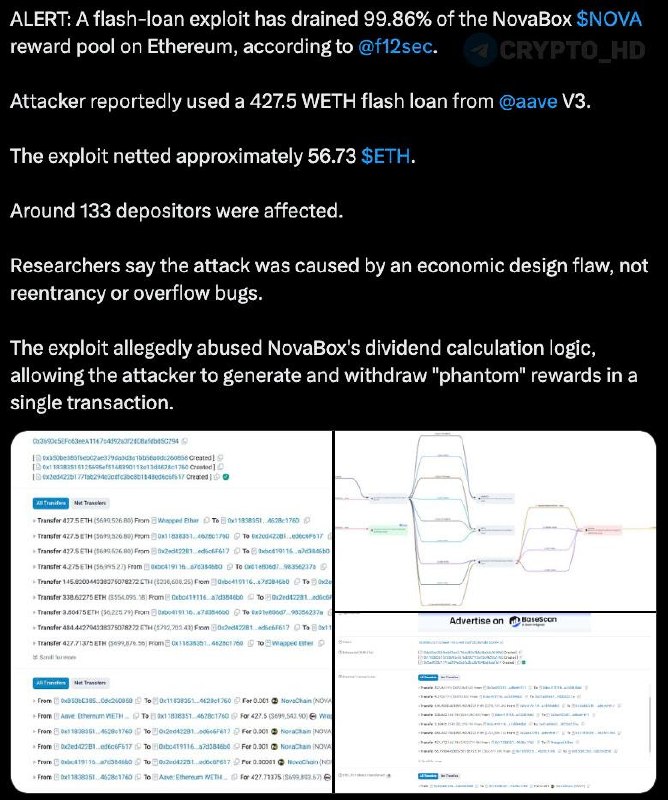
The NovaBox Ethereum hack nearly emptied the project’s dividend pool, according to incident reports. Users had deposited ETH and NOVA tokens into the pool to receive payouts. The attacker withdrew 56.73 ETH and left the pool almost empty, with funds reportedly down 99.86%. That is the useful number here, not the dollar figure. Why does it matter? Because a 99.86% drawdown means the mechanism basically failed for depositors. The pool was gutted.
The incident adds pressure to the DeFi regulation debate. This was a local exploit, not a market wide shock, but regulators now have another example to cite. The SEC and CFTC have already spent years pressing crypto firms on investor protection, market manipulation, staking services, exchange rules, and protocol accountability. Most guides treat a $92,000 hack as too small to matter. That’s only half right. One exploit becomes ten. Then a hundred. The policy argument gets easier every time.
My take: NovaBox probably does not rewrite the DeFi rulebook by itself, but it fits the case regulators have been building for years. If pressure rises around smart contract audits or protocol disclosures, the largest platforms will adjust first because they have lawyers and budgets. Smaller projects may not. Traders can then run into a nastier problem than bad headlines: thin liquidity that disappears before they can exit.
The NovaBox hack may also push some capital away from smaller DeFi bets. In crypto, fear travels fast. When a smaller project loses 56.73 ETH from a dividend pool, some investors stop chasing yield and move back toward BTC, ETH, or larger platforms they understand. Something similar happened during the Terra Luna collapse in May 2022, when many altcoins fell harder than Bitcoin and Ethereum during the wider selloff. Not the same event. Same reflex.
NovaBox is not Terra. It is nowhere near that scale. Yes, this contradicts the usual crypto habit of comparing every exploit to the biggest collapse in memory, but scale matters. Risk appetite matters too, especially in smaller corners of DeFi. With interest rates still elevated and inflation concerns still weighing on risk assets, small DeFi projects have little room for mistakes. A $92,000 hack will not cause a mass exit. It can still make traders more wary of dividend pools and reward contracts outside the top tier.
What this means
The NovaBox hack shows how fragile the long tail of DeFi can be. The broader Ethereum ecosystem will barely notice this, and ETH’s price is unlikely to care. For users in smaller protocols, the lesson is more practical than dramatic: check the contract, check the audit history, check whether anyone credible has reviewed the code, and still assume some risk remains. I would not skip that last part.
Dividend pools and reward mechanisms deserve extra scrutiny because they concentrate funds in one contract. That makes them obvious targets. Is that overkill for a tiny DeFi position? Sometimes, yes. But for money sitting in a payout pool, no. Smart contract risk is real, especially outside the top 50 tokens by market cap.
Investors should watch DeFi security rules, audit expectations, and TVL in smaller protocols. New SEC or CFTC comments on smart contract security, audit standards, or user recovery after hacks could move the sector, especially smaller projects with thin liquidity. Total value locked in smaller DeFi protocols is worth watching too. Counter to the usual advice, the important signal may not be one big collapse. It may be a slow TVL bleed as users move toward larger platforms or leave riskier DeFi products altogether.
Insurance protocols are worth watching as well. If more users buy coverage, or more projects add insurance options, the market may be taking exploit risk more seriously. If that does not happen, users stay exposed. My read is simple: NovaBox is small by market size, but the losses were not small for the people in the pool.
FAQ
Q: What was the NovaBox Ethereum hack?
A: The NovaBox Ethereum hack was an exploit that drained 56.73 ETH from the project’s dividend pool and affected 133 users.
Q: How much ETH was stolen in the NovaBox hack?
A: Incident reports say the attacker stole 56.73 ETH, worth about $92,000 at the time.
Q: How many users were affected by the NovaBox hack?
A: About 133 users were affected after the dividend pool was almost emptied.
Q: Why does the NovaBox hack matter for DeFi security?
A: It shows that smaller DeFi protocols can still expose users to serious losses, especially when funds sit in reward or dividend pools.
Q: How does the NovaBox hack relate to crypto regulation?
A: It gives regulators such as the SEC and CFTC another example to cite when they argue for stricter DeFi oversight, audit standards, and investor protection rules.
Q: What should investors do after hacks like this?
A: Investors should be careful with smaller or unaudited DeFi protocols, review audit history when available, and avoid putting too much capital into contracts they do not understand.
Q: Will the NovaBox hack affect the price of Ethereum?
A: Probably not. The amount stolen was small compared with Ethereum’s total market value, so any direct effect on ETH should be negligible.
Q: What are dividend pools in DeFi?
A: Dividend pools are contracts where users deposit tokens to receive a share of protocol payouts or rewards.
Q: What is “flight to quality” in crypto?
A: “Flight to quality” means investors move money out of riskier tokens and into larger, more established assets such as Bitcoin and Ethereum when markets feel unsafe.
Q: What role do smart contract audits play in preventing hacks like NovaBox?
A: Smart contract audits can catch code flaws before launch. They do not guarantee safety, but without them, users may be trusting code that has never been seriously tested.