
















































BTC, ETH options expiration: $2.2B at stake, price levels tested
Crypto traders are watching $2.2 billion in BTC options and $290 million in ETH options expire on Deribit. That is not a sleepy calendar item. The btc eth options expiration puts short term attention on two very specific levels: $66,000 for Bitcoin and $1725 for Ethereum. My take: these levels matter less as magic lines and more as crowding points while market makers adjust hedges and older trades roll off.
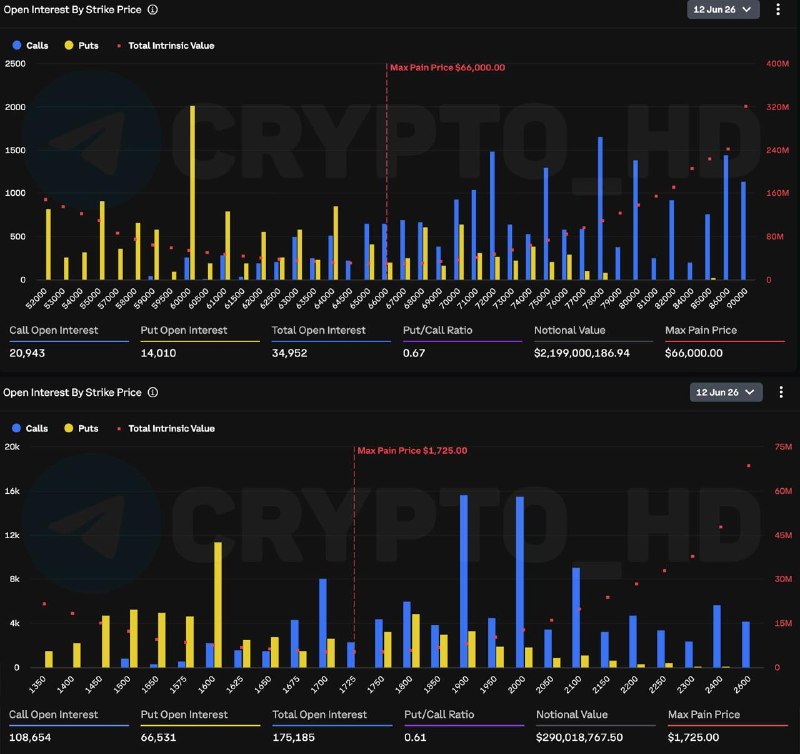
The Bitcoin figure is hard to ignore. $2.2 billion in expiring Bitcoin options is not background noise, even in crypto. Deribit is the main venue for this round of expiries, and traders are watching $66,000, the max pain level. That is the price where the most options expire worthless. Spot sometimes drifts toward it before expiry. Sometimes. Most guides talk about max pain like it pulls price by force. That is only half right. I would not treat it like gravity, but when enough desks stare at the same number, the number starts to matter. For Ethereum, the comparable level is $1725, with about $290 million in ETH options settling in this window.
Macro still matters. Central banks are still wrestling with inflation and rate expectations, and crypto remains sensitive to liquidity. Why does this matter? Because a large options expiry can sharpen that sensitivity when traders are already leaning one way. If the Federal Reserve sounds tougher on rates, BTC and ETH could come under pressure as traders cut risk. If the tone softens, the expiry could clear old hedges and leave room for a bounce. BTC can move several percent within hours after a shift in Fed language. Today’s expiry gives traders another reason to bunch up around $66,000 and $1725 instead of spreading risk cleanly across the tape.
Regulation adds pressure, though it is easy to overplay it. The SEC and CFTC are still watching crypto markets closely, especially around spot ETFs and staking. If BTC fails to hold $66,000 after expiry, some traders will blame regulatory uncertainty. Others will blame positioning. Both may have a point. I’ll be honest: the cleanest explanation after expiry is often the dull one. Spot Bitcoin ETF approvals earlier this year brought new institutional money into the market, according to industry reports, but the next test is whether that money stays when price action gets uncomfortable. That is what I would watch: not the headline, but the follow through.
What this means
Today’s BTC and ETH options expirations put $66,000 for Bitcoin and $1725 for Ethereum in focus. If prices hold above those levels after settlement, traders may read that as buyers staying in control. If they slip below and stay there, sentiment can turn quickly. Expiry can also calm the market once hedges are closed. Yes, this cuts against the usual “expiry equals volatility” line. Bear with me. The move can be loud before settlement and quieter after it, but only if traders do not immediately pile into the next trade. The next 24 to 48 hours should show whether this was just a positioning event or the start of a cleaner move.
Traders should watch price first, commentary second. For Bitcoin, the question is whether it can reclaim and hold $66,000. For Ethereum, it is whether $1725 acts like support or breaks without much fight. Simple test. Hard market. After that, watch inflation data and central bank comments. Then check open interest in the next options cycle. Is this overkill? For a $2.2 billion BTC expiry and $290 million in ETH options, no. If open interest builds around new strikes, that shows where traders expect the next fight.
FAQ
Q: What is a BTC/ETH options expiration?
A: It is the date when Bitcoin or Ethereum options contracts expire. Holders either exercise the contract or let it expire worthless.
Q: What is “max pain” in options trading?
A: Max pain is the strike price where the largest number of open options contracts expire worthless. Traders watch it because spot price sometimes moves toward that level before expiry.
Q: How does options expiration affect crypto prices?
A: It can raise short term volatility as market makers adjust hedges. In some cases, price drifts toward the max pain level.
Q: What is Deribit?
A: Deribit is a cryptocurrency derivatives exchange used for Bitcoin and Ethereum options and futures trading.
Q: Why is $66,000 significant for Bitcoin in this expiration?
A: $66,000 is the reported max pain point for Bitcoin options, so many contracts would expire worthless near that price.
Q: Why is $1725 significant for Ethereum in this expiration?
A: $1725 is the reported max pain point for Ethereum options, with a cluster of contracts tied to that area.
Q: How do macroeconomic factors influence options expirations?
A: Interest rates, inflation data, and central bank comments can change risk appetite. During an options expiry, that can make price moves sharper.
Q: What role does the regulatory environment play?
A: Regulatory pressure can affect sentiment. If prices move hard around expiry, traders may link that move to ETF, staking, or enforcement news.
Q: What should traders watch after the expiration?
A: Watch BTC and ETH against their max pain levels, then check upcoming macro data and open interest in the next options contracts.
Q: Does options expiration always lead to high volatility?
A: No. It can raise volatility, but the size of the move depends on positioning, sentiment, open interest, and the wider market.