















































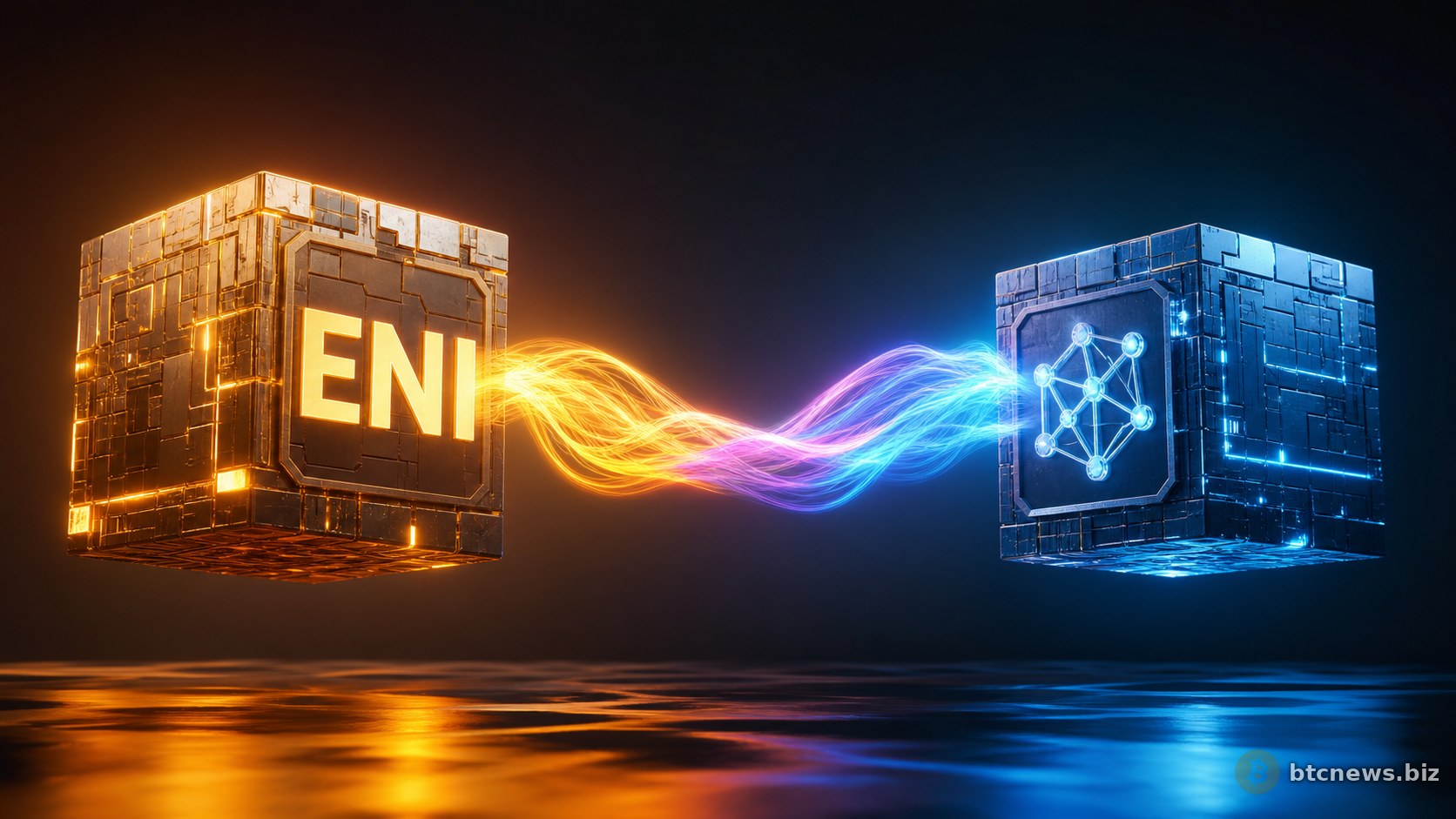
ENI and NerveNetwork Partner to Make Asset Transfers Between Blockchains Easier for Enterprise DeFi
ENI announced a partnership with NerveNetwork on June 11, 2026, aimed at making assets and applications easier to move between blockchains. The basic pitch is not complicated: ENI, a Layer-1 blockchain built for high throughput, will connect with NerveNetwork’s cross-chain technology so users are not stuck inside one network. I’ll be honest: this is plumbing, not glamour. But DeFi still has a plumbing problem. Too many chains still feel like separate rooms with locked doors.
In a post on X, ENI said the partnership includes deploying NerveNetwork’s decentralized cross-chain smart contract directly on ENI’s blockchain. ENI describes itself as a fast, modular chain for Web3 businesses, with quick settlement and support for real-world asset transactions. NerveNetwork says it supports more than 40 networks. So the exchange is fairly clear. ENI gets a route into more chains; NerveNetwork gets another enterprise-focused chain using its bridge infrastructure.
Some market watchers may treat this as an adoption signal. My take: that is too neat. Crypto partnership news often sounds huge on day one, then looks smaller a month later. Still, the logic holds. Enterprise Layer-1 chains need more than speed if they want serious use. They need liquidity. They need apps. They need users who are not already inside their own network. Polygon’s enterprise partnerships in late 2023 and early 2024, for example, often came before 15% to 20% moves in MATIC within weeks of major announcements, according to market data. ENI’s deal with NerveNetwork sits in that same general category: infrastructure gets more interesting when the market starts asking what a chain can actually do.
The issue is fragmentation. Liquidity is on one chain. Users are on another. An app launches somewhere else. That makes Web3 harder to use than it should be, especially for companies building around tokenized real-world assets. Why does this matter? Because an asset can be technically on-chain and still be commercially awkward. If an enterprise tokenizes assets on ENI but cannot move them easily to Ethereum for DeFi access, or to another chain for a specific institutional service, the asset loses usefulness. It is boxed in. NerveNetwork’s integration is supposed to let value, data, transactions, and tokens move between ENI and the chains NerveNetwork already supports. If it works as described, ENI-based assets should be easier to use across DeFi. Chainlink’s LINK gained more than 30% in Q4 2023 as its CCIP product gained traction, so traders have noticed bridge infrastructure before.
NerveNetwork’s job is to connect chains at scale. That sounds boring. It usually is. But boring infrastructure is often where the useful stuff happens. Most guides say bridges are mainly about moving tokens between wallets. That’s only half right. This could also let DApps on ENI interact with other networks, giving ENI users access to more multichain DeFi products. Institutions care because they do not want stranded liquidity or clunky manual workarounds. If moving assets through ENI feels easier, more capital can pass through it. If it does not, the partnership becomes one more headline in an already crowded pile.
What this means
ENI’s move suggests enterprise blockchains are taking interoperability more seriously. Fast chains still need connections. Without them, they can end up as private islands with nice specs and thin liquidity. Counter to the usual advice, speed alone is not the selling point here. Access is. By adding NerveNetwork’s cross-chain tools, ENI is trying to make assets and applications move across networks with less friction. That could help infrastructure tokens such as NerveNetwork’s NVT, along with other bridge-focused projects, if real usage follows the announcement.
Investors should watch what happens after the partnership post. Specific DApp launches would matter. So would real-world asset projects using the new cross-chain setup on ENI. Bridge volume is probably the cleanest signal because it shows whether users are actually moving assets. Is price action enough? No, not by itself. NVT price action and other interoperability tokens are worth watching too, but price alone can fool people. Price can lie here. A rise in ENI transaction volume or total value locked, especially from enterprise users, would say much more. That would show the integration is being used, not just added to the long list of crypto partnership announcements.