















































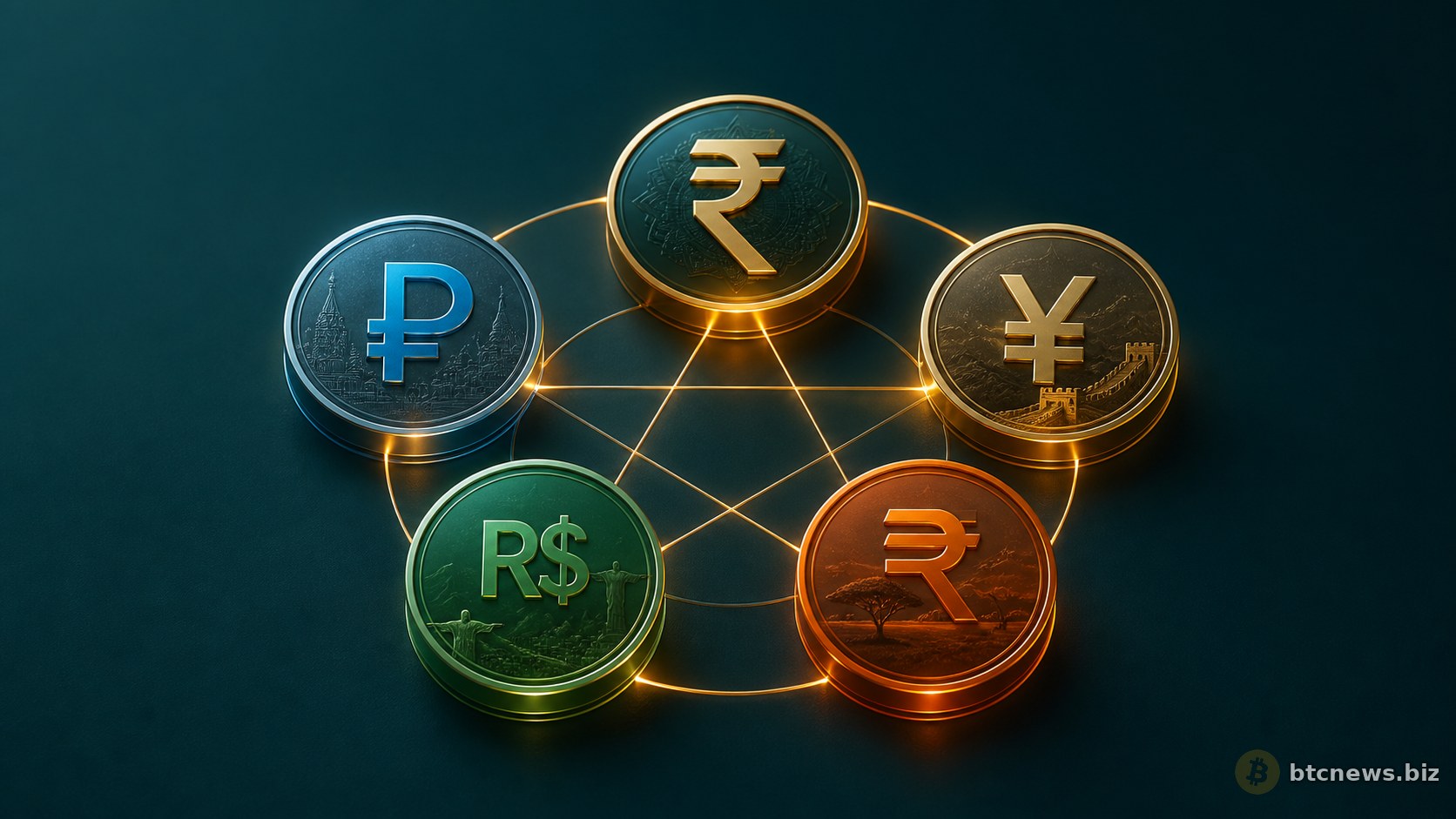
BRICS CBDC links: another step in crypto adoption and de-dollarization
BRICS countries are discussing ways to connect their central bank digital currencies (CBDCs) and fast payment systems. Nothing is built yet. The plan is still taking shape. Still, it could change how money moves between these economies and, indirectly, how investors view crypto. Reserve Bank of India Governor Sanjay Malhotra confirmed the talks on Tuesday. My take: this is less a finished payment network than an attempt to reduce reliance on existing financial channels and the US dollar.
Speaking at an event in Mumbai, Malhotra said cross-border transfers were a priority for the BRICS bloc. He stressed that the talks were still in their “very early stage,” with several options “on the table.” One option would connect CBDCs directly with fast payment systems. Why start there? Because lower costs are the obvious appeal.
“Cross-border payments is an area of interest for all of us, including the BRICS, because we feel there is a lot of scope for reducing cost,” Malhotra said. That is the immediate issue. If banks and payment systems can move money across borders with fewer intermediaries, businesses and consumers may pay less. They may also receive funds faster. It works.
CBDCs are not cryptocurrencies. Central banks issue and control them. That distinction matters. Still, a functioning CBDC network could make digital transfers feel less experimental to banks, companies, and ordinary users. I’ll be honest: I would not take that as proof that Bitcoin or Ethereum will benefit automatically. Most guides say wider digital-money use helps crypto. That’s only half right. It makes digital money easier to understand and use, but centralized adoption is not decentralized adoption.
There is a past example, although the comparison only goes so far. El Salvador adopted BTC as legal tender in September 2021. Bitcoin then climbed toward its previous record of $68,789 in November 2021, and the policy brought more attention to the asset. The episode showed how a government decision can affect market mood. It also showed that attention can fade while adoption moves at a different pace.
India has a direct interest in the proposal. It is hosting this year’s BRICS summit, and the Reserve Bank of India had already asked the Indian government to put CBDC linkage on the agenda for early 2026. The plan also fits India’s broader effort to expand the rupee’s use in international trade and payments. That is a concrete policy fit, not just a crypto narrative.
If BRICS countries build payment links around their own currencies, they could use established systems and, in some cases, the dollar less often. Counter to the usual advice, this would not mean an overnight break with the dollar. Financial systems rarely change that cleanly. A gradual shift could still affect how investors view currencies and alternative assets. Slow does not mean irrelevant.
Bitcoin is often described as a hedge against weakness in fiat currencies, though its price history makes that label difficult to defend without qualifications. During a 7% fall in the DXY dollar index between March and August 2020, BTC rose from roughly $5,000 to more than $11,000. The moves happened during the same period, but that does not show that one caused the other. Crypto prices respond to many forces at once. We know the numbers. The causal story is harder.
Malhotra also said linked CBDCs could expand the rupee’s reach. Consumers and businesses might be able to send money abroad through payment routes similar to those they already use at home. That would give India a practical way to promote the currency overseas, even if the project never becomes one unified BRICS payment network. Is this overkill? For a cross-border system, no.
At the same event, Malhotra asked Indian banks to catalog their AI models and create governance policies. The subject is separate from CBDCs, but both involve updating financial technology and controlling the systems behind it. The link to crypto is indirect. Banks that build more digital infrastructure may eventually create demand for blockchain services and digital asset tools. The connection is plausible, not proven.
What this means
The BRICS proposal points to a financial system with more competing payment networks. National digital currencies could become part of cross-border payments, especially if they connect without routing every transaction through traditional dollar-based channels. That is the direction. The mechanism remains unfinished.
For crypto investors, that is worth watching, but it is not an automatic buy signal. Yes, this may sound cautious after the broader adoption argument above. Bear with me. CBDCs are centralized, and governments may build them to keep tighter control over payments. Their growth could make digital money ordinary without directing users toward decentralized assets. Both things can happen. My view: treat the announcement as infrastructure news first and a token catalyst second.
The more immediate opportunity may be in the plumbing: systems that help different chains and payment networks communicate. Digital assets matter here too, but the technical bottleneck comes first. Projects linked to cross-chain transfers could draw attention if governments and banks begin testing these connections. XRP, which investors often link to cross-border payments, could also attract speculation if BRICS officials announce real pilots. Its regulatory position remains a serious unknown. We tried the easy narrative. It broke.
The next announcements matter more than the headline. Investors should look for a timetable, named participants, technical details, or a pilot program at the BRICS summit hosted by India. A general statement about cooperation would be easy to ignore. A working trial would be much harder to dismiss. Watch the implementation.
De-dollarization claims deserve the same caution. Watch what these countries do, not just what they say. If they keep settling more trade in local currencies, demand for reserve assets could change slowly. That might strengthen the case for BTC, but calling Bitcoin a safe haven still requires overlooking some very large price swings. I would not make that leap from one summit statement.
For BTC, a sustained move above $70,000 would be one technical level to watch. It could point to renewed buying, especially if institutional demand and adoption news improve at the same time. A price break by itself would not show that BRICS CBDC plans caused the move. Why does this matter? Because crypto traders are often good at finding a macro explanation after the chart has already gone somewhere.