















































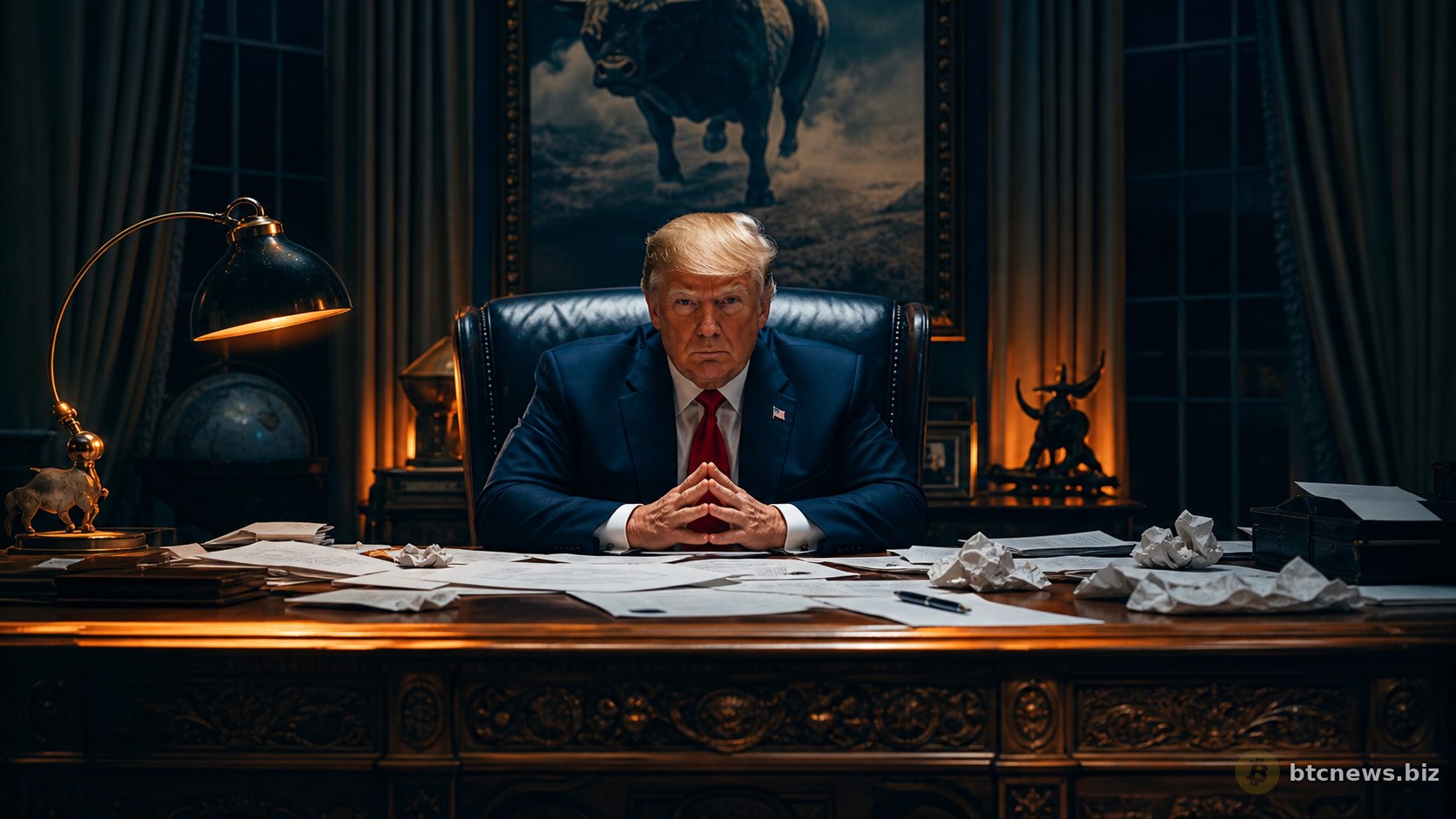
Trump’s Heated MAHA Farmers Meeting: What It Might Say About Crypto Regulation
Donald Trump’s recent MAHA Farmers Meeting turned tense fast. Officially, it ended with an executive order supporting regenerative agriculture. Crypto? Not the first thing that comes to mind. But I keep coming back to the mechanics of the fight: American Farm Bureau Federation President Zippy Duvall pushed back against regenerative farmers and Health Secretary Robert F. Kennedy Jr. over the order’s language on pesticides, and suddenly a tidy policy moment became a live-fire argument over wording, power, and interpretation. Stablecoins, DeFi, staking, and the rest of the crypto market can run into that same mess.

The meeting was supposed to be a routine signing ceremony. It was not. Trump, senior officials, and regenerative farmers ended up in a long policy argument instead. Duvall, speaking for the American Farm Bureau Federation, objected strongly. He warned that the order could be read as a claim that pesticides are harmful, and said that would make it harder for him to defend Trump to farmers. Then regenerative farmers pushed back for nearly an hour. Jonathan Lundgren, a South Dakota farmer and former Department of Agriculture scientist, made his case. So did Indiana farmer Rick Clark. They went straight at the president.
Trump signed the order anyway. White House officials said it fit both the Make America Healthy Again, or MAHA, agenda and his support for American farmers. Fine. My take: the crypto angle is the process, not the farm policy. A president sat through a public fight between opposing camps, then moved ahead on a narrow issue anyway. Why does this matter? Because crypto rules can get pulled into the same kind of fight once health, energy use, consumer protection, or national security gets bolted onto the debate. Stablecoin bills could stall. Staking rules could get torn apart line by line. DeFi could become the easiest target in the room. Most guides say regulation is about the SEC writing rules. That is only half right. It can also be the SEC, CFTC, and Treasury all pulling in different directions while traders wait for one clear sentence. We saw something like this with spot Bitcoin ETFs: months of uncertainty, then approval on January 10, 2024, and BTC moved above $47,000.
There is also the political money angle. This meeting had Robert F. Kennedy Jr. and Agriculture Secretary Brooke Rollins in the room, so the issue was not just farming methods. It was political capital. This one event will not move BTC or ETH by itself. Still, it shows how economic and social issues keep getting dragged into partisan fights. I’ll be honest: crypto investors sometimes underprice that. Inflation prints matter. Federal Reserve language matters. A hawkish Fed can push risk assets lower, while softer signals can send BTC higher. But politics can create the same drag. A fight over digital asset tax rules, for example, could leave traders guessing for months and slow new capital. Boring? Maybe. Tradable? Absolutely.
The more interesting part is that Trump signed the order despite resistance from a powerful farm lobby. That suggests he may push policies tied to his agenda even when established interests complain. For crypto, that cuts both ways. A president who wants lighter digital asset rules could move quickly and give the market the clarity it keeps asking for. A president who sees parts of crypto as a threat could move just as quickly in the other direction. Yes, that slightly contradicts the usual “markets hate uncertainty” line. Bear with me: markets also love decisive policy when it points in their direction. The market has reacted sharply to political signals before. In early 2021, reports about tougher crypto regulation helped pull BTC lower, before prices recovered as the picture became less cloudy. This agriculture fight is not a crypto story on its face. But as a proxy for contested policy, it is useful. Crypto is nothing if not contested.
What this means
The MAHA meeting points to a regulatory path that could be loud, public, and slow. Watch that. Stablecoins and DeFi may not move through Congress cleanly. The push to connect digital assets with traditional finance may get stuck in hearings, agency fights, lobbying campaigns, election-year sound bites, and half-finished compromises. ETH and Solana (SOL) could feel that in the short term, especially if the market starts trading every rumor like it is policy.
Traders should watch what future administrations say about digital assets, not only what inflation or jobs data says. Congressional crypto hearings matter. New SEC or CFTC guidance matters. Campaign rhetoric matters too, even when it sounds thin, because markets often price the mood before the details. Is this overkill? For a market that can move on one sentence from Washington, no. For BTC, the $60,000 level is worth watching as a confidence check if political uncertainty builds. Counter to the usual advice, silence from regulators is not always bullish; sometimes it just means the fight has moved behind closed doors. Clear bipartisan movement on crypto rules would be different. That could bring buyers back in and put new all-time highs back in play.