
















































DxSale liquidity pools hacked for $7.3 million, rattling DeFi traders again
Hackers pulled $7,300,000 from DxSale’s liquidity pools, according to PeckShield. Another DeFi hit. And yes, this one stings. DxSale sits close to token launches and presales, which are already jumpy markets; once trust cracks, money does not usually wait around for a postmortem.
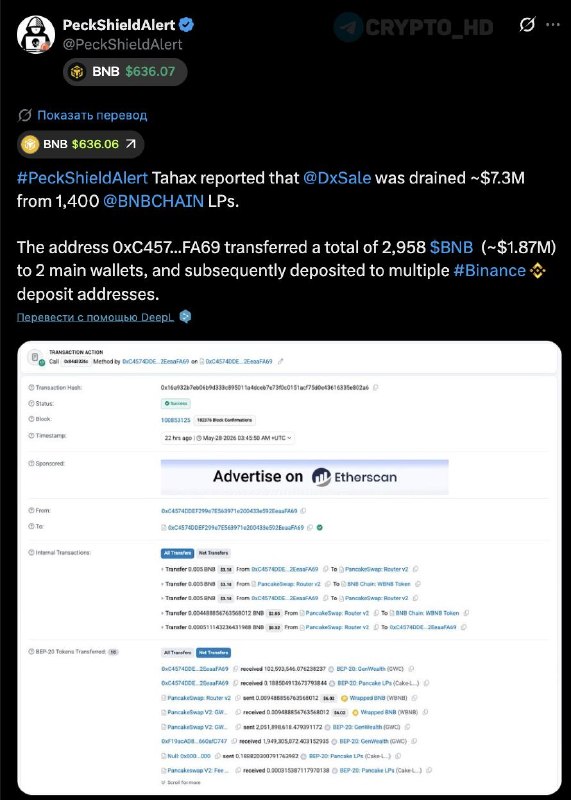
The attack hit DxSale, a platform used to launch new tokens, run presales, and manage project liquidity. PeckShield’s first alert did not lay out the full attack path, so the technical picture is still incomplete. My take: that uncertainty is part of the damage. $7,300,000 disappearing from liquidity pools is not background noise for anyone holding launchpad exposure this month. It makes traders recheck wallets, positions, approvals, pool depth. All of it. Familiar DeFi plumbing can still fail, and users usually learn that after the funds are gone.
Liquidity pool hacks can also spill into the crypto market’s macro flow. Why does this matter? Because a protocol loss is not just a protocol loss when it pushes traders to de-risk. We saw that in early 2022 after the Wormhole bridge exploit, when $325 million was stolen and Solana (SOL) fell more than 10% in the 48 hours after the news. DxSale’s $7,300,000 loss is much smaller. Still, these incidents stack up. One hack is a headline. Ten hacks are a reason to skip the next presale. I would not be shocked if some money moves out of smaller launchpad tokens and back into Bitcoin (BTC) or Ethereum (ETH), simply because traders understand those assets better when the market gets nervous.
The hack also gives the regulation pressure argument more fuel. Most DeFi defenders say code risk is separate from regulation risk. That is only half right. US regulators have watched DeFi for years, mostly over investor protection, weak oversight, and protocols that move money without much accountability. The SEC has raised those concerns many times. A $7,300,000 exploit on a token launch platform gives regulators an easy example to cite, especially after headlines around staking, exchanges, and enforcement actions have already moved names like Coinbase (COIN). I’ll be honest: this is exactly the kind of incident that makes heavier KYC and AML checks easier to sell. In the worst case, ordinary users could find some DeFi activity harder to access. That would slow new projects, even if it does not kill them.
What this means
The DxSale hack points to the old DeFi problem: products ship fast, and security often catches up later. Not profound. Just recurring. Projects that used DxSale for liquidity or presales may now face weaker token prices or slower fundraising. Investors may ask sharper questions, too. Counter to the usual advice, the answer is not simply “wait for the audit badge.” Due diligence has to include pool design, admin controls, contract permissions, and whether anyone credible has explained the risk in plain English. Smaller altcoins may feel the pain first. ETH may hold up better, as it often does when traders still want crypto exposure but want less launchpad risk.
Traders should watch regulators next, especially the SEC and CFTC. Is this overkill for a $7,300,000 hack? No, because enforcement narratives are built from repeat examples, not one giant case. A new DeFi security statement, lawsuit, or enforcement action could move the market. Total value locked (TVL) on other launchpads and liquidity management protocols is worth watching too. If TVL starts falling across similar platforms, the market is not treating this as a one-off. BTC and ETH price action matters as well. If they stay firm while smaller altcoins fade, that looks like a safety trade. The next serious audit report or security update from a major DeFi protocol will show whether the industry is actually reacting, or just waiting for the next exploit to repeat the lesson.