
















































Harmony blockchain hack: 4B ONE mint tests layer 1 security
Hackers created 4 billion ONE tokens during the Harmony blockchain breach—26% of the total supply. In one attack. That is not a rounding error; it is a structural shock. My take: the loss lands on Harmony first, but investors now have one more reason to question smaller layer 1 networks.
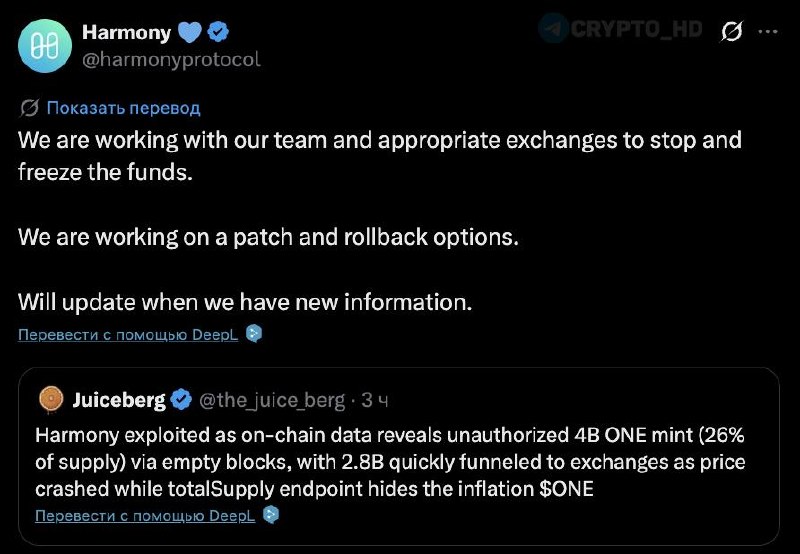
The tokens were created without authorization. Harmony’s team worked with exchanges to block and freeze the new funds. Developers reportedly prepared a fix and considered rolling back the network. This was not a routine software bug. It was a failure of control. I’ll be honest: once a network can produce 4 billion unauthorized tokens, “established” stops sounding very reassuring.
Why does this matter beyond ONE? Because a major hack can change where crypto investors put their money. After the Terra-Luna collapse in May 2022, Bitcoin (BTC) briefly gained market share as investors backed away from riskier altcoins, even as the wider market fell. Harmony may not move Bitcoin much this time, but the attack could still change how traders price risk across the altcoin market. Smaller layer 1 projects with limited operating history may feel the damage most.
Counter to the usual advice, investors may not simply rotate into another altcoin. Some could shift into larger cryptocurrencies or stablecoins, especially if Federal Reserve rate hikes are already making the market uneasy. My read is that once confidence takes a hit, it rarely comes back in one trading session. Markets remember. Sometimes too well.
The hack could also increase pressure for stricter crypto rules. Regulators, including the SEC, are already examining DeFi and the blockchain systems behind it. Creating 26% of a token’s supply in one incident gives critics a clear example of how a technical failure can expose users to losses almost immediately.
Most guides say regulation follows major failures. That’s only half right: it also follows a useful political example. Calls for more regulation grew after the FTX collapse in November 2022, and another major failure would add weight to that case. Regulators and exchanges may demand tougher smart contract audits and clearer security checks before listing tokens. That would increase costs for projects. After an incident this large, extra scrutiny would be expected.
What this means
The Harmony hack shows how even established networks can fail at a basic level. Investors now have to examine the security model behind smaller chains, particularly those with less decentralization. The short-term outlook for ONE is grim. It works against the token twice: adding 4 billion tokens at once puts severe pressure on the price, while the attack itself weakens demand.
Is this overkill? For smaller layer 1 projects, no. The wider market may also rethink their risks. If investors decide that Ethereum (ETH) or Solana (SOL) provide better safeguards, money could move there instead. Those judgments may not always be fair, but markets tend to make them quickly. They do not wait for a perfectly balanced postmortem.
The next clues will come from Harmony’s response and from trading around ONE. Rolling back the network would be a major decision, so the team’s explanation and the market’s reaction will matter. Traders should watch the token’s price and volume on major exchanges. Skip the noise. Watch whether recovery lasts.
A recovery that lasts would suggest that traders think the damage is under control, although one short rally would say very little. Yes, this cuts against the instinct to treat every bounce as a signal—bear with me. Comments from the SEC could show whether the incident is becoming part of a wider policy debate. The rest of the altcoin market is worth watching too. If money leaves smaller layer 1 networks for larger assets, it would suggest that investors are becoming less willing to take that risk.