
















































Raydium old pool hack: Solana DEX breach hits $1.34M, raises security concerns
Raydium, one of Solana’s biggest decentralized exchanges, was hit by an exploit in an old liquidity pool worth about $1,340,000. Not catastrophic by DeFi standards. Still, real money left the pool, and users took the hit. My take: the uncomfortable part is not just the dollar figure, but where it happened. Older DeFi infrastructure often sits there quietly until someone with patience, tooling, and bad intent gives it another look.
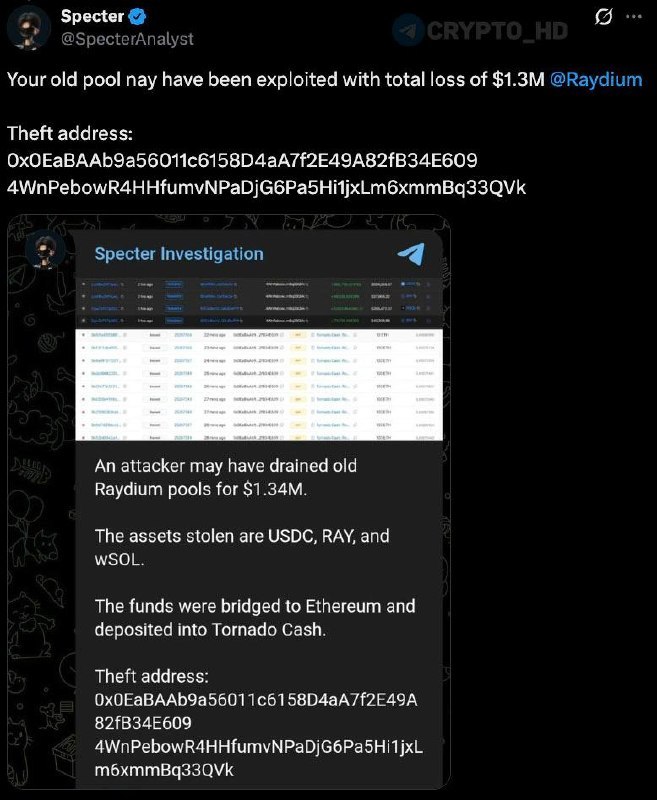
Specter first reported the breach and said the attacker targeted an older Raydium pool. The exact method is still being reviewed, so pretending the whole chain of events is already obvious would be lazy. What is known is enough for traders to care: about $1.34 million was drained. Why does this matter? Because a familiar logo, past audits, and years in the market do not make a protocol untouchable. We have seen that lesson repeat across DeFi, and it usually gets relearned at somebody else’s expense.
The timing is awkward. DeFi is already under pressure from regulators, especially in the US, where the SEC has been watching decentralized platforms, staking services, and tokens it may treat as unregistered securities. A $1.34 million exploit on a well known Solana DEX gives critics another case to cite when they argue for tighter rules. Most market commentary treats hacks and regulation as separate stories. That is only half right. They feed each other. One hack does not automatically change policy, but it adds to the pile, and markets do notice piles. UNI and AAVE, for example, both traded sideways during periods when regulatory concerns were part of the market conversation, even as BTC moved above $61,400 in early March.
The exploit could also push some traders toward the safer end of crypto, or at least what counts as safer in this market. When a Solana DEX gets hit, even through an old pool, people re-check their exposure. Fast. Smaller DeFi tokens usually feel that pressure first. Bitcoin and Ethereum often catch the rotation when traders get nervous because they are deeper, more liquid, easier to justify on a messy week, and less tied to one app-specific failure. A much harsher version played out after FTX collapsed in November 2022. The whole market fell, but BTC and ETH found their footing faster than many altcoins. This Raydium exploit is nowhere near that size. I’ll be honest: calling it another FTX-style event would be ridiculous. Still, it could make traders trim SOL linked exposure for a few sessions while they wait for clearer answers.
What this means for DeFi security and Solana’s ecosystem
The Raydium old pool hack points to a problem DeFi keeps running into: old contracts and forgotten pools can stay risky long after everyone has moved on. That is the boring answer. It is also probably the right one.
Market analysts say the breach could put short term pressure on Solana (SOL), mostly because it tests confidence in the apps built on the network. Counter to the usual panic read, that does not mean Solana itself failed. It does mean traders may treat the ecosystem with more caution until Raydium explains what happened and how it plans to limit the damage. Is this overkill for a $1.34 million exploit? For a small protocol, maybe. For one of Solana’s best known DEX names, no. SOL and Solana based tokens could see sharper moves as the market prices in the $1.34 million loss.
The next updates matter more than the first headline. Raydium needs to explain the exploit, say whether other pools are exposed, and clarify whether affected users have any path to recovery. Solana developers and security teams are also worth watching for network activity changes or new warnings. Regulators may comment too, especially if the story spreads beyond crypto media. Here is where I would be careful: a quiet follow-up from Raydium could hurt confidence almost as much as a bad one. For SOL, the $150 area is an obvious level traders will watch. If price breaks below it and holds there, the market may be treating this as more than a one day scare.
FAQ: Raydium old pool hack
What was the total amount lost in the Raydium old pool hack?
Initial reports put the loss at about $1,340,000.
Which blockchain was affected by the Raydium hack?
The hack involved Raydium, a decentralized exchange on Solana.
What is the primary concern raised by the Raydium old pool hack?
The main concern is that older DeFi pools can still carry real risk, even on established platforms. It may also hurt investor confidence and draw more regulatory attention.
How might this hack affect Solana (SOL) prices?
It could weigh on SOL in the short term if traders become more cautious about Solana based DeFi. Volatility may rise while Raydium shares more details.
What actions should market participants take following this incident?
Market participants should watch Raydium’s response, Solana security updates, and any regulator comments about DeFi risk.