
















































Telegram Crypto Scams Targeting Russians Put Wallet Security Back in Focus
Telegram crypto scams targeting Russians are phishing campaigns that pretend to be Telegram or crypto support channels, then steer Russian-speaking users to malicious links. The aim is blunt: get into accounts, chats, and wallet-related conversations. The issue is back in view after fraudsters reportedly sent fake Telegram-branded messages in Russia warning users that their accounts could be blocked. The source post did not give a calendar date. Still, on May 5, 2026, the warning lands hard because Telegram is where a lot of crypto life happens: trader chats, OTC desks, token groups, wallet support, launch rooms, private introductions. Lose the Telegram account, and you may lose the map of who you trust. My take: that map is often more valuable than people admit. Worse, the next link may look familiar enough to click.
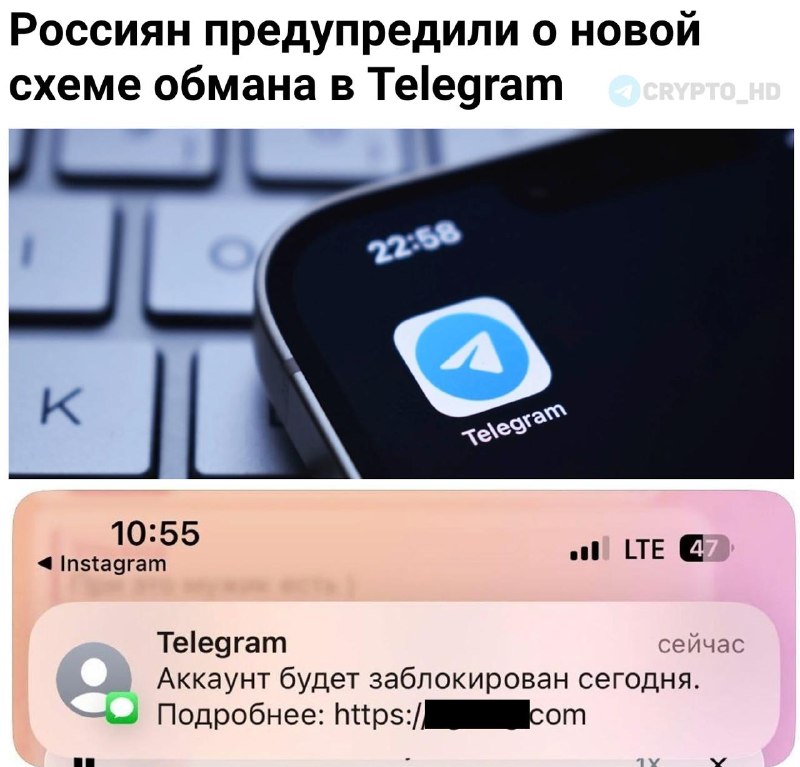
The reported scheme is account-block phishing: scammers send messages that look like Telegram notices, scare the user, and point them to a fake link. The stated risk is loss of access to the victim’s Telegram profile. No company other than Telegram is named in the source. No token ticker is mentioned. No loss figure is given. Keep that clean. This is not a confirmed exchange hack. It is not a named wallet exploit either. Most guides would stop there and call it “just phishing.” That is only half right. The ugly part sits around crypto, where identity, messaging, trust, rushed clicks, and recovery flows can do the damage before a wallet is ever touched.
Crypto phishing often starts away from the blockchain because attackers go after the user’s communication layer before they touch the wallet. BTC traders can stare at $60,000, $70,000, and funding rates all day, then still get caught by something embarrassingly plain: a fake support note, a cloned login page, or a message that says “your account will be blocked.” Why does this matter? Because the attacker does not need to defeat cryptography if the user hands over the room where decisions are made. According to the FTC, phishing messages often pretend to come from trusted companies, claim something is wrong with an account, and push people toward links or attachments that can steal money or personal data. “Telegram phishing scams Russia” is not just a security-team keyword. It names a real weak spot for Russian-speaking crypto users who rely on Telegram for airdrops, OTC prices, exchange updates, wallet support, and launch chatter.
The regulatory angle is account control. If Russian crypto scams keep using Telegram-style impersonation, exchanges serving Russian-speaking users may tighten account recovery, withdrawal delays, and device-change checks. Terse version: friction follows fraud. That can hit BTC and ETH liquidity indirectly because behavior changes before the chart explains why. A trader worried about a compromised Telegram account may pull funds from a smaller venue, delay a TON trade, or move BTC to cold storage instead of keeping it near order books. Counter to the usual advice, the risk signal here is not only “protect your wallet.” It is “protect the account that tells you which wallet action feels normal.”
For investors, this is an operational risk story, not an instant price story. One phishing wave does not mean BTC drops or jumps 5% in a session. I would not trade that headline by itself. The better read is less dramatic and more useful: operational risk. BTC and ETH are liquid, but the people trading them still depend on centralized apps for alerts, customer service, market gossip, and group coordination. A fake Telegram message can become a fake exchange-support escalation in two clicks. If the attacker gets the profile, the next target may be a wallet group. Or a private sale chat. Or the trusted contact list that makes the scam feel personal. Telegram crypto phishing turns social trust into something attackers can reuse.
Telegram impersonation also says something about adoption because scammers go where users already move money, identity, and trust. They go where the crowd is. Telegram is attractive because crypto users already expect urgent messages, bot prompts, account warnings, link-based verification, and admin notices that appear at awkward hours. That does not mean Telegram caused the fraud. It means messaging identity is worth stealing. According to the FBI, scammers use social media, messaging platforms, and chat groups, including Telegram groups, to contact potential cryptocurrency fraud victims. For TON-linked traders, BTC holders following Telegram channels, and ETH users in launch groups, the takeaway is blunt: communications security is part of portfolio security now. Your wallet can be solid while your social layer is wide open. We see this mistake constantly in crypto risk discussions: too much chain analysis, not enough account hygiene.
The factual line matters: the source describes fraudsters impersonating Telegram, not Telegram confirming a breach. The source does not say Telegram sent the messages, blocked accounts, or found an infrastructure failure. It says fraudsters are sending messages in Telegram’s name in Russia. Traders should keep that distinction. This is not proof that Telegram broke. It is proof that attackers copy the most familiar brand in the room. In crypto, that could be Telegram, an exchange, a wallet team, a bridge, a token foundation, or a fake “security desk” using the right logo. The phishing link is the product. Panic is how they sell it.
The safe-haven lesson is that protocol security and user security are separate layers. BTC’s long term pitch includes self custody and censorship resistance. Phishing exposes the awkward gap. Yes, this partly contradicts the clean “self custody fixes it” story. Bear with me. Bitcoin can settle without Telegram, but many Bitcoin investors cannot trade, coordinate, or check information without messaging apps. That tension matters when markets price political and regional risk. In Russia, where the source places the campaign, account access can be more than convenience. It can hold crypto relationships, support history, transaction instructions, and proof of who said what. According to Telegram’s own FAQ, users with personal security concerns should enable 2-Step Verification and use strong app passcodes.
What this means
Telegram crypto phishing means crypto risk is moving further into identity, communications, and account control, not only smart contracts, wallets, and exchange balances. The affected layer is wide: BTC holders, ETH users, TON traders, and Russian-speaking crypto communities that use Telegram every day. Is this overkill for one warning? For a 50-page hobby site, maybe. For traders moving between Telegram-heavy groups and smaller exchanges, no. The practical thing to watch is not only BTC at $60,000 or $70,000. Watch withdrawal behavior around smaller exchanges. Watch Telegram-heavy trading groups too. If users start treating every account-block warning as hostile, liquidity may get more cautious even without a dramatic candle on the chart.
The next test is whether this stays a local Russian phishing warning or turns into a wider operational risk pattern across crypto communities that depend on Telegram. From May 5, 2026, watch the next 72 hours for repeat warnings from crypto channels on Telegram, exchanges serving Russian-speaking users, and wallet teams that handle support there. For markets, keep BTC spot levels around $60,000 and $70,000 on screen, plus ETH flows if the warnings spread into wallet-support channels. According to the FTC, users should avoid links in unexpected messages and contact the company directly through channels they already know are real. I’ll be honest: the tell will probably be boring before it is obvious. It will not be a dramatic headline. It will be whether Telegram crypto phishing stays a local Russian scam warning or becomes a broader problem for crypto investors who still click first and check later.
FAQ
What are Telegram crypto scams targeting Russians?
They are phishing attempts that impersonate Telegram or crypto-related accounts to steal access, credentials, or wallet-adjacent information from Russian-speaking users.
Did Telegram confirm that its platform was hacked?
No. The reported warning describes fraudsters sending messages in Telegram’s name, not a confirmed Telegram infrastructure breach.
Why do these scams matter for crypto investors?
Because Telegram accounts often sit close to exchange chats, wallet support, OTC groups, launch communities, and trusted contacts.
Can a Telegram phishing message lead to crypto losses?
Yes. A compromised Telegram account can help attackers impersonate trusted contacts, send fake support links, or collect information tied to crypto activity.
Which crypto assets are most relevant to this risk?
The risk applies broadly to BTC, ETH, TON, and any token community that uses Telegram for announcements, support, or trading coordination.
Is this a Bitcoin price event?
No. It is better treated as an operational risk event that may affect user behavior, exchange trust, and wallet security habits.
What should users do if they receive an account-block warning on Telegram?
Do not click the link. Check the issue through Telegram’s official app settings, known support routes, or trusted official channels.
What does the FTC recommend for phishing messages?
According to the FTC, users should not click links or download attachments in unexpected messages. They should contact the company through a website, email, or phone number they know is real.
What does Telegram recommend for account security?
According to Telegram’s FAQ, users can enable 2-Step Verification and set a strong app passcode in Settings > Privacy and Security.
What does the FBI say about crypto scams and messaging apps?
According to the FBI, scammers use social media, texting, dating sites, WhatsApp, and Telegram groups to contact potential cryptocurrency fraud victims.
Does this scam prove that Telegram caused the fraud?
No. The reported activity points to impersonation by fraudsters, not causation by Telegram.
What is the main investor takeaway?
Communications security is now part of crypto portfolio security. A secure wallet can still be exposed if the investor’s messaging identity is compromised.