
















































Whale liquidation on Binance: $12M BTC short squeeze points to a jumpy market
A Binance whale liquidation wiped out a $12 million BTC/USDT short in one order, according to Coinglass and Crypto Headlines. Big number. Bigger warning. I’ll be honest: this is the sort of print that makes me trust leverage less, not Bitcoin more. Crypto can still punish one oversized position in seconds. Bitcoin may stay choppy for a while because of it.
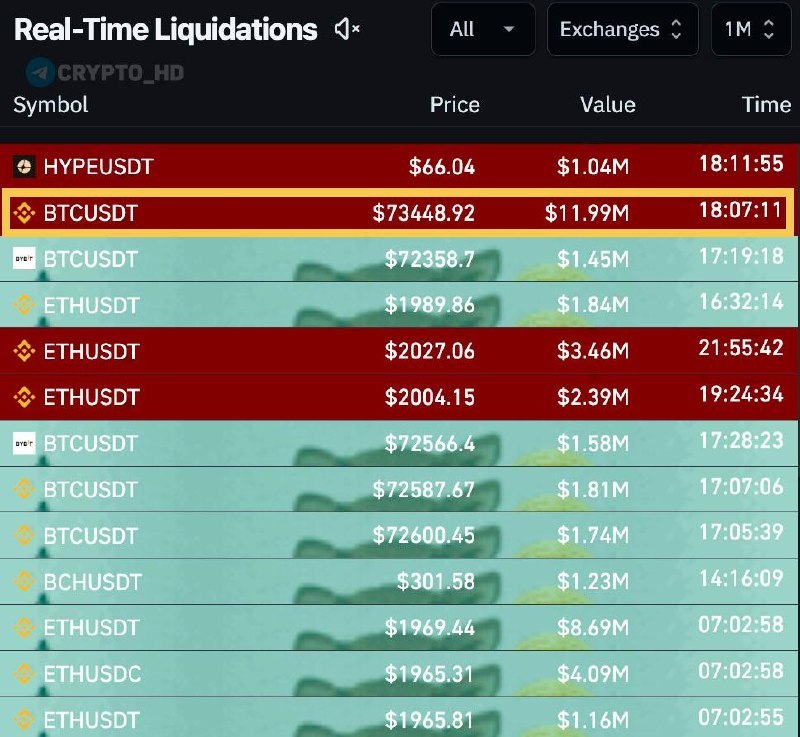
“A whale liquidation occurs when an exchange forcibly closes a large leveraged trade because the trader no longer has enough margin to cover losses.” Coinglass said Binance liquidated the short position in a single BTC/USDT order worth about $12 million. That is not normal background noise. One forced close. One exchange. One pair. When a trade that large gets closed quickly, other traders notice. Stops get hit. Short sellers may have to buy back Bitcoin at worse prices. Most market recaps treat a liquidation like instant proof of direction. That is only half right. I would not treat it as a grand market verdict; sometimes it is just leverage running into a fast candle.
“Central bank policy and inflation concerns can affect crypto market sentiment.” This Binance BTC short squeeze lands in a messy macro backdrop: the Federal Reserve, rate anxiety, sticky inflation, and traders still trying to price risk assets without much patience. Analysts have pointed to the Federal Reserve’s hawkish tone on rates and sticky inflation as pressure on risk assets. Bitcoin often trades like a more volatile version of that mood. Why does this matter? Because forced buying can push the price up for a while even if nothing basic has changed. In early 2023, Bitcoin climbed from about $16,500 to more than $23,000 as macro sentiment improved and shorts had to cover. My take: something similar may be happening here, just smaller, faster, and easier to overread.
“Bitcoin’s safe-haven status is still up for debate because its price can react both to global uncertainty and to crypto-specific shocks.” This liquidation also makes the safe-haven argument harder to cleanly defend. During geopolitical stress, Bitcoin sometimes trades like an alternative to traditional assets. Financial reports noted that after the January 2020 Soleimani strike, BTC gained about 8% within 72 hours. But a sudden $12 million liquidation on Binance tells another story. Counter to the usual advice, I do not think “watch the macro” is enough here. One large leveraged position can still push this market around. The safe-haven label feels too tidy. Bitcoin may attract institutional money, but it still has moments where it looks less like digital gold and more like a crowded derivatives trade.
What this means
“Large liquidations can show where liquidity is thin and where volatility may pick up.” The $12 million BTC short liquidation suggests there were price levels where liquidity was too thin to absorb the move cleanly. For traders, the lesson is blunt: leverage cuts both ways. Crypto gives little warning before it turns. BTC/USDT could see more volatility if price keeps pushing into areas where other shorts are sitting. Another squeeze is possible if shorts keep getting trapped. A quick reversal is possible too. Annoying, but true. Yes, this slightly contradicts the clean “short squeeze means bullish” reading — bear with me. A squeeze can be fuel, but it can also be the last burst before buyers disappear.
“Bitcoin traders should watch price levels, derivatives data, and macro events to judge what may come next.” The levels to watch are still $60,000 and $62,000. If Bitcoin holds above $62,000, more short covering could push it higher. If it slips below $60,000, this liquidation may look more like a one-off spike than the start of a broader move. Is this overkill? For BTC/USDT after a $12 million forced close, no. CME Bitcoin futures matter. Open interest matters too. Funding rates are worth watching because they show whether traders are adding risk or pulling back. The next FOMC meeting, scheduled for mid-March, could also steer the broader risk mood. I would keep the macro calendar open, even if crypto traders sometimes act like Bitcoin should trade in a vacuum.