















































Finance movies and series put crypto trust under review
These finance movies and series recommendations are not weekend filler. They hit the same nerves crypto traders live with: trust, leverage, hype, market plumbing, and the moment everyone realizes the spreadsheet matters. The list runs from “Наследники” (2018-2023) to the 2024 Netflix documentary about Bitfinex, stolen BTC and the pair nicknamed the “cryptocurrency Bonnie and Clyde.” My take: this is less a watchlist than a stress test. Stories move money until someone checks the books, rules tighten, or liquidity vanishes.
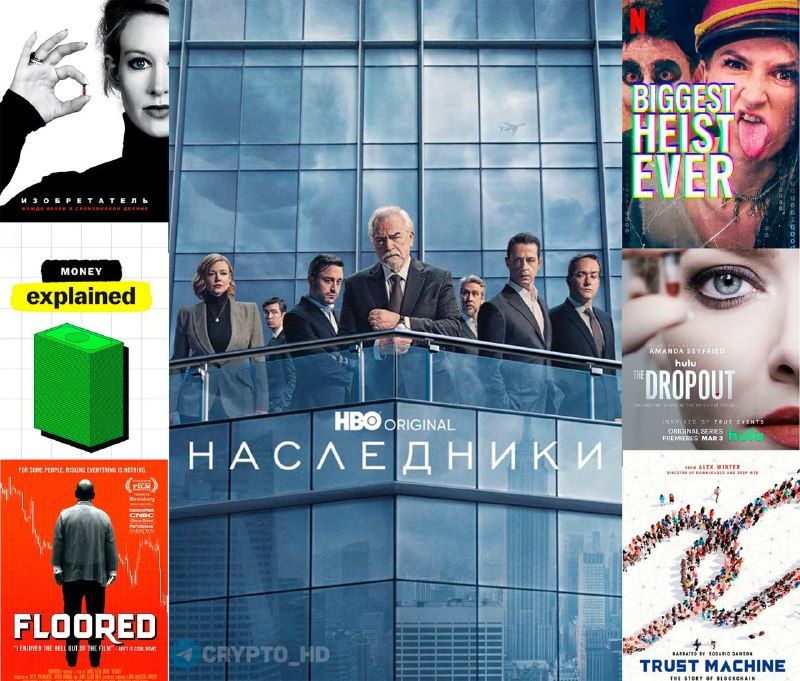
The source list names 7 titles for a weekend watchlist. “Наследники” (2018-2023) follows a media holding company, succession fights, deals, acquisitions and a family trying to keep control of a billion dollar empire. “Выбывшая” (2022) moves to Theranos, venture hype, fake technology and the investor pitch that became one of Silicon Valley’s loudest scandals. Then “Изобретатель: Жажда крови в Силиконовой долине” (2019) comes in with the Elizabeth Holmes and Theranos story as a documentary, paying more attention to a startup selling investors a future it did not have. Same wound. Different camera.
The clearest crypto entry is “Крупнейшее ограбление в истории” (2024), the Netflix documentary about Bitfinex, stolen BTC and the pair described as the “cryptocurrency Bonnie and Clyde.” The list also includes “Машина доверия: Страсти по блокчейну” (2018), a documentary about blockchain, cryptocurrency, decentralization and the fight between new tech, banks and the state. Why does this matter? Because those 2 titles land right where traders live. BTC trades as technology, money, belief and collateral for someone else’s leverage. Then custody breaks, and belief suddenly has a price.
The Theranos titles are not crypto stories. That is the point. “Выбывшая” (2022) and “Изобретатель” (2019) echo the venture capital instinct that pushed token launches, Layer 1 rotations and exchange listings once BTC and ETH became mainstream tickers. Most guides say crypto fraud is about bad actors in crypto. That is only half right. When a market buys the story before it checks the product, price discovery becomes reputation discovery. Usually the lawyers, regulators or liquidity find the truth first.
The regulation link is the cleanest bridge from the list to crypto. Theranos appears in the source as a company with fake technology and a polished investor story. Bitfinex appears through stolen BTC and a major Netflix documentary in 2024. For BTC, ETH and exchange linked equities such as COIN, this matters because regulators tend to move hardest after retail investors can explain the damage in one sentence. “Fake technology,” “stolen BTC” and “conflict with banks and the state” are not academic phrases. They turn into hearings, compliance bills, custody rules, exchange scrutiny and expensive new internal controls. I’ll be honest: traders often price that part too late.
The adoption signal points the other way. “Машина доверия: Страсти по блокчейну” (2018) treats blockchain and cryptocurrency as technology pushing against banks and government. That was the debate in 2018. It is still the debate in 2026. Is crypto a parallel financial rail, a speculative risk asset, or just another part of the regulated system? The answer changes allocation. If banks and states absorb blockchain infrastructure, ETH and stablecoin rails get a cleaner adoption story. If the conflict gets worse, BTC’s censorship resistance pitch gets fresh oxygen.
Macro flow sits under this watchlist too, even though the source does not name central banks or interest rates. “Чтобы вы поняли… деньги” (2021) explains money in plain language: loans, scams, gambling, pensions and financial traps people keep falling into. Those are the same household pressures that decide whether retail buys BTC near a local top or sells halfway through a drawdown. Counter to the usual advice, the small stuff matters here. Rent, credit cards, pension anxiety and gambling losses can show up as crypto flow. When rates rise, credit tightens and risk appetite fades, speculative assets usually lose the easy money first. When liquidity comes back, BTC and ETH often become the quick shorthand for risk on.
“Floored” (2009) adds a market structure lesson traders should not skip. The source describes it as a documentary about old school Chicago pit traders and the way electronic trading started pushing live trading out. Crypto did not inherit the pit. It inherited the machine. BTC, ETH and perpetual futures trade all day and all night, with no closing bell and no clerk slowing down panic. Is this overkill for a movie list? No, because market structure decides who survives the move. Thin liquidity at strange hours, funding pressure and fast liquidation cascades are not background details. They are the trade.
The safe haven argument is messier, which makes it useful. BTC bulls often say decentralization makes Bitcoin a hedge against banks, states and seizure risk. The 2018 blockchain documentary in the list goes straight at that conflict. But the 2024 Bitfinex documentary shows the other side. Yes, this contradicts the clean “digital gold” pitch. It should. If investors worry about theft, weak custody or exchange risk, that story can stall fast. BTC can trade like a hedge in one news cycle and like a high beta tech asset in the next. Ignore that split, and position sizing gets ugly.
“Наследники” (2018-2023) may look like the odd title out, but governance belongs in the crypto conversation too. A media empire fighting over inheritance, power, deals and acquisitions is not that far from token treasuries, foundation boards, protocol upgrades and exchange control. Here is the uncomfortable part: decentralization can be real in the code and thin in the politics. When a protocol’s governance is concentrated, traders should treat the token less like neutral infrastructure and more like a company with political risk. That matters for ETH staking debates, exchange tokens, DAO votes and any asset where a small group can shape supply, incentives or access.
The editorial read is not “watch TV and buy coins.” It is more useful than that. The 7-title list is a short course in how finance breaks: family control battles in 2018-2023, venture mythology in 2022 and 2019, household traps in 2021, stolen BTC in 2024, blockchain’s trust debate in 2018 and electronic trading’s rise in 2009. Crypto investors should recognize all of it. The packaging changes. The incentives do not. We have seen this pattern enough times to stop treating it as a surprise.
One thing worth saying plainly: the source post does not include quotes, so none should be invented. It gives titles, years and descriptions, not comments from directors, analysts, traders or executives. That absence matters. In a market stuffed with confident takes, a clean fact set can beat another fake reaction quote. For BTC and ETH traders, the useful takeaway is the risk map: custody, hype, regulation, liquidity, governance and adoption. Skip the fake certainty.
What this means
The list suggests crypto culture is still learning through finance’s older failures. A weekend watchlist that puts Theranos, Bitfinex, blockchain, Chicago trading pits and retail money traps in the same frame shows where investor anxiety sits in 2026. For BTC, the issue is not only price. It is trust in custody, exchange security and the safe haven claim. For ETH, the pressure sits around adoption and regulation, especially when decentralized infrastructure meets banks, states and compliance teams. My read: this is why the cultural stuff keeps bleeding into the chart.
Watch market proof, not vibes. Track BTC and ETH reactions around the next FOMC decision on June 17, 2026, CME BTC futures open interest after the weekend, and exchange reserve data tied to custody confidence. For technical levels, use the current BTC spot range on your trading venue and mark the prior weekly high and low before Monday’s open. If BTC holds the weekly low while CME open interest rises, the trust story has buyers. If it loses that level on rising exchange inflows, traders are pricing the Bitfinex style custody fear again.