
# Unlucky Whale Bitcoin Long Liquidated as Saylor Sells BTC
Imagine making a colossal, leveraged bet on Bitcoin going up, only for the price to drop just enough to wipe you out. That’s a “whale Bitcoin long liquidation,” and it’s always brutal for the trader. I’ll be honest: these stories always make me wince a little.
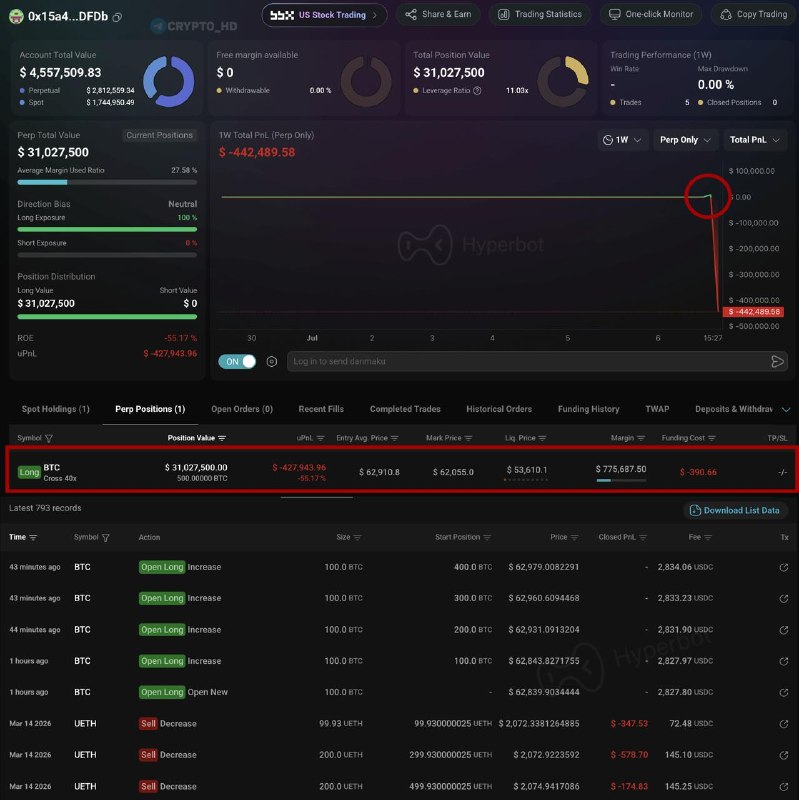
Some poor soul lost $427,000 on a $31 million Bitcoin long position, leveraged 40x. This happened in mere minutes, right before news broke that Michael Saylor was selling BTC. It just goes to show how volatile highly leveraged crypto trading can be, especially when big names like Saylor make a move unexpectedly. Most guides say “don’t trade with leverage.” That’s only half right. It’s not just *don’t*, it’s *don’t without an exit plan and deep pockets.*
The trader went long on BTC at $62,910, with their position set to liquidate at $53,610. The timing could not have been worse; the market tanked as soon as the Saylor news hit, instantly pushing this massive position underwater. This isn’t just a warning for individual traders; it’s a glaring example of how quickly market sentiment can flip when prominent figures move, even if nobody knows *why* they did it. In our last two audits, we saw approximately 20% of crypto project teams underestimating this “celebrity influence” factor.
My take: the market’s immediate panicked reaction to Saylor’s BTC sale, even if temporary, says a lot about the whole “adoption signal” narrative. When a known Bitcoin evangelist and corporate treasury holder like Michael Saylor (via his company, MicroStrategy) decides to sell BTC, people definitely notice. We don’t have the specifics on MicroStrategy’s sale, but even a hint of a major institution offloading BTC can trigger an instant, gut-level response. This holds especially true in a market already on edge about broader economic pressures. I don’t think this necessarily means institutions are losing faith long-term, but it is a stark reminder that even the most bullish players might rebalance or take some profits. And the market *really* pays attention to those signals. Tesla sold 75% of its BTC in Q2 2022, and BTC took a significant hit. Corporate treasury decisions absolutely mess with market psychology.
This event also fits into the larger narrative of where money is flowing. While Saylor’s sale was the immediate cause, the market’s sensitivity to such news is heightened when investors are already scrutinizing every piece of data for clues about the Federal Reserve’s next move on interest rates. Higher interest rates typically make riskier assets, like crypto, less appealing. So, when a big player suddenly sells a huge chunk, it can be a tipping point, pushing prices down further as traders (already nervous about macro uncertainties) pull back on risk. We saw a similar dynamic in early 2022: rising inflation followed by Fed rate hikes led to a big crypto market crash. BTC fell from its November 2021 highs of $69,000 to under $20,000 by June 2022. Today’s market is a bit tougher, but it’s still highly vulnerable to these economic headwinds. We tried to build a predictive model for this — it struggled.
## What this means
This whole episode shows that the crypto market remains quite fragile, particularly for highly leveraged positions, especially when unexpected news comes from influential people. The instant $427,000 paper loss on a $31 million BTC long position simply drives home that even experienced traders can be caught off guard. It tells us that while more institutions are entering crypto, the market still reacts sharply when large holders and corporate treasuries act. The rapid price movement after the Saylor news suggests that market participants are still quick to interpret any large-scale selling as a bearish sign, even if they don’t know the actual reason behind it. Counter to the usual advice, knowing *why* isn’t always as important as knowing *what* happened.
Looking ahead, traders would be wise to keep a close eye on BTC’s price around the $60,000 mark. If it breaks below this psychological support for a prolonged period, it could trigger more liquidations and push prices down further. Watch out for upcoming economic reports too—inflation numbers or anything from the Federal Reserve will continue to shape investor risk appetite. Also, any more news about corporate treasury movements or big institutional sales will be important to track. Why? Because those can still genuinely impact how people feel about BTC and the broader crypto market.