















































Chainlink Lead Slams Ripple-Kansas Deal, Calls XRP “Bank-Themed Memecoin”
Ripple’s new five-year sports sponsorship with the University of Kansas has kicked off another crypto fight, and this one is not subtle. Chainlink community lead Zach Rynes went straight at XRP, calling it a “bank-themed memecoin.” Blunt, even by crypto standards. My read: the real argument is not about a jersey patch. It is about who Ripple is actually selling to, banks or retail token buyers.
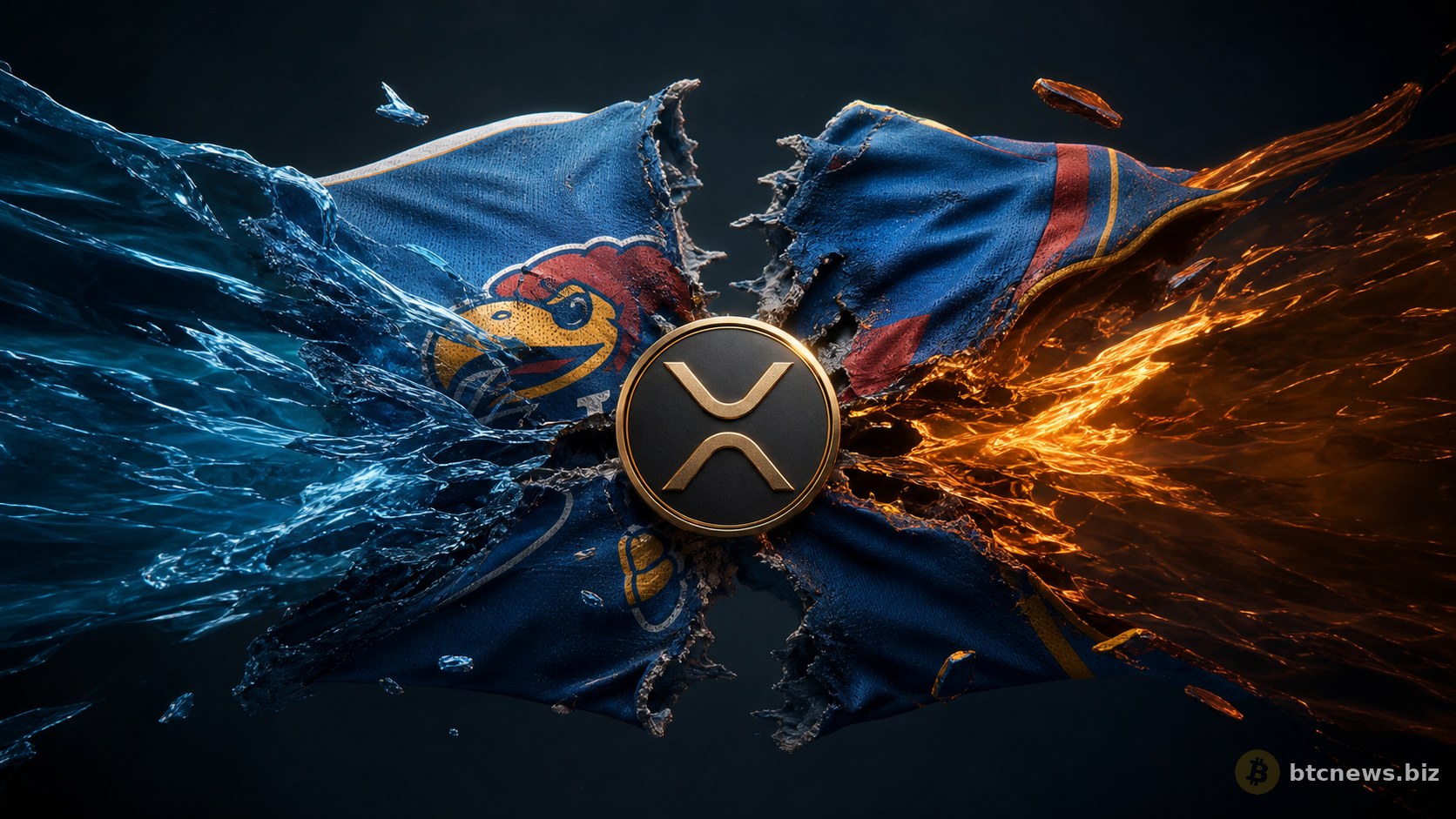
The fight began after Ripple said the XRP logo would appear on Kansas Jayhawks football and basketball uniforms. Ripple CEO Brad Garlinghouse called the partnership a “rare moment where my professional and personal worlds collide.” Rynes read the same announcement and landed somewhere else entirely. To him, it looked like a “desperate marketing stunt,” because a company selling financial technology to institutions does not have an obvious reason to put its token logo in front of college sports fans. Is that too cynical? Maybe. But it is not a strange question.
Rynes put it this way: “Sponsoring a college sports program with the $XRP logo on the jersey doesn’t make much sense if you think Ripple’s primary business is selling financial technology to banks.” His claim is that the campaign is designed to keep retail buyers interested in what he calls a “bank-themed memecoin.” That hits an old sore spot in crypto. A jersey logo can look like adoption if you already like the coin. If you don’t, it looks like paid visibility wearing an adoption costume. I’ll be honest: I think that distinction matters more than the sponsorship itself. Ethereum’s DeFi ecosystem, for example, had more than $60 billion in total value locked in early 2024. Messy usage, yes. Still usage. A sports logo is harder to measure.
Rynes also accused Ripple of using its large XRP escrow holdings to benefit Ripple Labs equity holders. He claimed Ripple “executes these coins they sell to fund corporate acquisitions and equity buybacks of Ripple Labs stock, building enterprise value for the sole benefit of shareholders at the direct expense of token holders.” That accusation goes straight to the old regulatory problem: is XRP a utility token, or does it behave more like a security? Most crypto defenses say utility settles the matter. That’s only half right. The SEC’s case against Ripple has long centered on whether XRP was sold as an unregistered security, and Rynes’ argument, fair or not, frames XRP as a funding source for company operations instead of a decentralized payment asset. The market has punished that kind of uncertainty before. When the SEC filed its lawsuit in December 2020, XRP fell more than 60% within days.
He did not stop there. Rynes said Ripple’s software delivery and operating units are tiny next to the money made from selling tokens into the market. “Ripple’s private round valuations are tied to the treasury value of their zero cost basis $XRP stash and their ability to extract from it for shareholders, every other business line is a rounding error in comparison,” he added. Harsh claim. Real question. Can a project keep growing without leaning on pre-mined token sales? Investors have been less forgiving about that lately, especially with rates still high and risk appetite shifting week to week. Counter to the usual advice, “more partnerships” does not always make a token story cleaner. Bitcoin, for instance, gained 15% in Q1 2024 while the wider market was still working through macro uncertainty. Simpler stories can travel faster.
XRP supporters pushed back, as expected. One user, “bill morgan,” pointed out that LINK, Chainlink’s token, was sitting at 20th on CoinMarketCap after once being closer to the top altcoin race. Fair shot, maybe. My take: it is also classic crypto deflection. Market cap rankings say something about demand. They do not answer Rynes’ claims about Ripple’s business model or token distribution. They also do not answer the uglier question of who benefits when XRP is sold.
Haven’t heard a Zach rant against $XRP since Link was in 11th spot on market cap on its way to thè flippening https://t.co/Fbin0mH6BB
— bill morgan (@Belisarius2020) July 8, 2026
What this means
The argument shows how much harder it is to sell “adoption” with branding alone. A logo on a jersey is visible. It is not the same as banks using the token at scale. Why does this matter? Because investors are looking more closely at revenue, token supply, treasury sales, and who actually gets the upside. For XRP, the spat could harden both sides and add more volatility if retail traders start weighing the Kansas deal against Rynes’ criticism. For LINK, Rynes’ comments support Chainlink’s preferred story: less hype, more infrastructure. Whether the market buys that story is another matter.
From here, the bigger price drivers for XRP are still legal and regulatory. Any new development in SEC vs. Ripple will matter more than a Kansas jersey patch. Yes, that somewhat cuts against the attention this fight is getting. But price usually cares more about courts, liquidity, and rates than one loud thread. For XRP, traders are watching support around $0.45 and resistance near $0.60. For LINK, the next major resistance level is around $18.00. The macro backdrop matters too. The market had its eye on the September 18, 2024 FOMC meeting for interest rate clues, since altcoins usually feel it when risk appetite dries up.
FAQ: Chainlink community lead slams Ripple-Kansas deal
What is the core of Zach Rynes’ criticism of the Ripple-Kansas deal?
Rynes says the sponsorship looks like a “desperate marketing stunt” from a company that says it focuses on institutional financial technology. In his view, the XRP logo on Kansas uniforms is aimed more at retail buyers than banks.
What does Zach Rynes claim about Ripple’s use of its XRP holdings?
Rynes claims Ripple sells XRP to fund acquisitions and Ripple Labs stock buybacks. He says that benefits internal equity holders at the expense of token holders.
How does Rynes characterize Ripple’s other business lines compared to its token sales?
He says Ripple’s software delivery and other operating units are “negligible” and a “rounding error” compared with the revenue Ripple gets from selling tokens into the market.
What is the “adoption signal” narrative mentioned in the article?
It is the idea that visible partnerships, like sports sponsorships, can be treated as proof of adoption. Supporters may read the Kansas deal that way. Critics like Rynes see paid marketing meant to support token demand.
How did some XRP fans respond to Rynes’ criticism?
Some XRP supporters pointed to LINK’s CoinMarketCap ranking. User “bill morgan” argued that LINK had fallen from its earlier position as a stronger top altcoin contender.
What is the significance of the SEC’s lawsuit against Ripple in this context?
The SEC case matters because it deals with whether XRP was sold as an unregistered security. Rynes’ comments could give critics more ammunition by framing XRP as a funding tool for Ripple Labs rather than a decentralized payment token.
What impact could this public spat have on investor sentiment?
It could make XRP sentiment even more split. Some traders may treat the Kansas deal as useful visibility. Others may focus on Ripple’s token sales, business model, and regulatory risk.
What technical levels should traders watch for XRP and LINK?
For XRP, the levels mentioned are support at $0.45 and resistance at $0.60. For LINK, the next major resistance level is around $18.00.
What broader market event is mentioned as potentially influencing altcoin risk appetite?
The article points to the September 18, 2024 FOMC meeting, since interest rate signals can affect how much risk traders are willing to take in altcoins.