















































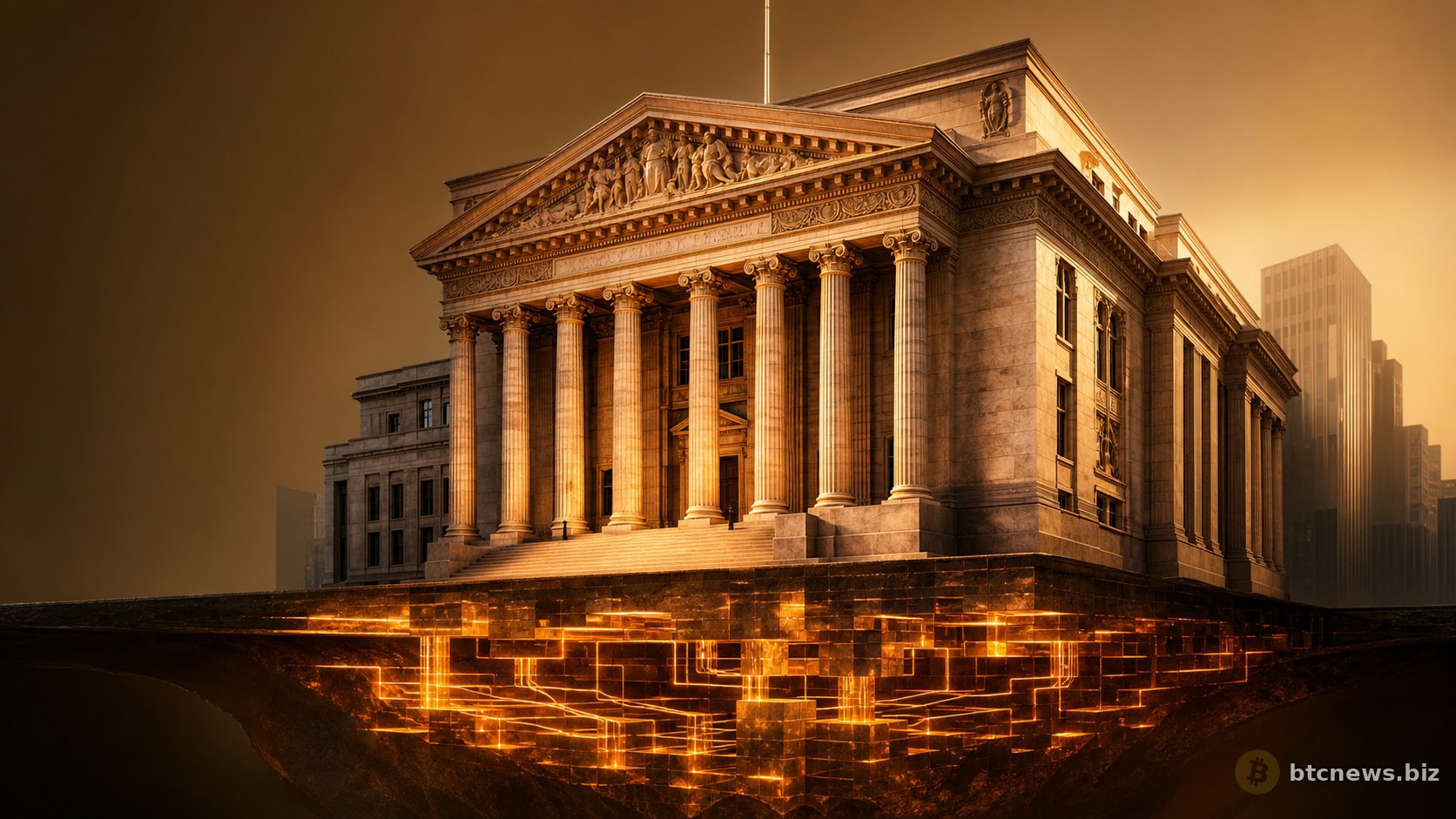
Wall Street’s crypto embrace: did disintermediation lose?
Crypto began with a blunt promise: finance without middlemen. Fifteen years after Bitcoin launched in January 2009, that promise looks less clean. JPMorgan, BlackRock, Visa, and Mastercard, the kind of firms Bitcoin was meant to route around, are now wiring blockchain into their own systems.

Crypto wanted to replace Wall Street. Wall Street decided to use crypto instead. My take: that is the whole story, or close to it. JPMorgan, BlackRock, Visa, and Mastercard are processing trillions, tokenizing billions, and turning blockchain into ordinary financial plumbing. That changes what people mean when they say “crypto.” It is not just wordplay.
The original pitch was clean: electronic cash without trusted third parties. Satoshi Nakamoto’s white paper, published after the 2008 financial crisis, described peer-to-peer payments without banks sitting in the middle. Ethereum pushed the idea further, toward programmable money and apps outside corporate control. For years, crypto conferences ran on that energy: bank the unbanked, build new rails, go around Wall Street. The target was obvious. The uncomfortable part is that crypto now leans on that same system for much of its growth.
This happened through a long series of corporate decisions. Banks tested settlement products. Card networks tried faster clearing. JPMorgan’s blockchain unit, Kinexys, is the cleanest example. Since launching in 2015, Kinexys has processed more than $3 trillion and now moves billions per day through JPM Coin, a dollar deposit token that is moving toward native issuance on the Canton Network. Oliver Harris, a former Goldman Sachs executive who leads Kinexys, has said the goal is not to tear down finance, but to rebuild parts of it from the inside. Why does this matter? Because this is not a conference demo. It is live infrastructure, and it is a hard adoption signal from one of the world’s biggest banks.
BlackRock is making a similar move with its USD Institutional Digital Liquidity Fund, known as BUIDL. The tokenized Treasury fund held about $2.4 billion in assets under management as of Q2 2026, making it the largest fund of its kind. BlackRock’s May SEC filings for two more tokenized fund structures suggest the firm is not treating this as a side project. Larry Fink has also kept calling tokenization an “upgrade” to asset management. I’ll be honest: the more interesting part is where BUIDL is showing up. DeFi lending markets. Uniswap’s request-for-quote system. A Securitize-managed allowlist sitting underneath it all. It is an odd mix of old and new. A firm with more than $10 trillion in assets is putting regulated assets on-chain, and that is a serious adoption signal for tokenized products. More capital could move into compliant on-chain markets, which would affect liquidity and pricing across DeFi.
Payments moved even faster. Visa’s stablecoin settlement pilot lets selected issuers and acquirers settle daily obligations with Circle’s $USDC instead of wire transfers. By April 2026, it had reached a $7 billion annualized run rate and expanded to nine blockchains. Mastercard has gone wider, supporting Circle’s $USDC, Paxos-issued tokens such as PYUSD and USDG, and Ripple’s RLUSD as of June 2026. Stripe’s 2025 acquisition of Bridge fits the same pattern. Its stablecoin payment volume has doubled year over year, mostly in B2B transactions. Most crypto guides frame this as pure adoption. That is only half right. Users may get faster cross-border payments and stablecoin balances they barely notice. But the old intermediaries still return through the side door: permissioning, compliance checks, custody, reporting. The GENIUS Act’s stablecoin framework and bank compliance systems are putting real regulation pressure on crypto firms, which now need legal, audit, and reporting teams that look a lot like traditional finance.
What this means
The market is maturing, but not the way early crypto people pictured it. Money from BlackRock, JPMorgan, Visa, and Mastercard behaves differently from the retail money that drove earlier boom and bust cycles. A tokenized Treasury fund backed by BlackRock is not the same thing as a token tied to a founder’s promises and a Discord roadmap. The technology has earned institutional use. Control, though, is shifting toward firms that already know how to scale regulated finance. That may bring deeper liquidity and lower volatility. It also means less decentralization. That trade-off is real. For traders, the upside is more institutional money and more tokenized assets to trade. The catch is that these products arrive with rules, allowlists, custodians, and regulators attached. Watch tokenized real-world assets, especially Treasuries. Then watch how they affect DeFi yields as institutions look for compliant on-chain returns.
For investors, crypto is splitting in two. One side is regulated, institution-backed, and easier for large pools of capital to enter. The other side is still more open, permissionless, and closer to the original self-custody idea. Counter to the usual advice, this does not mean the regulated side is automatically safer or the permissionless side is automatically doomed. It means the risk has moved. The first side may bring wider access and steadier markets. It also gives up part of what made crypto interesting in the first place. Is this overkill as a distinction? No, because the next things to watch are stablecoin rules, tokenized securities guidance, and how these products connect to existing financial rails. BlackRock’s future SEC filings should show whether more tokenized funds are coming. Visa and Mastercard’s settlement volumes will show whether stablecoins are becoming ordinary payment infrastructure. A major SEC or CFTC decision on digital asset classification could change the pace, including $ETH staking yields and the survival odds of smaller DeFi protocols that cannot afford a full compliance operation.
FAQ
What is the main argument of this article?
The article argues that Wall Street institutions, once the middlemen crypto hoped to bypass, are now using blockchain inside their own systems and reshaping the crypto market.
How has JPMorgan integrated blockchain technology?
JPMorgan’s Kinexys unit has processed more than $3 trillion since 2015 and now moves billions per day with JPM Coin. This is live financial infrastructure, not a small test.
What is BlackRock’s BUIDL fund?
BUIDL is BlackRock’s tokenized Treasury fund. It held about $2.4 billion in assets under management as of Q2 2026, making it the largest tokenized fund of its kind.
How are Visa and Mastercard using stablecoins?
Visa uses Circle’s $USDC in a settlement pilot that reached a $7 billion annualized run rate by April 2026. Mastercard supports several stablecoins, including $USDC, PYUSD, USDG, and RLUSD.
What does “regulation pressure” mean for crypto firms?
Regulation pressure means crypto firms have to build legal, audit, reporting, and compliance systems like the ones used in traditional finance. The GENIUS Act stablecoin framework is one reason for that shift.
What is the split in the crypto market?
The market is dividing into regulated, institution-backed products and more decentralized permissionless protocols. The first may be easier for big investors to use, but it gives up some of crypto’s original self-custody ethos.
What are tokenized real-world assets?
Tokenized real-world assets are traditional assets, such as Treasury bonds, represented as blockchain tokens. They can trade or settle on-chain while still being tied to off-chain assets.
Who is Satoshi Nakamoto?
Satoshi Nakamoto is the pseudonymous creator of Bitcoin. Nakamoto published the Bitcoin white paper after the 2008 financial crisis and described electronic cash without banks in the middle.
Why do Larry Fink’s comments on tokenization matter?
Larry Fink runs BlackRock, which manages more than $10 trillion. When he keeps calling tokenization an upgrade to asset management, it shows BlackRock sees this as part of its business, not just a crypto experiment.
What could SEC or CFTC policy changes affect?
SEC or CFTC decisions on digital asset classification could change how quickly institutions move on-chain. Those decisions could affect $ETH staking yields, tokenized securities, stablecoins, and smaller DeFi protocols with weaker compliance resources.