















































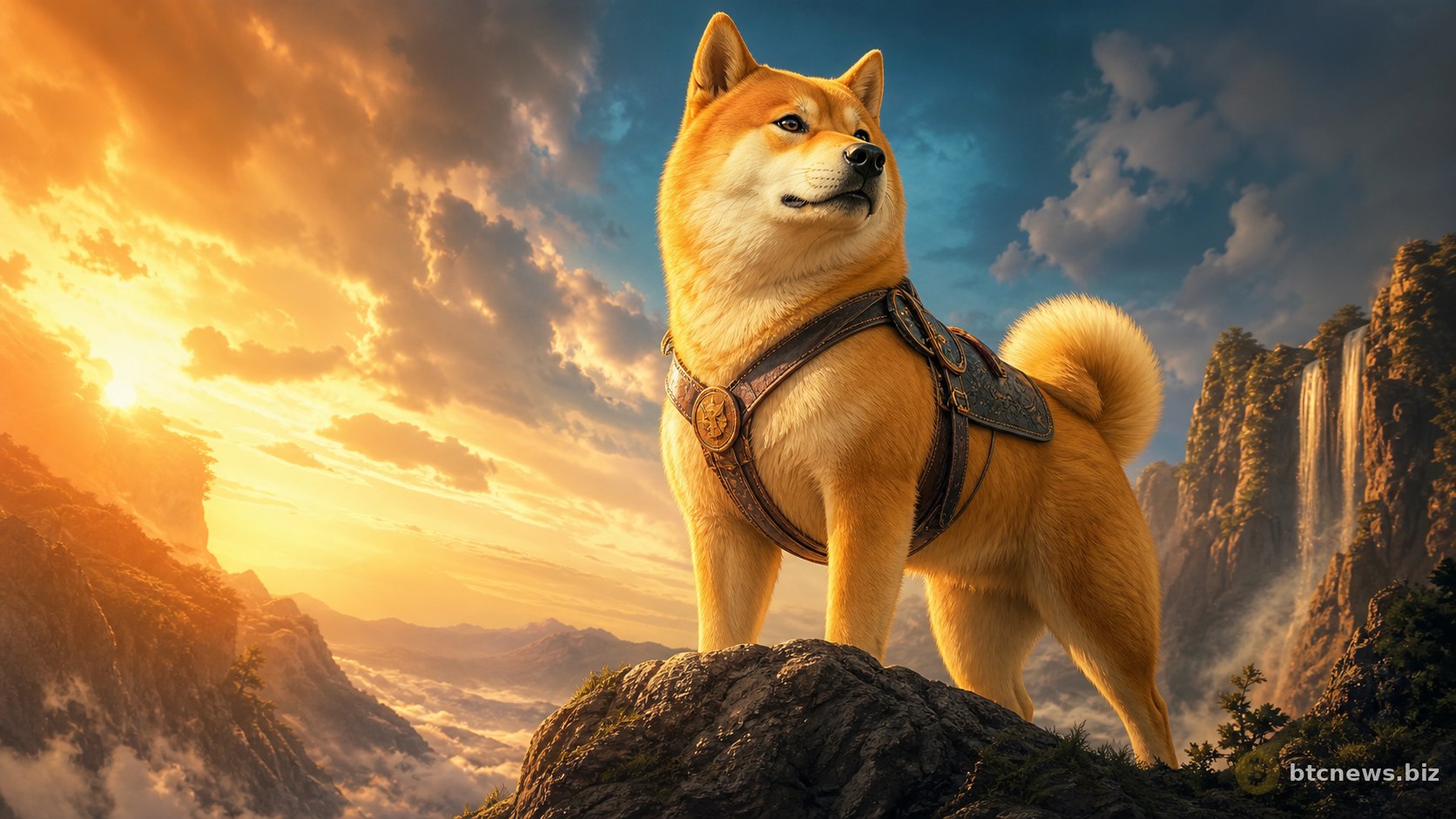
Dogecoin’s “Giant DOGE” meme points to a weird crypto-adjacent moment in Japan
Dogecoin’s official account latched onto a very specific Japanese tax perk: send part of your taxes to Shibuya Ward and get a Shiba Inu mount in Final Fantasy 14. The account joked that three things are guaranteed: “Death, taxes and a giant DOGE,” as long as you pay the right government. I’ll be honest: that is a better crypto headline than most token launches get. It is also extremely specific. A local tax program met a video game reward. Shibuya’s Hachiko identity got pulled in too. Then Dogecoin wandered into the frame, because of course it did.
Dexerto reported that Japanese Final Fantasy 14 players can get the “Megashiba” mount through Japan’s hometown tax system. The system is called “furusato nozei.” It lets taxpayers send part of their income tax to a municipality instead of routing all of it the usual way. This year, Shibuya Ward picked in-game items as rewards, including the Megashiba, a huge Shiba Inu mount loosely tied to the Hachiko statue in Shibuya. Players outside Japan can still buy the Megashiba from the Final Fantasy 14 Online Store, but the tax perk only applies in Japan. Weird? Yes. But not random. At the time of writing, $DOGE traded at $0.08273, down 3.28% over 24 hours.
This does not mean Japan is suddenly taking Dogecoin for taxes. Nobody is paying Shibuya Ward in $DOGE here. Most quick crypto takes will blur that line. That is only half right, and the missing half matters. The actual story is about digital goods becoming normal enough for a government ward to use one as a public-program reward. A few years ago, that would have needed a paragraph of explanation. Now the joke lands first, and the policy detail comes second. My read: that shift is the story.
For crypto traders, the link is indirect, but it is not nothing. Meme coins depend on people treating internet culture as financially meaningful. So do game cosmetics. So did the NFT market, at least when it was hot. Nike’s RTFKT acquisition in December 2021 had a much cleaner blockchain connection, and $ETH rose about 15% in the week after that deal. This Shibuya example is smaller and messier. I would not build a trade around it. Why does this matter? Because adoption does not always arrive wearing a bank logo or an ETF wrapper. Sometimes it looks like a giant cartoon dog you can ride in Final Fantasy 14.
What this means
The point is simple: digital items are starting to look less like disposable extras and more like things people actually want. Shibuya’s in-game reward does not validate every crypto project. It definitely does not prove meme coins are going higher. Counter to the usual advice, though, I would not dismiss this as “just gaming.” Final Fantasy 14, Shibuya Ward, Hachiko, and furusato nozei are not four pieces that usually sit on the same table. Yet here they are. That matters for gaming and NFTs. The word “metaverse” can stay in timeout.
For $DOGE, this is more about attention than fundamentals. Dogecoin moves on culture and jokes. Celebrity posts help. Retail bursts can do the rest. This story fits that machine pretty neatly, but the price was still down 3.28% over 24 hours, so the market was not treating it like a serious catalyst. Is this bullish? Not by itself. A sustained move above $0.09 would suggest traders are paying attention again. A drop below $0.075 would make this look like another fun headline that did not move money.
Investors should watch whether more cities, game publishers, or public agencies try rewards like this. One Shiba Inu mount is not a market shift. Five or ten programs like it, especially in Japan or other Asian markets, would be harder to shrug off. Yes, this slightly contradicts the “do not trade the headline” point above. Bear with me: the headline is weak, but the pattern could become useful. I would watch gaming companies that add blockchain features or NFT-style collectibles. I would also watch Japanese rules that affect digital goods. The signal here is not “buy $DOGE.” It is that digital culture keeps slipping into real-world systems through side doors, and traders tend to notice those doors eventually.