
















































Ethereum’s 10% Rebound: Can ETH Break $1,800 Amid Cautious Optimism?
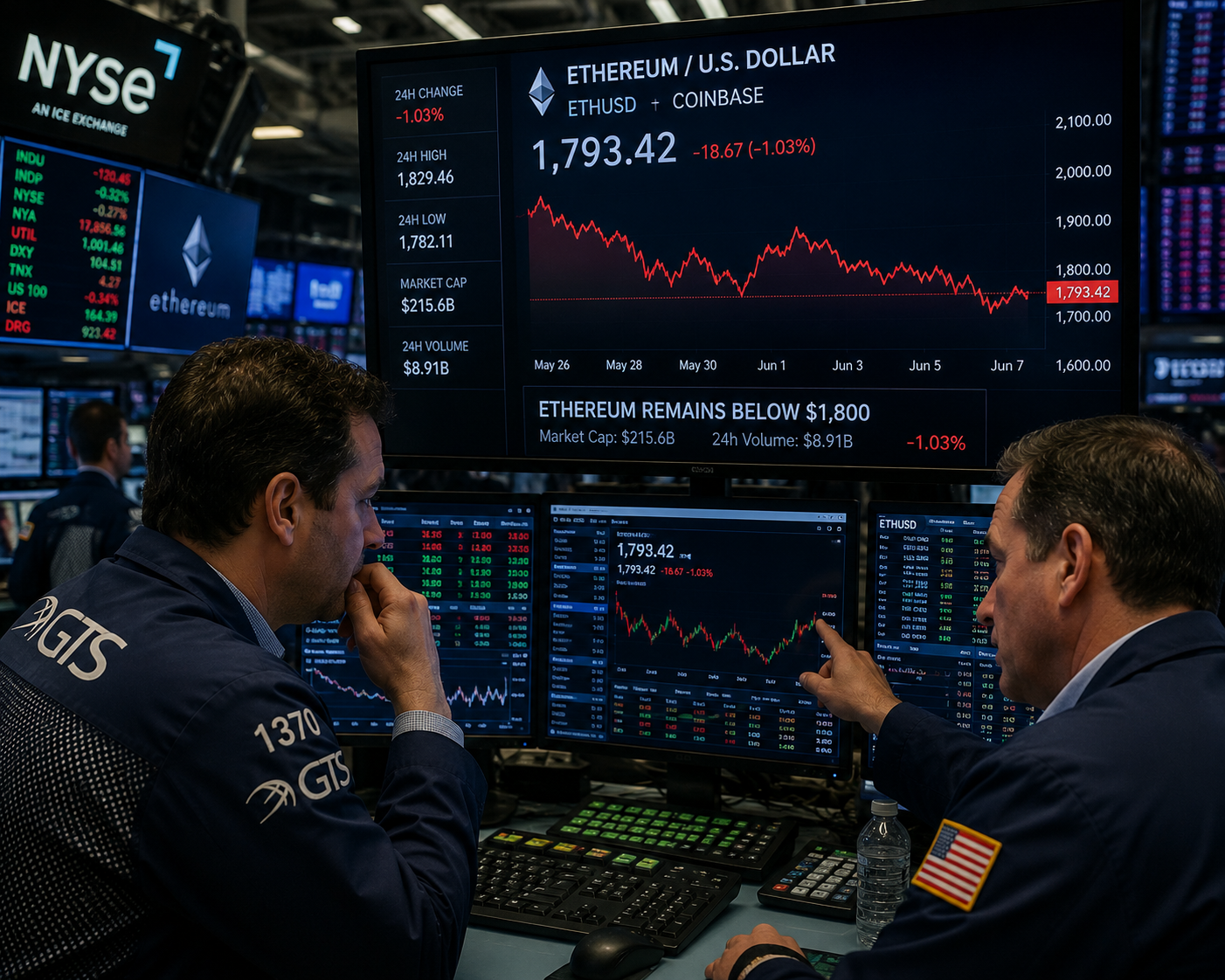
Ethereum ($ETH) rose about 10% over the past week and briefly traded above $1,800. My take: the bid is real, but it is not loud yet. Buyers have returned in derivatives markets, and that deserves attention. Still, I would not call this a clean breakout. Not yet. The next real test is around $1,806, where sellers already have a level to defend.
The move followed Ethereum’s Net Taker Volume turning positive on June 28. That indicator shows whether buyers or sellers are acting more aggressively in perpetual futures. After that flip, $ETH gained nearly 14%. Pretty simple. When the same reading stayed negative from May into late June, Ethereum kept sliding, so traders are watching it closely now. Why does this matter? Because futures aggression often shows up before the spot chart looks obvious.
Here is the catch. Derivatives traders are not exactly piling in. Ethereum’s Open Interest has barely moved, and the Estimated Leverage Ratio still has not recovered much from its June drop. That makes the rally look more spot driven, which lowers the chance of a ugly liquidation cascade. Most rebound writeups treat low leverage as automatically bullish. That is only half right. The less fun read is that bulls still seem reluctant to add leveraged longs. They want more proof first, and honestly, I get it.
The macro backdrop makes the setup more interesting. Softer US labor market data released last week helped risk appetite in the United States, and crypto usually gets pulled into that trade. The Ethereum Coinbase Premium Index, which tracks demand from US investors, remains below zero. But it has climbed sharply from the deeply negative levels seen at the start of July. In our read, that does not scream accumulation; it suggests US selling pressure has eased. Less selling still helps.
Institutional demand also looks better than it did a few sessions ago. CoinGlass data shows US spot Ethereum ETFs recorded four straight trading days of net inflows. Four days is useful. Four days is not a regime change. Counter to the usual ETF-flow obsession, I would not lean too hard on this signal by itself. ETF flows tend to be steadier than quick retail bursts, but this is still early evidence, not proof. If those inflows continue, they could give Ethereum a firmer base while it tries to break out of this range.
The chart is still messy. $ETH remains below several daily moving averages. The 50-day EMA sits at $1,806, right around horizontal resistance. The 100-day EMA at $1,970 is the next harder level if buyers clear the first one. RSI is at 58, and the MACD lines are close to neutral, so momentum has improved without looking decisive. Is that enough for a breakout? No. It is enough to keep the setup alive. Liquidations are another reminder that this market turns fast: $76.2 million was wiped out over the past 24 hours, including $47.6 million from long positions.
What this means
Ethereum’s 10% rebound shows short term sentiment has improved, helped by spot demand and lighter selling from US traders. But the bullish trend is not confirmed. Leverage still looks restrained, which tells me traders are interested but not convinced. Yes, that slightly contradicts the cleaner “spot-led rallies are healthier” argument above. Bear with me: spot demand can support price, but conviction usually needs broader confirmation. For $ETH, $1,806 is the level to beat. A firm move above it would make the rally look more serious. A rejection there could send price back toward $1,741, with the 20-day EMA near $1,713 below that.
For now, $1,806 comes first. If $ETH breaks and holds above it, $1,909 is next, followed by the 100-day EMA at $1,970. After that, resistance sits near $2,018. Then $2,108 and $2,211 come into view. If sellers take over again, $1,524 and $1,405 are possible retest zones, while $1,156 remains the larger support area lower down. The Coinbase Premium Index and ETF inflows are the two things I would keep checking. If both keep improving, this bounce has a better chance of becoming more than another failed move above $1,800.