















































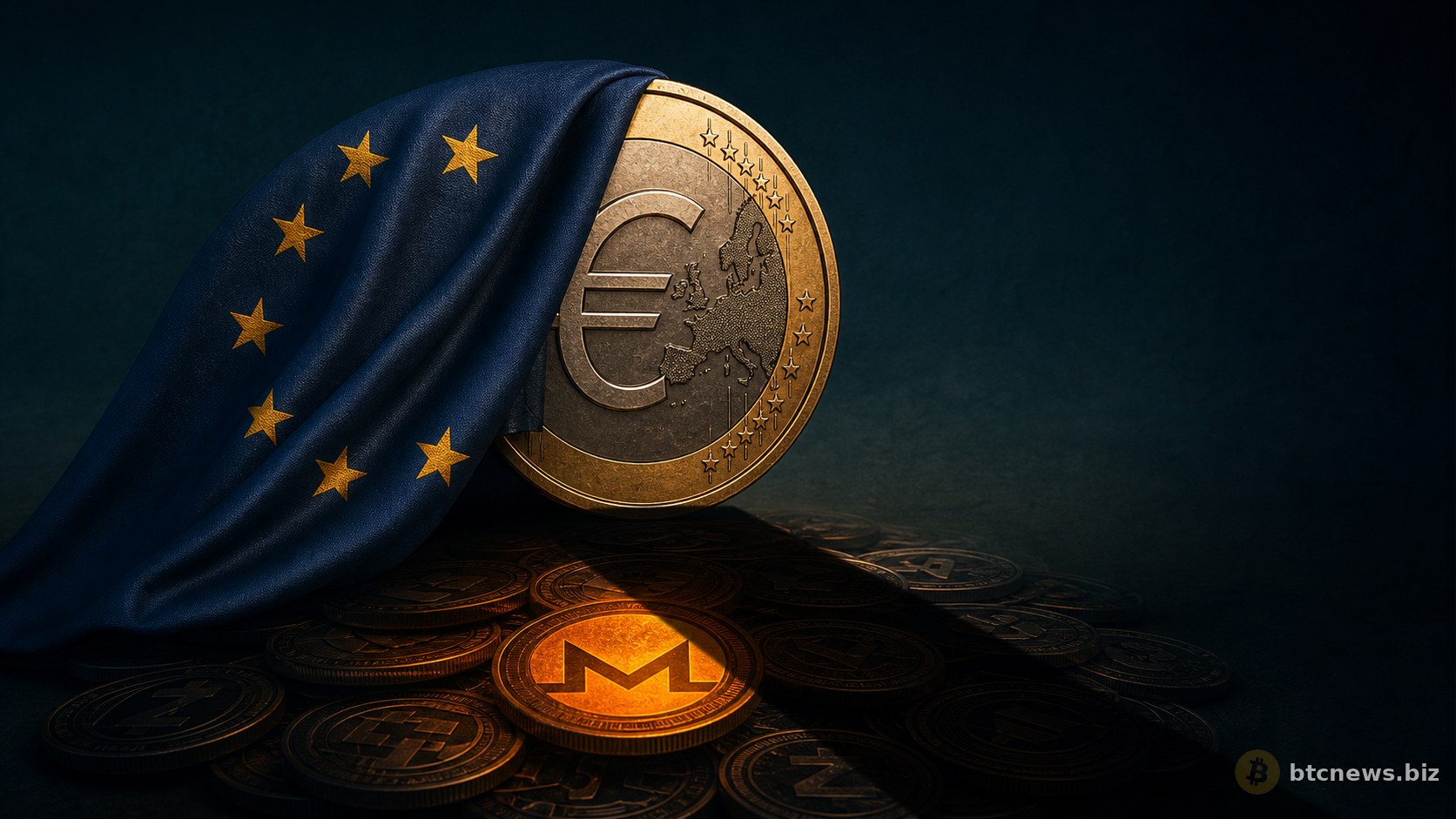
EU Targets Privacy Coins, Leaves Bitcoin Transfers Untouched: A Regulatory Tightrope
The European Union has approved Regulation (EU) 2024/1624, and privacy coins are the obvious target. Regulated crypto firms will no longer be able to support assets built for anonymous transfers, while direct Bitcoin transfers between private wallets stay outside mandatory ID checks. The rules take effect on July 10, 2027. My take: this is not a blanket crypto crackdown. It is narrower, sharper, and aimed straight at the anonymity layer. Privacy coins get squeezed. Bitcoin self custody does not.

Under Regulation (EU) 2024/1624, crypto-asset service providers (CASPs) in the EU will face stricter customer checks. The law also sets an EU-wide €10,000 limit, about $11,500, on commercial cash payments. Other sectors are pulled into the same AML net, including professional football clubs and luxury goods dealers. Most coverage will call this a crypto story. That is only half right. It is a broad AML package with one crypto section that happens to hit Monero (XMR), Zcash (ZEC), and exchange compliance teams especially hard.
Regulated crypto businesses, including exchanges and custodians, will need full customer due diligence for occasional crypto transactions of €1,000, about $1,150, or more. Below that, providers still have to identify customers, but the checks are lighter. The law also bans anonymous crypto accounts and services that anonymize or further obscure transactions, including services tied to anonymity enhancing cryptocurrencies. That points straight at Monero (XMR), Zcash (ZEC), and similar assets inside the regulated EU market. People can still hold and use them privately. The hard part is getting in and out through regulated exchanges. I’ll be honest: this is where the real pressure lands. I would not be surprised if EU platforms start clearing them out well before 2027. Delistings would hurt liquidity and price discovery, which is the same kind of pressure XRP faced in the US after the SEC lawsuit in December 2020, when its price fell about 60% within weeks of the filing.
Bitcoin (BTC) gets different treatment, and that distinction matters. The clarification around the regulation says ID duties apply to CASPs, not to every blockchain transaction. Direct transfers between self hosted wallets sit outside those obligations. If one person sends BTC to another without an exchange, custodian, or other intermediary, this law does not create a direct ID check for that transfer. Clean line. The Travel Rule framework, Regulation (EU) 2023/1113, still requires regulated providers to pass along sender and recipient information for transfers. Extra checks also apply when transfers involving a regulated intermediary and a self hosted wallet reach €1,000 or more. Does that mean Bitcoin is untouched? No. It means the regulated doorway is watched, while the wallet to wallet transfer itself stays outside this specific ID duty. That gives Bitcoin’s decentralization argument some room to breathe. We saw a version of this during Russia’s invasion of Ukraine in February 2022, when BTC briefly rose more than 15% as people looked for financial routes outside normal banks. I would be careful calling it a safe haven in the traditional sense, but it does act differently when trust in the usual payment rails starts to wobble.
Outside crypto, the €10,000 commercial cash cap is significant on its own. Member states can set lower limits if they choose. Traders must verify customer identities for cash transactions of €3,000, about $3,450, or more. The EU is trying to make large anonymous payments harder, whether they move through cash, shell companies, crypto platforms, or high-value goods. Professional football clubs, crowdfunding operators, and luxury goods dealers also get AML duties. Beneficial ownership rules tighten as well: legal entities must disclose ultimate owners through national registries, with the usual ownership threshold at 25% and a lower 15% threshold for higher risk structures. Crypto is not being singled out alone. Still, crypto gets the headline because privacy coins make the conflict easier to see.
What this means
The market now has a clearer split. Privacy coins face serious pressure inside the EU’s regulated crypto system. Bitcoin’s peer to peer design keeps more room, at least for direct self custody transfers. For traders, the privacy coin risk is practical: thinner liquidity and more exchange delistings. Sharper price moves for XMR and ZEC come after that. For Bitcoin, the effect is almost the reverse. The law leaves private wallet transfers alone, which may help its appeal among people who care about self custody and censorship resistance. Yes, this sounds like a pro-Bitcoin reading after several paragraphs about AML controls. It is, but only on this narrow point.
Watch the exchanges first. July 10, 2027 sounds distant, but compliance teams rarely wait until the last week. EU-based platforms may start removing privacy coins early to avoid legal trouble. XMR and ZEC volumes on non-EU venues will be worth tracking, especially if liquidity starts moving offshore. Is this overkill for a rule that starts in 2027? For privacy coins, no. Market structure often moves before the legal deadline. Also watch for more guidance on self hosted wallets. If regulators narrow that treatment later, sentiment could shift quickly. The next enforcement action or formal clarification may move the market more than the regulation text itself.
FAQ: EU Crypto Regulations
Q: What is the main goal of the new EU AML regulation concerning crypto?
A: The regulation aims to fight money laundering and terrorist financing by making financial transactions easier to trace, including transactions handled by regulated crypto firms.
Q: When do the new EU AML rules for crypto-assets take effect?
A: Regulation (EU) 2024/1624 takes effect on July 10, 2027.
Q: Are privacy coins like Monero (XMR) and Zcash (ZEC) banned in the EU?
A: Not for private ownership. The rule blocks regulated crypto-asset service providers (CASPs) from offering services that anonymize or further obscure transactions, which effectively cuts privacy coins off from many regulated EU platforms.
Q: Does the new regulation require identification for all Bitcoin transactions?
A: No. The ID requirements apply to Crypto-Asset Service Providers (CASPs), not to every blockchain transfer. Direct transfers between self hosted Bitcoin wallets remain outside those obligations.
Q: What is the new cash payment limit in the EU?
A: The regulation sets an EU-wide €10,000 limit on commercial cash payments. Member states can choose lower limits.
Q: What is the “Travel Rule” and how does it apply to crypto in the EU?
A: Under Regulation (EU) 2023/1113, the “Travel Rule” requires regulated crypto-asset service providers to send sender and recipient information with crypto transfers. Extra checks apply when a regulated intermediary is involved and transfers to or from a self hosted wallet reach €1,000 or more.
Q: Will EU-based crypto exchanges delist privacy coins?
A: They might. Regulation (EU) 2024/1624 gives exchanges a strong reason to remove privacy coins before the July 10, 2027 deadline, which could hurt liquidity and price discovery.
Q: How does this regulation affect Bitcoin’s status as a decentralized asset?
A: By leaving direct transfers between self hosted wallets outside mandatory ID checks, the rule helps Bitcoin’s self custody argument. It does not make Bitcoin regulation proof, but it keeps peer to peer transfers separate from regulated exchange activity.
Q: What is the threshold for customer due diligence for occasional crypto transactions?
A: Regulated crypto businesses in the EU must run full customer due diligence for occasional crypto transactions of €1,000 or more under Regulation (EU) 2024/1624.
Q: Are anonymous crypto accounts allowed under the new EU rules?
A: No. The regulation bans anonymous crypto accounts and regulated services that anonymize or further obscure transactions inside the EU’s regulated crypto market.