
















































Gold and silver ratio narrows to 66.9 as both metals jump, putting crypto traders on macro watch
Gold and silver rose hard last week, and the gold-to-silver ratio tightened to 66.9. That is not just a metals-market footnote. Crypto traders should care because the move came right after weaker U.S. jobs data changed expectations for the Fed. Why does this matter? Because fewer expected rate hikes usually mean a softer dollar, lower real yields, and more appetite for assets outside the usual dollar trade. My take: Bitcoin gets pulled into that discussion whether or not you like calling it “digital gold.”
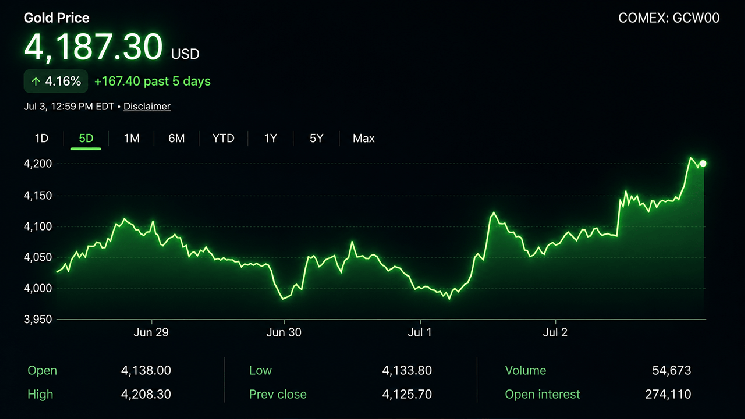
Gold logged its first weekly gain in five weeks. Silver ran harder. Aggregated market data for June 27 through July 4 shows gold climbing from lows near $4,012 per ounce on June 30 to about $4,175 by the July 3 close. That was a 2.1% gain. On July 4, America’s Independence Day, gold traded near $4,187 per troy ounce. Silver moved from about $58.3 per ounce to above $62.4, up roughly 6% to 7%. That gap matters. Silver was not just following gold higher. It pulled the gold-to-silver ratio down to about 66.9 to 1 by the end of the period.
The rally followed weaker U.S. jobs data and lower expectations for Fed rate hikes. The U.S. Bureau of Labor Statistics said nonfarm payrolls rose by 57,000 in June, far below forecasts near 110,000. Unemployment rose to 4.2%, and private payroll growth slowed. Traders adjusted quickly. The CME Fedwatch Tool showed the probability of a September Fed rate hike falling from about 66% to roughly 53% to 54% in the days after the release. Lower hike odds pressured the dollar and dragged real yields down. Gold and silver usually benefit from that because neither pays interest. OCBC strategists described their gold view as “cautiously constructive” after the data.
Here is where crypto enters. When the dollar weakens and real yields fall, investors start hunting for alternatives. Bitcoin (BTC) has been attached to that trade, especially when the market wants a non-sovereign store of value. Most guides frame this as simple: lower yields, higher Bitcoin. That’s only half right. Liquidity helps, but positioning, leverage, and risk appetite still decide how much of the move actually reaches crypto. BTC gained 3.5% to $30,500 on July 5, moving with the same broad tone that lifted metals.
Silver’s bigger bounce tells a slightly different story than gold’s. Gold is mostly the fear-and-currency trade. Silver has that side too, but it also has industrial demand behind it. Solar panels, electronics, and electric vehicles have kept longer term demand firm even after prices slipped through the second quarter. I’ll be honest: I would not stretch the crypto comparison too far. Bitcoin’s story is mostly scarcity and safe-haven demand. The rest of crypto is messier. Some altcoins tied to supply chains or IoT could see interest if traders start looking at industrial demand again. That link is loose. Ethereum (ETH) is probably the cleaner read on tech appetite. ETH traded at $1,900 on July 6, up 2.8% from its June 30 lows.
Peter Schiff kept arguing for gold over the dollar, which also pulls Bitcoin into the conversation. Schiff said the June 30 dip below $4,000 was partly tied to yen weakness against the dollar. His point was that traders leaving a weak yen for dollars were “jumping from the frying pan into the fire” by choosing dollars instead of gold. He has argued for years that gold should be measured against the dollar, not equities, and points to its rise from under $300 in 1999 to more than $4,000 today. I do not buy every Schiff argument, especially once Bitcoin gets involved. Still, the dollar critique is harder to wave away in this setup. Counter to the usual crypto reflex, gold probably benefits first if investors start doubting fiat stability again. Bitcoin often gets the second look. Geopolitical pressure, including U.S.-Iran diplomacy heading into mid-July, adds another source of volatility because safe-haven trades can move quickly.
What this means
The metals rally shows a real shift in mood after the jobs report. Softer payrolls and lower Fed hike odds point to a less aggressive policy path. That usually weighs on the dollar and helps assets that do not pay yield. For Bitcoin, the setup looks supportive. It gives the “digital gold” trade more room, especially if investors keep moving away from dollars and interest-bearing assets. Is this enough by itself? No. But it changes the backdrop. BTC may track gold more closely if the dollar stays weak. Gold is still about 22% below its early 2026 peak above $5,300, and silver has fallen even further from its January highs. Metals may still have room to recover. If they do, Bitcoin could get pulled along.
Crypto traders should keep an eye on the next macro prints and the metals levels. Inflation data and retail sales come first. Employment reports can flip the whole read. Gold has resistance near $4,200 to $4,300. Silver has a major psychological level near $65. A clean move above those zones would probably help the risk trade and could push BTC toward resistance near $32,000. Yes, this slightly contradicts the caution above: the macro link is imperfect, but traders still trade it. The CME Fedwatch Tool is worth watching too. If rate hike probabilities keep falling, crypto and other risk assets should get support. Central bank buying and U.S.-Iran diplomacy still matter in the background because either one can bring safe-haven demand back fast.