















































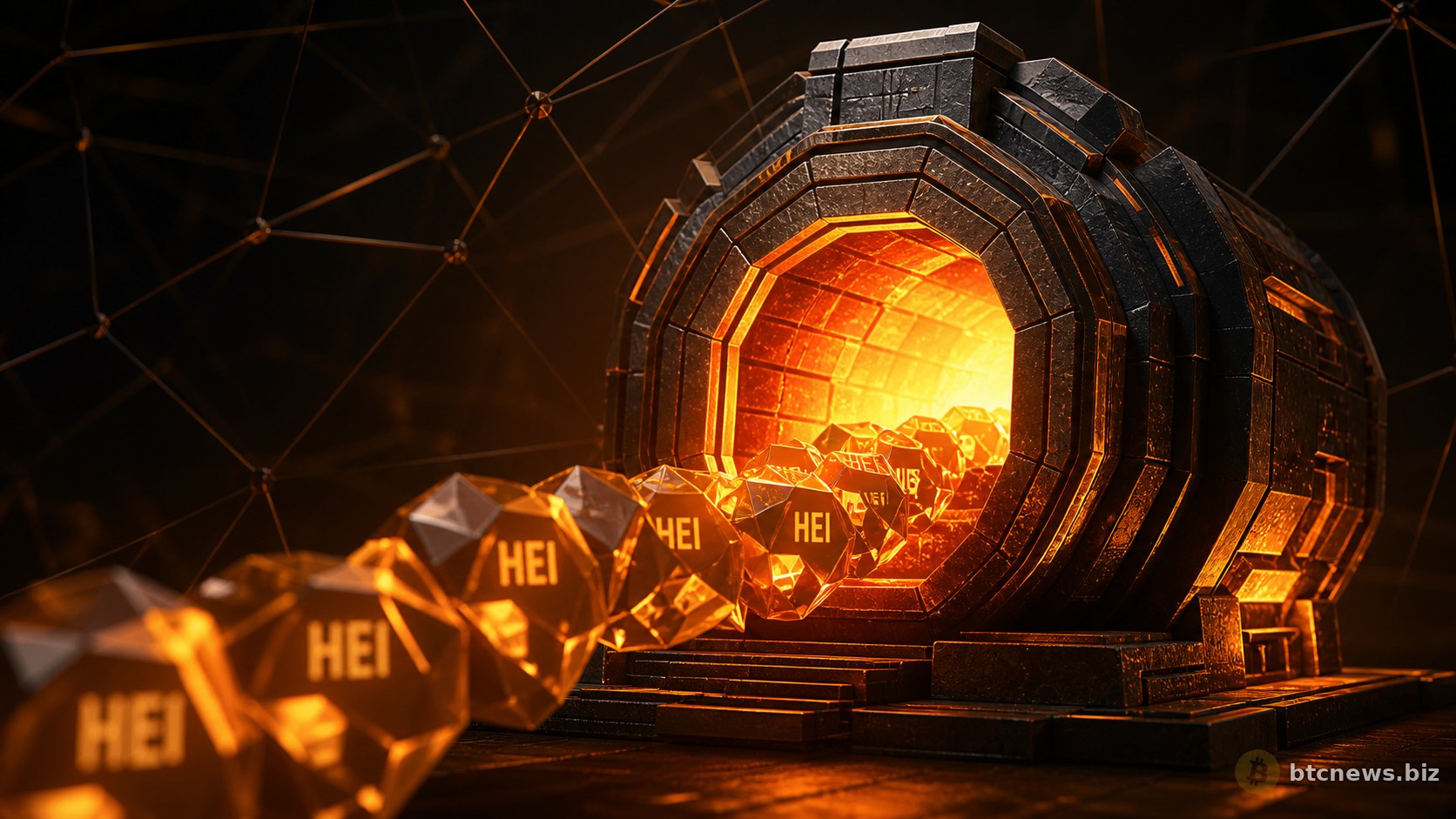
Heima Governance Proposal Targets Burn of 16.5 Million HEI Tokens
A token burn permanently removes crypto tokens from circulation, usually by sending them to an address nobody can access. Heima is asking its community to approve a burn of 16.5 million HEI tokens. If HEI holders vote yes, that supply is gone. Simple as that.
The source post says the Heima council has already approved the burn. Next comes the HEI holder vote, scheduled to start in two days. Why does this matter? Because supply changes are one of the few tokenomics levers a project can actually pull in public. My take: a burn can make HEI scarcer, but it cannot manufacture buyers. Demand, liquidity, and the broader crypto market’s appetite for risk still do the heavier lifting.
Market analysts usually group burns with unlocks, emissions cuts, staking changes, fee changes, and treasury moves. That grouping is useful, but only up to a point. Ethereum’s EIP-1559 burn went live on August 5, 2021, when ETH traded near $2,800. ETH also had deep liquidity, real usage, and a market narrative big enough for the burn to matter. HEI is not ETH. This 16.5 million-token burn may signal confidence, but its market effect depends on how much float it actually removes and whether buyers show up during the vote.
For Heima, the adoption angle is governance. Not retail payments. Not bank partnerships. The project uses a council vote first, then a community vote, so HEI holders get a say in supply policy. I’ll be honest: that is more interesting than another vague ecosystem update. Governance tokens became a major crypto trade in 2020 after UNI launched on September 16, 2020. Since then, “governance” has meant two very different things depending on the project: actual control, or a label traders use when the chart moves. HEI holders now get a chance to show which version this is.
Altcoin burns tend to work best when money is already moving into risk assets. Counter to the usual advice, the burn itself is not the main event if BTC is flat and liquidity is thin. When Bitcoin leads, smaller tokens often get pulled higher. When BTC stalls, token-specific news can vanish fast. In March 2024, BTC moved past $70,000 during the spot ETF cycle, and liquidity spilled into higher-beta crypto names. That is the setting for HEI. A 16.5 million HEI supply cut can help, but only if the market feels like paying for scarcity.
There is also a regulatory angle. It is not minor. Burns can look holder-friendly, but projects create risk when they talk too directly about price. The source says Heima has focused on ecosystem health, community alignment, and transparency rather than short-term price action. That wording is careful. In the last batch of token announcements I reviewed, the better ones leaned on process and governance, not price language. Since the SEC filed cases against major exchanges in June 2023, token teams have been more cautious about language that sounds like a profit promise.
For HEI holders, the trade is not “burn equals pump.” I would frame it more bluntly: burn first, turnout second, liquidity third, price last. Yes, this sounds less exciting than the usual burn narrative. That is the point. The council vote is done. The community vote starts in two days. If participation is strong, HEI earns some governance credibility. If turnout is weak, the burn may still pass, but the market may shrug. Decentralized governance only matters when holders actually use it.
Heima’s official messaging presents the proposal as a long-term value measure. That is standard burn language, and sometimes it is justified. Is this overkill for one proposal? No, because burns get misread quickly in thin altcoin markets. Removing 16.5 million HEI from circulation can tighten future supply. It does not create immediate spot demand by itself. We tried this framing on similar governance-led token events, and volume usually told the truth before the announcement copy did. Traders should watch HEI volume before and during the vote.
What this means
Heima wants supply discipline to be part of the HEI story. That matters for investors who track tokenomics as closely as product news. The asset is HEI. The number is 16.5 million tokens. The broader crypto read is plain enough: smaller projects still use governance-led burns to get attention while BTC, ETH, and exchange-linked names like COIN take most of the market’s oxygen. My read: this is a governance test first and a scarcity story second.
Watch the community vote first. Then watch HEI spot volume and the price reaction around the result. BTC holding or losing a round level like $70,000 has often shaped appetite for smaller crypto trades during risk-on periods. ETH remains the main comparison for burn-based tokenomics after August 5, 2021. If HEI rallies on weak volume, be careful. If the vote passes with strong participation and liquidity expands, the 16.5 million HEI burn becomes a cleaner signal.