
















































Hyperliquid Holds Near All-Time High as Bitcoin ETFs Bleed $6.5 Billion
Bitcoin ETFs have lost $6.5 billion to outflows. Hyperliquid ($HYPE), meanwhile, is still sitting near its all-time high. Weird? Yes. But not random. My take: some investors are no longer treating the whole crypto market as one Bitcoin-led basket, and $HYPE is benefiting because its economics are unusually easy to understand.
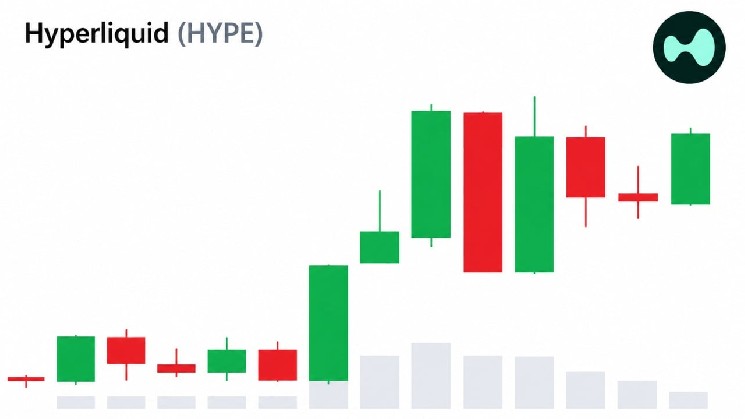
Crypto has had a rough few weeks. Fund flows have been weak, and Luke Nolan, a senior research associate at CoinShares, said crypto has received “very little help from flows recently.” U.S. spot Bitcoin ETFs have now posted eight straight weeks of outflows, their longest losing streak since launch. More than $6.5 billion has left those funds since May. Ethereum ETFs have softened too. Then Strategy added another shove lower when it sold 3,588 BTC in one week to fund preferred stock distributions. Not subtle.
Hyperliquid ($HYPE) has held up anyway. That is the bit I keep coming back to. Three spot ETFs now track $HYPE, the native token of the Hyperliquid blockchain: the Bitwise Hyperliquid ETF (BHYP), which stakes its holdings for yield. The 21Shares Hyperliquid ETF (THYP) tracks the FTSE Hyperliquid Index. The Grayscale Hyperliquid Staking ETF (HYPG) gives brokerage investors access to $HYPE. Data from SoSoValue and Farside Investors shows Bitcoin ETF outflows picked up in late spring, with $2.43 billion leaving in May 2026 and a record $4.06 billion leaving in June 2026.
$HYPE funds have moved the other way. Since launching in May, they have taken in money every week, including about $161 million in June. The three U.S. funds now manage roughly $336 million, while European $HYPE products manage more than $55 million. Are those huge crypto numbers? No. But measured against Hyperliquid’s market cap, they matter more than the headline size suggests. Nolan put it plainly: “On a market-cap-adjusted basis, $HYPE has been one of the strongest crypto ETF launches to date. The relative strength versus the broader crypto market remains clear.” I’ll be honest: I can see the pitch. Hyperliquid uses 99% of platform fees to buy back $HYPE, so trading activity feeds straight into token demand. Clean mechanism. No mystery box.
Most market commentary says investors want safety when flows turn ugly. That’s only half right. Sometimes they want something they can actually model. Bitcoin and Ethereum products are losing assets, while $HYPE funds are still taking in cash. That does not mean buyers have suddenly become disciplined fundamental analysts. Please. But it does suggest that a clean economic design can stand out when the rest of the market feels tired, crowded, and a little stale.
What this means
Hyperliquid’s strength during $6.5 billion of Bitcoin ETF outflows points to a pickier market. Investors are not treating every crypto asset the same. Tokens with simple value capture, like fee-funded buybacks, can still attract money when the mood is bad. That is the point. My read: $HYPE’s ETF inflows show its tokenomics are doing real work as a selling point, not just sitting in a deck as nice-sounding theory.
Counter to the usual advice, this does not mean every token should copy the buyback model. That would be too neat. The question is whether this lasts. Hyperliquid’s protocol activity matters, and so do weekly ETF flow reports from CoinShares and SoSoValue. Why does this matter? Because if $HYPE keeps taking in money while Bitcoin struggles below levels like $60,000, the case for decoupling gets stronger. If inflows slow, the lesson is less dramatic: good tokenomics help, but they do not make a token immune to a long crypto selloff. Either way, $HYPE is now a useful test case for how much investors care about value accrual when the market is under pressure.