















































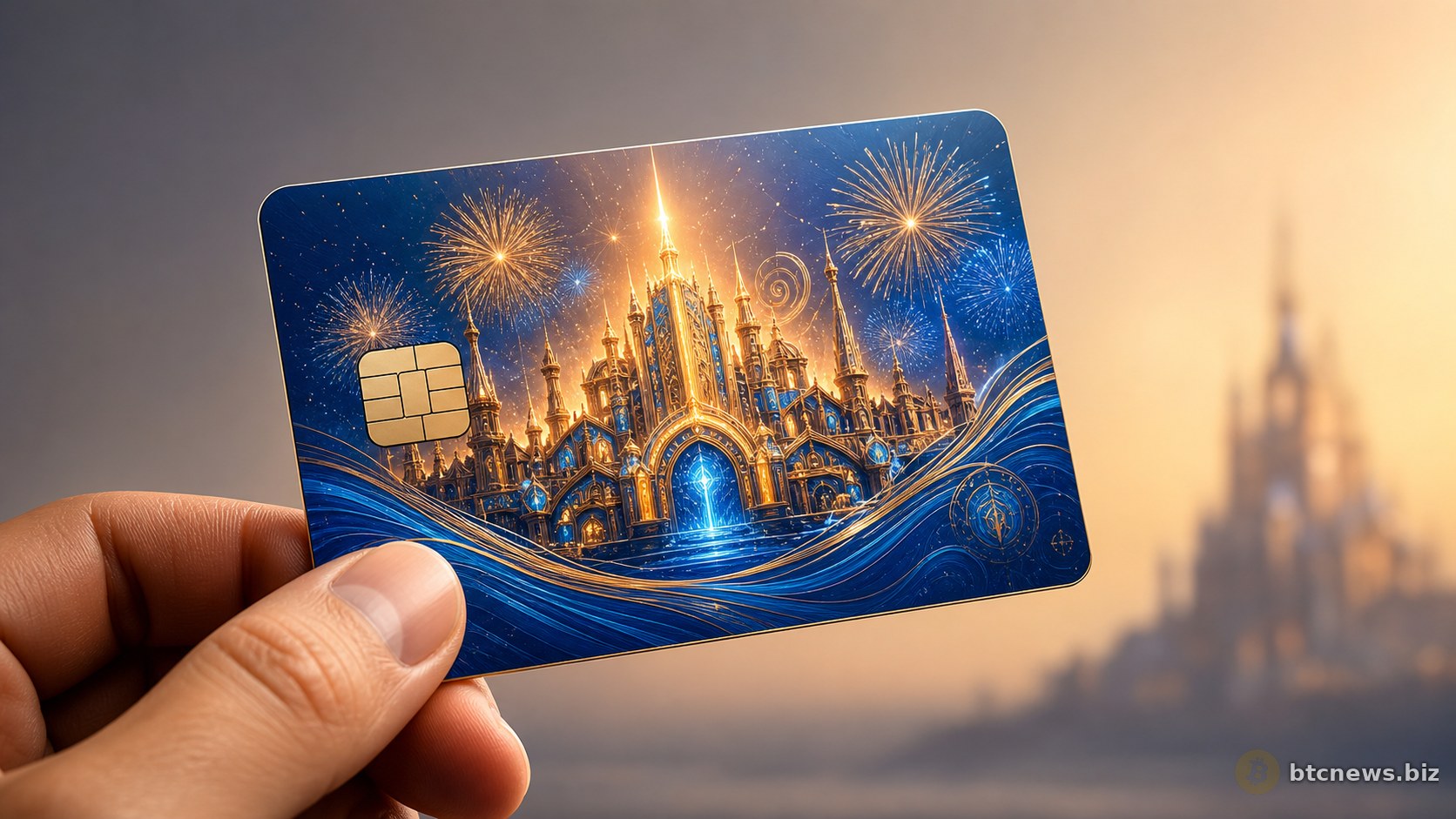
KuCoin launches limited-edition Tomorrowland Visa KuCard in bid for Web3 adoption
Crypto exchange KuCoin has released a limited-edition Tomorrowland Visa KuCard. The pitch is simple: connect crypto payments to Belgium’s annual Tomorrowland festival, then put the card in front of music fans who may never attend a crypto conference. Is that mainstream adoption? Not yet. My take: it is still more useful than showing the same product to another room full of traders.

KuCoin EU launched the card for Tomorrowland attendees and wants customers to spend crypto on ordinary purchases instead of leaving it inside an exchange account. In an X post dated July 19, 2026, KuCoin called the card a “custom asset designed for global music lovers” that puts “the future of Web3 payments in your pocket.” I’ll be honest: the language is overcooked. The product is not. It is a festival-branded payment card linked to supported digital assets.
One card changes very little. Most crypto promotions imply that exposure naturally becomes adoption. That is only half right. Tomorrowland gives KuCoin access to a large international audience, but familiarity will matter only if people see the card, ask how it works and actually try it. Even then, a hands-on demonstration may do more than another whitepaper ever could.
Consumer payment products have pulled crypto into public view before. PayPal added cryptocurrency buying and selling in 2020, the year Bitcoin (BTC) later crossed $20,000 for the first time. PayPal did not cause the rally on its own; its launch was one component of a much broader rise in public and institutional interest. KuCoin’s project is narrower and focused on spending rather than investing. Still, the company is chasing a similar prize: visibility beyond existing crypto users.
KuCoin is selling two ideas at once. The limited-edition card is a payment method, but it is also a Tomorrowland collectible. Festival visitors can find staff members known as “Guardians” at the venue, while people who are not attending can join a waitlist on KuCoin’s website. That second route matters. It gives the promotion somewhere to go after the festival grounds empty.
Crypto-linked cards let customers spend supported digital assets through existing networks such as Visa. The provider usually converts the crypto when payment occurs, so the customer does not need to sell it manually before reaching checkout. Why does this matter? Because one extra conversion step can be enough to make a payment method feel tedious. In my experience, convenience often determines whether something becomes routine or gets abandoned after a week.
The investment case is weaker. Central banks are still wrestling with inflation and interest rates, while investors move money among cash, bonds, stocks and riskier assets. A festival card will not influence Federal Reserve policy in any serious way. Full stop. It can demonstrate that digital assets work as payment methods alongside traditional finance, but only real purchases—not launch-day attention—would support that claim.
Younger customers may be willing to test Web3 products when those products connect with music or another interest they already have. Some investors have also bought Ethereum (ETH) during periods of high inflation and treated it as a possible hedge. Counter to the usual promotional line, broader availability does not make that hedge dependable; ETH’s volatility leaves the argument with a pretty large asterisk. More payment activity might improve liquidity and confidence over time. One limited-edition card cannot establish that trend.
Carrying the future of Web3 payments in your pocket. 💳
Meet the Limited Edition @tomorrowland Visa KuCard powered by KuCoin EU, the ultimate custom asset designed for global music lovers.
Want yours? Spot a Guardian on-site or head to our website to secure your spot on the… pic.twitter.com/Iprm4UTGiu
— KuCoin (@kucoincom) July 19, 2026
Tomorrowland places KuCoin outside the normal crypto bubble. The Belgium festival attracts visitors from around the world, and its total audience reaches into the millions. That makes it a sensible testing ground for a consumer payment product. Fans do not need to study blockchain architecture first. They can start with a Visa card tied to an event they already recognize.
The card may work better than a vague Web3 campaign for one blunt reason: it has a job. Carry it. Use it to pay. The Tomorrowland design also makes the product resemble festival merchandise rather than financial infrastructure, which may feel less daunting to first-time users. I would not dismiss the novelty factor, either. The real test begins when that novelty wears off and customers decide whether KuCoin still belongs in their wallets.
What this means
The KuCoin Tomorrowland Visa KuCard is another attempt to move crypto from trading accounts into everyday purchases. Exchanges have paired products with entertainment and lifestyle brands to reach people beyond crypto circles, and the logic is easy to follow. But here is where I push back: this industry uses the word “adoption” far too freely. A July 19, 2026 launch post creates attention. Adoption means cardholders return and pay again.
If usage grows, the card could increase demand for supported stablecoins and other payment assets. KuCoin Token (KCS) might benefit if the program brings new customers onto the exchange, although there is no guarantee it will. Talk of a clean shift from “holding crypto” to “using crypto” runs ahead of the evidence. KuCoin has launched the product. It has not disclosed how many people will use it.
Investors need numbers, not advertising copy. How many cards were issued? How many cardholders remained active after Tomorrowland? KuCoin’s next quarterly reports could also show monthly purchase volume and repeat use. I would put more weight on those figures—and on transaction growth across multiple exchanges—than on one festival campaign.
More day-to-day crypto spending could improve sentiment around Bitcoin (BTC) and Ethereum (ETH), but it would not automatically push either asset beyond a resistance level. Prices respond to liquidity and regulation. Interest rates matter too, along with plenty else. For now, this is an experiment with an unusually loud soundtrack.
FAQ
What is the KuCoin Tomorrowland Visa KuCard?
It is a limited-edition KuCoin EU payment card linked to the Tomorrowland music festival. Cardholders can spend supported digital assets at merchants that accept Visa.
Who is the target audience for this card?
KuCoin is targeting Tomorrowland attendees and music fans. Existing crypto users looking for another way to spend their assets may also be interested.
How can someone obtain the limited-edition KuCard?
People at Tomorrowland can look for KuCoin staff known as “Guardians” around the venue. Anyone not attending can register for the official waitlist on KuCoin’s website.
Why could this partnership matter for Web3 adoption?
It puts a crypto payment product before Tomorrowland’s international festival audience in a setting where people already spend money. KuCoin says that makes Web3 payments easier to grasp. Does exposure alone count as adoption? No. That depends on how many customers continue using the card after the festival.
Does this card support every cryptocurrency?
No. KuCoin has not claimed that the card supports every cryptocurrency. It works with compatible digital assets, potentially including selected major cryptocurrencies and stablecoins. Customers should review KuCoin EU’s current list before applying or paying with the card.
How could this initiative affect the crypto market?
More purchases through crypto-linked cards could increase demand for the assets used to fund them. This limited-edition release is unlikely to move the broader market by itself. Consistent transaction growth across several card programs would carry more weight.
What are the benefits of a crypto-linked payment card?
Customers can spend supported crypto at ordinary card terminals. The service converts the assets when needed, removing the manual sale that would otherwise be required before each purchase.
Is the KuCoin Tomorrowland Visa KuCard available globally?
KuCoin EU introduced the card to an international audience, but that does not make it universally available. Eligibility depends on local regulations and KuCoin EU’s service area. The waitlist terms also apply.
What is Tomorrowland?
Tomorrowland is a large electronic dance music festival held annually in Belgium. Visitors travel from many countries to attend, while its worldwide audience numbers in the millions.
What should investors monitor?
Future KuCoin reports may show the number of cards issued and how much customers spent. Repeat use after Tomorrowland is the harder—and more revealing—measure. Investors tracking KuCoin Token (KCS) should also check whether card activity produces measurable exchange growth. In my view, those figures matter far more than the launch announcement.