















































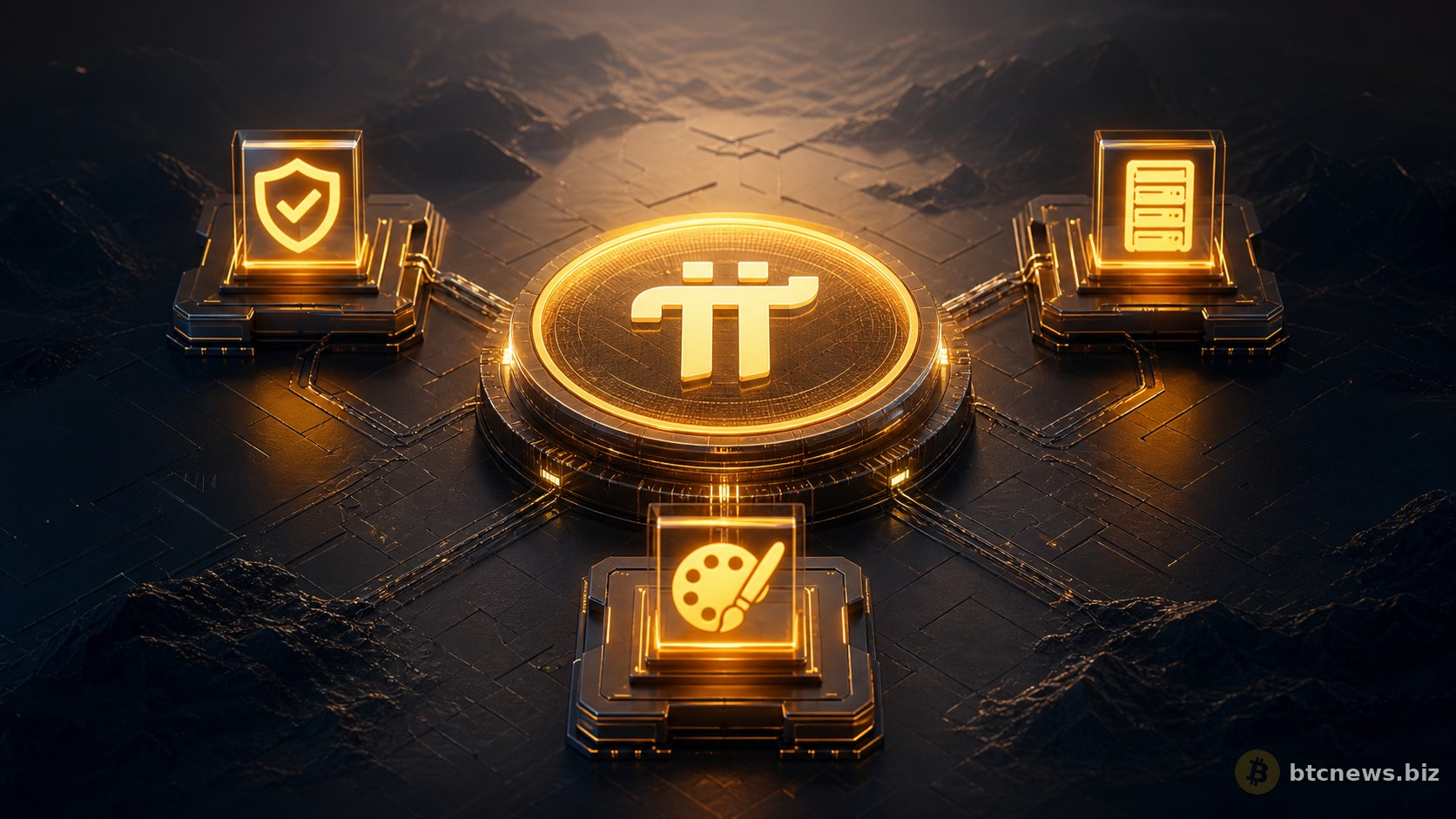
Pi Network Moves Into AI Infrastructure, Dropping the “Mining App” Label
“Pi Network has moved from a ‘mining app’ toward infrastructure for AI, identity checks, and distributed computing.”
Pi Network just made its biggest move so far, and for once, price was not the headline. On Pi2Day 2026, the project launched three products: PiVerify, SoloHost, and Pi Sign-in. That changes the conversation around Pi. At least, it tries to. It is no longer just the phone mining app people open out of habit, or the token sitting in a wallet while users wait for a listing. My take: Pi is making a deliberate bid to be infrastructure for AI, identity checks, and distributed computing, with tools that businesses and developers outside its own ecosystem can actually touch.
Pi2Day 2026 did not bring the exchange listing or price news many users probably wanted. Instead, Pi Network put PiVerify on the table. Then SoloHost. Then Pi Sign-in. That matters because the project is trying to shake off its old “mining app” label and offer services outside companies might need. Most guides would say adoption starts with listings. That is only half right. In this case, Pi is betting that usage has to come before the market story gets cleaner.
“PiVerify turns Pi’s existing KYC system into an identity verification service for outside businesses.”
PiVerify is probably the most useful launch on paper. It is a KYC and identity verification service built on Pi’s existing user verification system, which has already checked more than 18 million Pioneers in over 200 countries. The model uses AI automation plus human review. That could help fintech apps and exchanges. It could also help Web3 platforms and AI services cut down on fake accounts, fraud, and Sybil attacks. Why does this matter? Because Pi holders finally get a proposed use case that is not just waiting. Outside clients pay in Pi to use PiVerify, which gives the token something to do besides sit in a wallet.
“SoloHost turns more than 420,000 Pioneer-run computers into a distributed computing network for AI work.”
SoloHost is the second big release, and I’ll be honest: this is the one that feels less cosmetic. It uses Pi’s network of more than 420,000 Pioneer-operated computers and lets developers list self-hosted apps on Pi Desktop, including local AI agents. Pi Node operators can opt in and sell spare computing power to outside clients. Those clients pay node operators in Pi after the work is finished. The first production app is Hermes, an open source AI agent that stores data locally. It is expected to launch shortly after Pi2Day, with the top 100 node operators completing real AI compute tasks for external clients. Pi is not just adding another blockchain feature here. It is trying to turn hardware its users already run into an AI compute layer.
“Pi Sign-in lets supported websites and apps use Pi accounts as a login option through Pi’s verified identity layer.”
The third release is Pi Sign-in. It lets supported third party websites and apps offer Pi accounts as a login option. Sounds dull. It is. But dull infrastructure is often where adoption actually happens. Counter to the usual crypto advice, the boring login layer may matter more than the flashier launch demo. Pi has a verified human identity layer across 18 million KYC-confirmed users in more than 200 countries. Developers can now plug into that. If it works, Pi starts looking less like a crypto community and more like an identity provider with a very large user base.
“Pi’s shift gives the crypto market a cleaner example of token utility, assuming businesses actually use the services.”
Pi Network is trying to move from what critics saw as a “glorified waiting room” into something closer to an infrastructure provider. For the broader crypto market, that is the interesting part. Pi is not publicly traded, but a large distributed AI compute network paid for in the native token would give it a cleaner utility story. So would a KYC service paid for in Pi. Render (RNDR) is a useful comparison. It has gained more than 200% in the last 12 months as demand for decentralized GPU compute tied to AI workloads has grown. Pi is different. It built the user base first and is now trying to build services around it. Yes, that contradicts the usual “build the product first” playbook. Bear with me. Other early stage crypto projects may try to copy that if they want value that does not depend only on speculation.
“Hermes puts privacy in the spotlight by keeping AI agent data local.”
Hermes also gives Pi a privacy angle. The app stores data locally, which fits the current anxiety around centralized AI systems and who can see user data. I would not put this in the same bucket as Monero (XMR) or Zcash (ZEC), since those are more about transaction privacy. Pi’s angle is data locality. Different thing. Still, the timing makes sense. People are paying more attention to where their data lives, especially when AI is involved. If outside clients pay in Pi for these services, Pi gets a direct economic loop. Is that enough by itself? No. But it is the part worth watching. Utility demand has been a strong story for tokens like Chainlink (LINK), which has climbed more than 150% in the past year as its oracle services spread across DeFi protocols.
What this means
“Pi’s move shows how crypto projects are trying to move from speculation toward working infrastructure.”
Pi Network’s move points to a wider change in crypto. Projects are under more pressure to prove they do something. PiVerify, SoloHost, and Pi Sign-in are all paid for in Pi, so the strategy is not subtle: build a real economy around the token before price becomes the whole conversation. My read is that this could push other large, unlisted crypto communities toward similar utility models. It may also change how people judge “pre-mainnet” projects. AI and identity verification are crowded markets. They are also real markets. If Pi can solve practical problems there, it has a better argument than another token built around hype.
“Investors should watch actual usage, especially outside clients and Pi payment volume.”
Investors should watch whether outside businesses actually integrate PiVerify and SoloHost. The useful metrics are not vague community excitement. Track third party clients. Track Pi paid for services. Watch whether node operators keep participating after the first wave. Pi itself is not tradable, but a working utility model could affect sentiment around decentralized AI and identity projects. RNDR and Akash Network (AKT) are worth watching as market proxies for AI compute demand. Hermes is another near term test. If the top 100 node operators complete real client work without the rollout getting messy, SoloHost will have something concrete to point to.