















































TeraWulf jumps 13% on AI data center expansion in Kentucky
TeraWulf’s stock rose 13% after the company announced an AI data center expansion in Kentucky. The market reaction was blunt. Some bitcoin miners are no longer being valued only as token producers. My take: investors are now paying for sites with power and transmission access, plus a credible shot at getting large projects built. For traders watching WULF, HUT, IREN, CIFR, and other BTC-linked equities, that is the piece that matters.
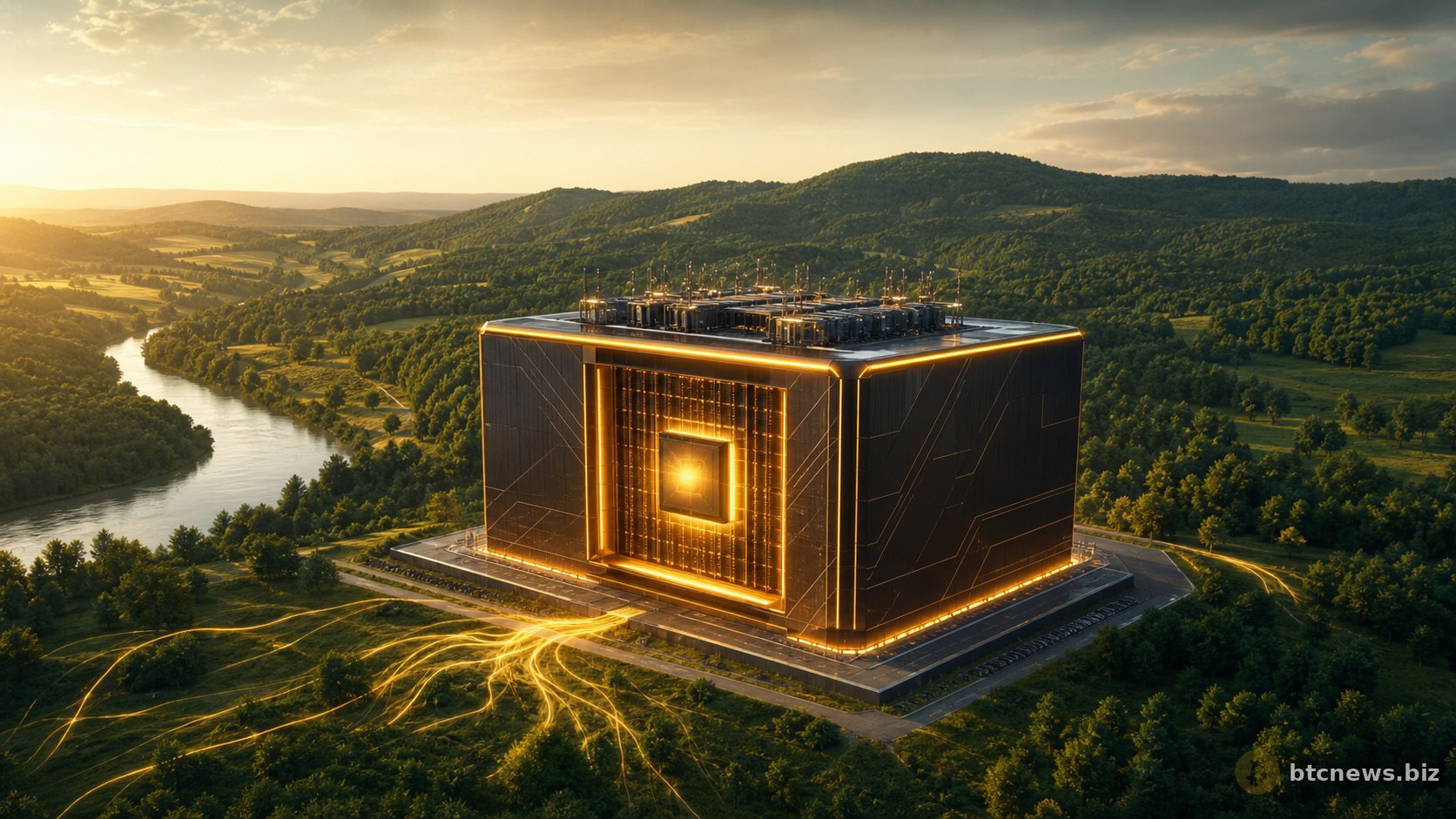
TeraWulf (WULF) jumped 13% early Tuesday after announcing the Muskie Data Campus, an AI and high-performance computing site in Kentucky. The company said it bought a hyperscale development site that could support more than 1 gigawatt of AI and HPC infrastructure over time. The first 500 megawatts are expected in the second half of 2028. Another 500 megawatts are targeted for 2030. Big number. Long wait.
The adoption signal is hard to miss. Bitcoin miners spent years trading mostly on BTC price and hash price. Block rewards mattered too, but that old framework is getting messier. Most guides still describe miners as leveraged BTC plays. That’s only half right. After the April 2024 Bitcoin halving cut the block reward from 6.25 BTC to 3.125 BTC, miners had more pressure to find revenue outside token mining. WULF’s 13% move suggests investors see the Kentucky campus as part of that post-halving shift.
The trade spread across crypto-linked stocks too. Hut 8 (HUT) climbed 7%. Keel Infrastructure (KEEL), formerly Bitfarms, rose 6.5%. IREN (IREN) gained nearly 5%, while Cipher Mining (CIFR) advanced 5.5%. Why does this matter? Because a basket move says traders were not just chasing one headline. If you trade BTC, miner equities can act like a higher-beta read on crypto infrastructure demand. This time, though, AI lit the fuse, not spot Bitcoin buying.
There was a macro angle as well, and I’ll be honest: this is where the story gets less clean. The rally came alongside broader strength in AI-linked stocks, including bitcoin miners trying to sell themselves as data center operators. Memory chipmaker Micron (MU) jumped 15% to record highs above $870, while UBS raised its target to $1,625 on strong AI memory demand. Advanced Micro Devices (AMD) gained 5% and also hit new highs.
For crypto investors, that puts WULF in the same risk-asset conversation as BTC, ETH, and COIN, even though the source did not give Tuesday price levels for those tickers. When markets chase AI infrastructure, money can spill into nearby high-growth trades with plenty of volatility. Crypto equities can catch that bid first. Tokens may follow if BTC and ETH hold the levels traders care about that day. Or they may not. That split is the trade.
The Kentucky project comes down to one constraint: power. TeraWulf said access to electricity and transmission has become one of the main fights in the AI buildout. Prager put it plainly: “The defining constraint in this market is no longer computing hardware. It is power, transmission infrastructure, and execution certainty.”
That quote explains the trade better than the usual AI hype. In 2021, miner stories were mostly about hash rate, machines, and BTC upside. In 2026, WULF is up 13% because investors want exposure to scarce power assets tied to AI and HPC demand. Counter to the usual advice, this is not just a “follow Bitcoin” setup. Still, this is not near term cash flow. The first 500 megawatts are expected in the second half of 2028, and the next 500 megawatts are aimed at 2030.
That timeline gives both sides something to argue. Bulls can point to more than 1 gigawatt of potential AI and HPC capacity and say WULF has a bigger market than bitcoin mining alone. Bears can point to the gap between Tuesday’s price action and the second half of 2028. Financing. Construction. Customers. Power prices. Delays. Is this overkill for one stock move? No, because Tuesday’s 13% jump says the market wanted the growth story first. Fair enough, but 2028 is not exactly around the corner.
What this means
The crypto mining equity trade is no longer a simple BTC proxy. WULF, HUT, IREN, CIFR, and KEEL are being judged on whether they can turn power access into AI and HPC revenue. WULF’s Kentucky campus now gives investors a more than 1 gigawatt number to anchor on. For BTC and ETH traders, this is adoption-adjacent rather than token-native. I would not call it clean crypto adoption. Public miners are trying to turn crypto-era infrastructure into AI-era infrastructure.
Watch whether WULF holds its gains after Tuesday’s 13% jump. Also watch whether HUT at 7%, KEEL at 6.5%, IREN at nearly 5%, and CIFR at 5.5% keep confirming the basket trade. The next real dates are the second half of 2028 for the first 500 megawatts at Muskie Data Campus and 2030 for the next 500 megawatts. What is the clean tell? Whether BTC, ETH, and COIN join the risk-on move or leave the miner rally as an AI-only equity trade.