
















































Trump’s Crypto Token Buyers Down $3.8 Billion: A Retail Reckoning
“Investors in the $TRUMP memecoin are down about $3.81 billion in total, according to blockchain analytics firm Nansen.” Buyers of the $TRUMP memecoin have lost a combined $3.81 billion, Nansen data shows. That is not a small loss. It works like this: a thin market runs on hype, then it runs out of people willing to buy the top. Nearly a million wallets are underwater. The earliest buyers, meanwhile, took most of the upside. My take: this is less a mystery than a market structure doing exactly what it was built to do.
“Most wallets that bought Donald Trump’s memecoin are now unprofitable, while a smaller early group has made large gains.” The split is ugly. Of the 1.48 million wallets that bought Donald Trump’s memecoin after its January 2025 launch, 988,905 are in the red. Another 492,285 wallets are still in profit, up $4.04 billion combined. Much of that money went to buyers who got in during the first hours, when the token traded below $1. Two days later, it nearly touched $75. Across all wallets, gains and losses net out to about $236 million. Sounds tidy, right? It is not. The net figure hides the part that matters: hundreds of thousands of late buyers got stuck holding the bag.
“The losses among $TRUMP holders come as crypto has been weak, with speculative tokens hit hardest.” This is not only a $TRUMP story. It lands in a rough stretch for crypto, with the sector spending the first half of 2026 in a slump and market data showing Bitcoin down about 50% from its October record above $126,000. When Bitcoin sells off, smaller tokens usually fall harder. Memecoins tend to fall hardest. Counter to the usual advice, “community” does not create a floor by itself. There is not much support under an asset that depends mostly on attention and momentum. Hope is thin collateral.
“The $TRUMP token has fallen far below its peak, wiping out most of its market value.” $TRUMP now trades near $1.79, down about 96% from its high. Its market value is around $425 million, compared with nearly $15 billion at the January 2025 peak. The 722,000 wallets still holding the token have positions worth about $465 million combined. Since launch, roughly $71 billion in value has moved through it. Is that overkill for a memecoin? No, not when the chart is vertical and the brand is political. Still, it is a staggering amount of money for a token that now looks, for 988,905 losing wallets, like a very expensive lesson. Trump has promised to make the U.S. the crypto capital of the world. A lot of token holders got something less glamorous: a position they wish they had sold sooner.
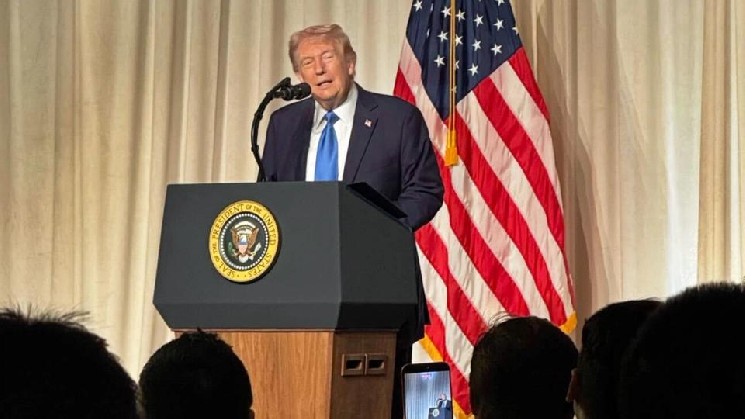
“Trump criticized cryptocurrency in the past, then embraced it during his 2024 campaign and made money from crypto-related ventures.” Trump was once a crypto critic. During the 2024 campaign, he changed course and embraced the industry. His administration has also pushed the federal government in a more crypto friendly direction. In a CNBC interview, he said there was nothing wrong with income from his crypto businesses, said he did nothing illegal, and said he did not know the full extent of his holdings. He also said he gave daily control of his businesses to his two eldest sons before taking office, without divesting. I’ll be honest: that answer does not settle the concern. When a sitting public figure benefits from crypto ventures while ordinary buyers lose money on a related token, transparency stops being a policy buzzword. It becomes the whole question.
“World Liberty Financial, a crypto company tied to Trump and his family, also saw its WLFI token lose ground after trading opened.” World Liberty Financial adds another wrinkle. Trump and his family have had an ownership stake in the company, and its WLFI token followed a different path. WLFI sold at $0.015 in the first ICO round and $0.05 to the public. The tokens could not be transferred until September 1, 2025. When secondary trading opened that day, WLFI started at $0.29 and rose to $0.33. Most guides treat lockups like a neutral mechanics issue. That is only half right. Lockups and staged releases are common in ICOs, but for retail buyers they can turn brutal once trading opens into a weak market.
What this means
“The $TRUMP losses show how early buyers can pull value from late retail demand in speculative crypto markets.” The pattern is familiar. Early buyers get cheap entries. Attention builds. Late buyers rush in. Then the people closest to the exit leave first. That does not make every memecoin a scam, and yes, that is a narrower claim than the angry version of this argument. It does mean the structure often rewards timing more than conviction. $TRUMP fits that pattern plainly: a small early group captured the gains, while a much larger group bought after the easy money was gone. We should say the quiet part plainly: regulators will probably have a harder time ignoring politically linked tokens after this, especially with losses this large and this public.
“Regulators may pay closer attention to politically tied memecoins, while Bitcoin and Ethereum will still set the mood for riskier tokens.” From here, watch SEC and CFTC comments on memecoins, especially tokens tied to political figures. Bitcoin and Ethereum still matter too. Why does this matter? Because if BTC cannot recover major levels, including the $70,000 area, money will probably keep leaving riskier tokens. The next FOMC meeting matters because rate expectations shape how much risk traders are willing to take. On-chain whale activity is worth watching as well. In tokens like $TRUMP, one large wallet can change the mood quickly. Skip the slogans.