
















































Türkiye’s Betting Crackdown: Crypto Wallets Under Fire as Regulatory Pressure Grows
Türkiye has blocked access to 47,493 illegal betting websites since January 1. Now investigators are looking beyond the sites, into the crypto accounts and payment services that may keep them alive. Why does that matter? Because governments elsewhere are also watching digital assets more closely whenever money appears to be bypassing the banking system. Crypto transactions once thought difficult to trace are getting plenty of attention. That era is over.
The figures are blunt: 680 operations and 5,629 suspects detained. Courts ordered 3,231 of them held before trial; another 1,515 remain under judicial control. Cybercrime teams monitor betting sites and social media ads around the clock. Payment systems get the same treatment. They trace bank accounts, electronic money services and cryptoasset accounts suspected of processing wagers or criminal proceeds. Most coverage frames this as a betting crackdown. That is only half right. The investigations may begin with betting, but they rapidly become financial investigations—and crypto is part of the trail.
Several May raids sit inside those national totals. Four operations over eight days led to legal action against more than 670 suspects. In Adana, investigators named cryptocurrency platforms as alleged channels for laundering betting revenue. Then, on June 5, the Istanbul Anatolian Chief Public Prosecutor’s Office identified seven shared crypto wallets outside Türkiye that allegedly received regular transfers from an illegal betting group. Prosecutors put the network’s total transaction activity at $4 billion (TL192.37 billion) and blocked the connected bank and crypto accounts. I’ll be honest: that number changes the scale of the story. Four billion dollars is not a side operation run by a handful of gamblers.
Investigators say a suspect identified as İ.Ö.Ö. coordinated the network. It allegedly made money through illegal betting and pre-arranged match results. Wagers placed through Türkiye’s legal betting system were another source. The proceeds then allegedly passed through currency exchange bureaus and Grand Bazaar jewelers before reaching crypto wallets with unidentified users. The prosecutor’s terrorism financing and money laundering bureau is handling the case with financial intelligence agency MASAK. My read: investigators are tracing each transfer until the names disappear, then reversing through the chain.
The recruitment model was strikingly ordinary. The network allegedly targeted people between 20 and 30 years old who had no regular income, put about $2,080 (TL100,000) into their accounts and used them as betting “pool accounts.” The account holders received a 1% commission. Even the suspect with the lowest volume had about $1.9 million (TL90 million) in account traffic. Authorities detained 80 people across 24 provinces. They also seized 11 companies, 45 vehicles, 16 homes and 11 plots of land worth about $7.3 million (TL350 million). The asset haul is large. Still, the ordinary personal accounts reveal just as much about how the scheme allegedly functioned.
Adana produced a separate case. There, the gendarmerie restrained 4,742 bank accounts and six cryptoasset accounts tied to suspects accused of running illegal betting panels. According to the Interior Ministry, financial intelligence reviews found about $104 million (TL5 billion) in account activity linked to 47 suspects across 23 provinces. Officials also restrained a shell company and 23 homes. The list continued: 29 vehicles and 13 plots of land. Counter to the usual “follow the money” shorthand, authorities are not stopping at the accounts that carried it. Property and businesses are targets too.
The response is accelerating. Istanbul prosecutors estimated that about $35 billion was wagered illegally during the 2022 World Cup and projected roughly $50 billion for the 2026 tournament. They focused on the final, when betting activity was expected to peak. Justice Minister Akın Gürlek said prosecutors identified 6,314 bank accounts used for illegal betting and instructed banks to freeze all of them as the match began. Turkish media reported that an AI-assisted system called AVCI helped map the accounts. Is this merely faster bookkeeping? No. If that report is right, investigators want to stop the money while it is moving instead of spending months reconstructing transactions afterward.
Gürlek said the operation uncovered 19 offshore “finance houses” whose panel systems were connected to illegal betting sites. Judicial proceedings began against 23 suspects. In February, he told prosecutors to “drain the swamp” rather than depend on isolated cases. Chief prosecutors in all 81 provinces were instructed to coordinate investigations and preserve digital evidence. They were also told to restrain assets. Crypto platforms and their users should expect more pressure, particularly around unhosted wallets or activity classed as high risk. My take: crypto anonymity always had limits. These cases simply make those limits impossible to shrug off.
For traders, the immediate concern is closer review of deposits, withdrawals and wallet connections. Platforms may tighten their checks. Approvals may take longer. Some users may leave particular services altogether. But treating every raid as proof that crypto adoption is about to collapse would be a stretch. Most alarmist takes go too far here. The effects will probably be uneven: regulated platforms could attract customers, while privacy-focused services face more obstacles. Loosely supervised payment routes could face them too.
What this means
Türkiye’s campaign shows how much better governments have become at tracing funds they suspect are tied to crime. Crypto wallets are no longer treated as a financial blind spot. The targeting of individual wallets, combined with reports that AVCI mapped connected accounts, indicates that investigators may be linking transfers across banks and digital asset services faster than before. Why care if you are not betting illegally? Because anyone using crypto for privacy or to get around conventional financial channels should plan for closer scrutiny. The net is wider now.
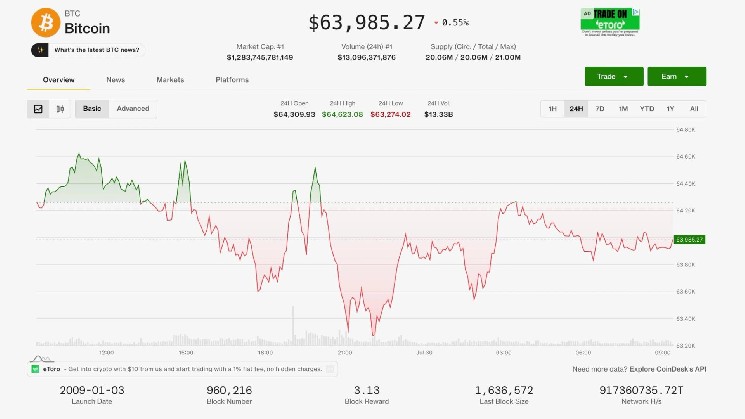
Investors should watch compliance rules, especially know-your-customer and anti-money-laundering requirements. Platforms with mature KYC and AML systems could gain if customers move toward regulated services. The news might cause a short-term BTC decline, with $60,000 becoming a possible support level. That remains a speculative price call. I would not overstate it. Türkiye’s crackdown alone is unlikely to move the wider market unless other countries adopt similar measures or exchanges begin restricting accounts on a much larger scale.
Other jurisdictions may copy Türkiye’s methods, particularly countries where crypto use is high and illegal finance remains a persistent problem. The Financial Action Task Force deserves attention because its recommendations often shape national rules. Reports about AVCI’s accuracy will matter too. Account mapping sounds useful. Yet that is not automatically reassuring: false matches or weak oversight could create serious problems of their own.
Traders can track daily transaction volumes at major exchanges, with particular attention to those operating in emerging markets. A sharp fall in deposits or withdrawals could signal that tougher checks are changing customer behavior. BTC’s 200-day moving average is another useful marker. If the price remains below it, that may indicate broader concern about regulation. Still, one Turkish crackdown would not be enough to confirm it. Not even close.