














































U.S. Sanctions Iran-Linked Crypto Wallets as Tether Freezes $131 Million
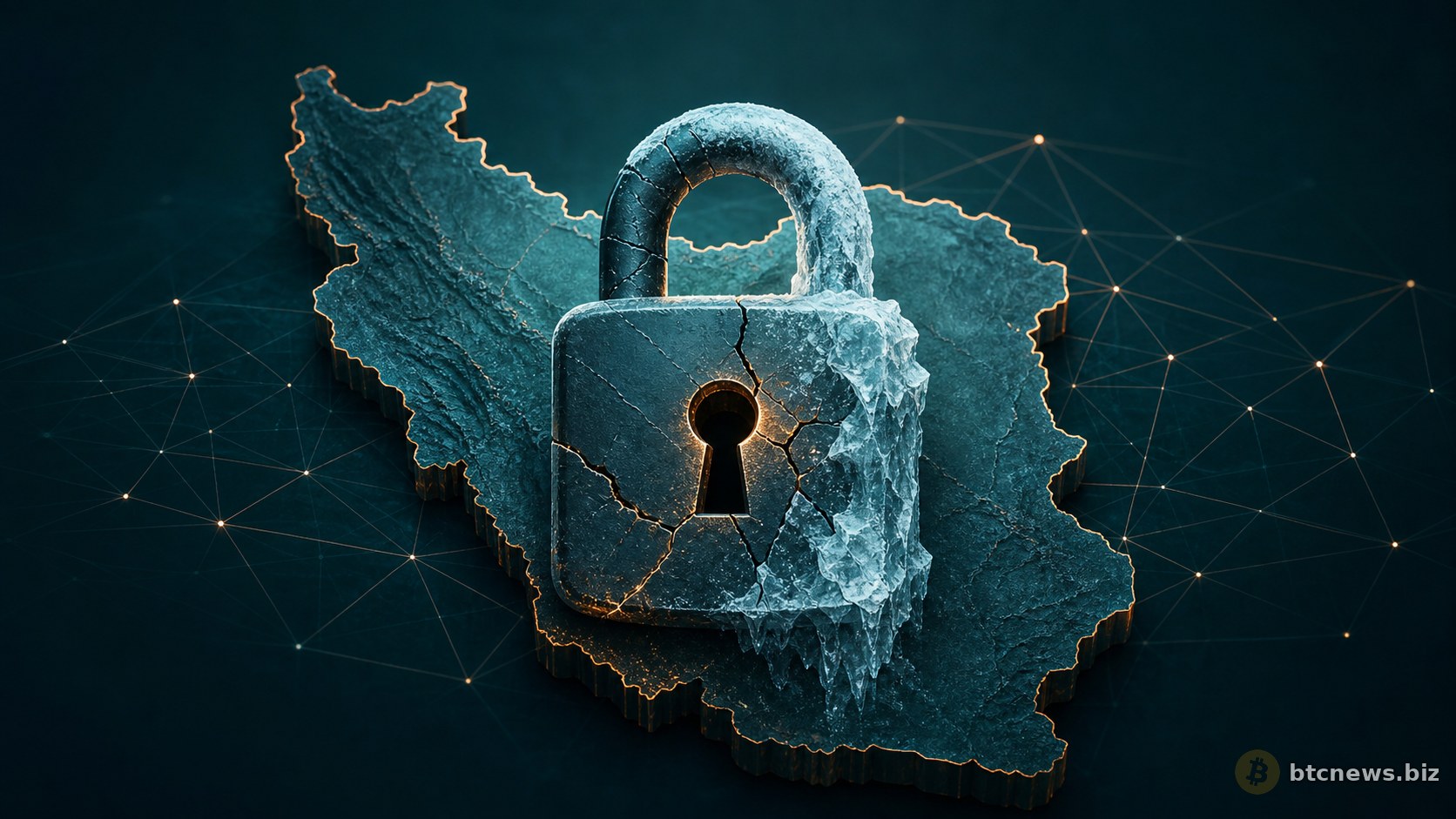
The U.S. has added four crypto wallets linked to the Central Bank of Iran to its sanctions list. Tether then froze $131 million in USDT, according to Chainalysis. The timing matters: a ceasefire agreement collapsed, fighting resumed and geopolitics reached straight into crypto markets. Fast. The episode also leaves digital assets facing an awkward safe-haven question. How safe is an asset when its issuer can shut it off? My take: not as safe as the blockchain rhetoric suggests.
After air and drone strikes resumed, the U.S. Treasury Department’s Office of Foreign Assets Control (OFAC) sanctioned four wallets on the Tron blockchain. Chainalysis said those wallets had received more than $165 million in stablecoins, while Tether blocked $131 million in USDT held in the accounts. Some money had already moved elsewhere. The Central Bank of Iran itself is not a new target; U.S. counterterrorism sanctions have covered it since 2019 because of its support for the Islamic Revolutionary Guard Corps-Qods Force and Hezbollah. What changed? OFAC named specific addresses that exchanges and custodians can screen. That is operationally significant, especially given Elliptic’s estimate that Iran’s central bank accumulated at least $507 million in USDT and used it to support the rial.
OFAC’s action follows June sanctions against Nobitex and other Iranian exchanges accused of helping the central bank move money through stablecoins. The result is more regulatory pressure on crypto. Tether froze $344 million in USDT in April; with the latest action, the total covered by the two reaches about $475 million. Regulators plainly expect stablecoin companies to enforce sanctions, including when tokens sit on a public blockchain. Most crypto slogans imply that an on-chain balance cannot be touched. That’s only half right. The balance can remain visible forever while the issuer makes it unusable after receiving a legal order. It stays put. It cannot move.
That split between the blockchain record and issuer control is easy to overlook when markets are calm. Centralized stablecoins offer deep liquidity. They also have a kill switch. I’ll be honest: neither point cancels the other. Tether’s ability to freeze USDT has been public knowledge for years, so this is not a newly uncovered flaw. Still, $475 million locked across two actions is harder to dismiss than a warning buried in documentation. Some traders may move part of their money into decentralized alternatives. Plenty will stay with USDT because liquidity tends to win in crypto. Counter to the usual advice, the practical choice is not always the ideologically pure one. But counterparty risk deserves more attention than the worn-out claim that nobody can touch assets stored on a blockchain.
The episode complicates the safe-haven case for Bitcoin and other cryptocurrencies during geopolitical turmoil. The current action concerns stablecoins, not BTC, yet governments increasingly treat digital assets as part of the financial system during conflicts. After the January 2020 strike that killed Qasem Soleimani, Bitcoin gained about 4% to 7% within 72 hours as some investors looked beyond traditional markets. That move is often presented as proof that political tension benefits crypto. Not so fast. A 72-hour gain can support the argument without settling it.
USDT supplies much of the liquidity used to buy and sell crypto. If Tether can freeze it to comply with sanctions, a major settlement asset begins to look like a bank account bolted onto a blockchain. The comparison is blunt, but useful. Iran’s central bank appears to have used USDT to support the rial and avoid parts of the conventional banking system; OFAC and Tether then demonstrated where that strategy breaks. Bitcoin may still appeal to people seeking an asset without a central issuer. Centralized stablecoins are different. Yes, that qualifies the safe-haven argument from the previous paragraph—because the distinction matters. USDT may track the dollar, but access depends on a company that must answer to legal authorities. I keep coming back to that point.
What this means
The sanctions and Tether’s freeze give a fairly sharp preview of where stablecoins are heading. Issuers are entering the compliance system already used by banks and payment companies. Here, OFAC named four wallet addresses and Tether stopped the associated funds from moving. Five years ago, crypto supporters might have called that level of control far-fetched. Now two actions alone cover about $475 million. Is that merely symbolic enforcement? No. Funds that cannot move have a very practical problem.
Investors should retire the old “wild west” description. It was never particularly useful, and it fits even less now. Regulators closely monitor centralized crypto companies, with issuers of dollar-backed tokens receiving particular attention. Other stablecoin operators could face the same scrutiny. My take: predictions of an automatic USDT exodus are too neat. USDT might lose trading volume if users decide freezes pose a greater risk, but traders have tolerated years of concerns about Tether because it is available almost everywhere and trades in enormous volume. Watch its market share against USDC or DAI. That evidence will matter more than a burst of anxious social media posts.
OFAC updates warrant close attention because the Treasury Department says its published wallet lists are not exhaustive. Other addresses controlled by the Central Bank of Iran may already qualify as blocked property without being publicly named by OFAC. More addresses may appear. Additional freezes could follow. Each case further weakens the claim that centralized stablecoins resist seizure in the same way Bitcoin does. They don’t.
The conflict in the Middle East matters too. Another escalation could give Bitcoin’s safe-haven reputation a fresh test, particularly now that stablecoin enforcement is impossible to miss. If tensions rise, traders will watch how BTC behaves near major resistance levels. But price alone cannot answer the question. Why not? Because a brief rally might reflect speculation or forced liquidations; ordinary risk taking could produce the same move, and short-term positioning could muddy it further. The better test is whether investors keep treating Bitcoin and issuer-controlled stablecoins as the same kind of refuge. To me, the answer is already clear: they are not.
FAQ
- What action did the U.S. take?
- The U.S. Treasury Department’s Office of Foreign Assets Control sanctioned four crypto wallets on the Tron blockchain that it linked to the Central Bank of Iran.
- How much USDT did Tether freeze?
- Tether froze $131 million in USDT held in the sanctioned accounts, according to Chainalysis.
- Why was the Central Bank of Iran already under U.S. sanctions?
- U.S. counterterrorism sanctions have covered the bank since 2019 because of its support for the Islamic Revolutionary Guard Corps-Qods Force and Hezbollah.
- How much USDT has Iran’s central bank accumulated?
- Elliptic estimates that Iran’s central bank accumulated at least $507 million in USDT.
- What does the action mean for stablecoin issuers?
- Authorities expect issuers to enforce sanctions and follow legal orders. When an issuer has the technical ability, compliance can include freezing tokens held in designated wallets.
- Does this weaken crypto’s “safe-haven” argument?
- It weakens the argument for centralized stablecoins because their issuers can freeze them. Bitcoin has no equivalent issuer, so authorities cannot apply the same enforcement method directly to BTC.
- How much USDT has Tether frozen in the actions discussed here?
- The $344 million frozen in April and the latest $131 million add up to roughly $475 million. That figure shows the scale of Tether’s enforcement in these actions; it is not necessarily a permanent total across all accounts.
- What should traders watch next?
- Traders should watch for more OFAC wallet designations and further escalation in the Middle East. Shifts in USDT’s market share against stablecoins such as USDC and DAI will matter as well.