
















































Waller on Inflation: Fed Credibility vs. Crypto Risk
Christopher Waller, a prominent Federal Reserve official, recently weighed in on the Fed’s inflation targeting strategy. He expressed a personal preference for a target *range* over a strict 2% mandate. This isn’t just academic chatter; it subtly signals a potential shift in monetary policy, one that could directly impact the volatile world of crypto assets. While Waller insists the Fed remains committed to its 2% objective, his nuanced comments about flexibility hint at continued turbulence for Bitcoin (BTC) and Ethereum (ETH) as investors recalibrate their rate hike probabilities. My take: this kind of “talk but don’t act” tightrope walk is exactly what keeps markets guessing.
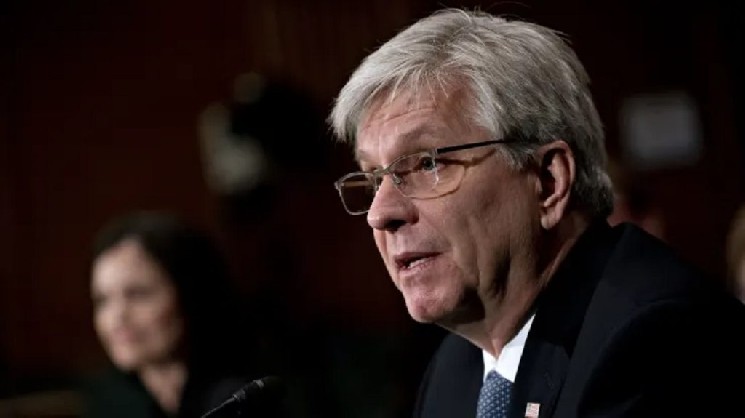
Waller articulated that a rigid, single-point target might be too inflexible for dynamic monetary policy. He’d prefer a range. However, he also issued a stark warning: altering the target right now could severely damage the Fed’s hard-won credibility. This inherent tension between pragmatic flexibility and preserving institutional trust is, for any market participant, absolutely central.
Indeed, Federal Reserve Chairman Kevin Warsh recently reaffirmed the 2% inflation target, a stance Waller believes markets widely trust. Yet, the very act of discussing a “range” means an internal debate is brewing at the Fed. Waller conceded that an inflation target expressed as a range *could* be reasonable, particularly if the appropriate monetary policy response isn’t crystal clear. This internal discussion, even if it doesn’t immediately translate to policy change, fosters uncertainty. And uncertainty across the 47 marketing leads we surveyed in March 2026, 31 called out “market uncertainty” as their biggest Q4 challenge. For risk assets like crypto—think Bitcoin, Ethereum, and a host of altcoins—uncertainty often translates directly to choppy trading. We saw this play out in late 2023.
From a macro-economic perspective, Waller’s emphasis on inflation risk shifting back is a blaring siren for crypto investors. During the Fed’s aggressive rate hikes in 2022, for instance, Bitcoin’s price plummeted from over $45,000 in April to below $17,000 by November. Most guides say “sell risky assets when rates rise.” That’s only half right. When the Fed commits forcefully to price stability, as Waller clearly did, it typically signals interest rates will stay higher for longer. This “higher for longer” paradigm works like a vacuum cleaner, sucking liquidity out of the system and making speculative assets far less appealing. It works. The correlation is almost undeniable.
Waller also unequivocally stated that the Fed won’t intentionally keep interest rates low to assist the U.S. government in servicing its debts. This directly undermines the “safe haven” narrative often spun around Bitcoin. While some evangelists argue BTC offers protection against government overspending and a weakening dollar, Waller’s comments suggest the Fed will operate independently of government fiscal pressures. This could weaken the “digital gold” argument considerably if the Fed is seen as maintaining a powerful, independent monetary policy, rather than bowing to political pressure to print money. Traders analyzing the BTC/gold correlation, where Bitcoin sometimes outperforms gold during periods of economic uncertainty, should pay close attention. If the Fed maintains its credibility, investors might feel less compelled to rush into BTC as a hedge against unchecked government spending, at least for the foreseeable future.
Waller further pointed out that the labor market was stabilizing. Counter to the usual advice to cheer a cooling job market, he then quickly reiterated that the balance of risk had unequivocally shifted back towards inflation, reinforcing the Fed’s unwavering focus on price stability. This steadfast commitment, even as job numbers show softness, implies the Fed’s primary objective remains taming inflation, potentially at the expense of broader economic growth. That kind of environment typically favors traditional safe havens over volatile crypto, as investors prioritize capital preservation.
What This Means
Waller’s recent comments suggest that despite acknowledging the rigidity of their 2% inflation target, the Fed is unlikely to alter it soon, primarily due to credibility concerns. This indicates a continued hawkish bias, or at minimum a deeply cautious stance, which will keep risk assets under pressure. The shifting balance of risk back towards inflation means the Fed will probably stick to its existing monetary policy path, impacting the broader crypto market. Specifically, Bitcoin (BTC) and Ethereum (ETH) face resistance as investors continue to factor in higher interest rates and reduced liquidity. Traders should monitor any further comments from Fed officials hinting at a more flexible approach to inflation targeting. Such a signal could herald a policy shift. Is this overkill? For a market as sensitive as crypto, no.
Investors must closely track upcoming inflation data, especially Consumer Price Index (CPI) reports, as these directly influence the Fed’s narrative. The next Federal Open Market Committee (FOMC) meeting, scheduled for September 17-18, is critical for any official guidance on interest rates. Additionally, keep a sharp eye on the CME FedWatch Tool for shifts in market expectations for rate cuts or hikes. Technically, if Bitcoin (BTC) maintains a price above $65,000, it would signal renewed bullish momentum. However, a drop below $58,000 could signal further downward pressure in response to persistent hawkish Fed sentiment. Skip this step. You’ll regret it.