















































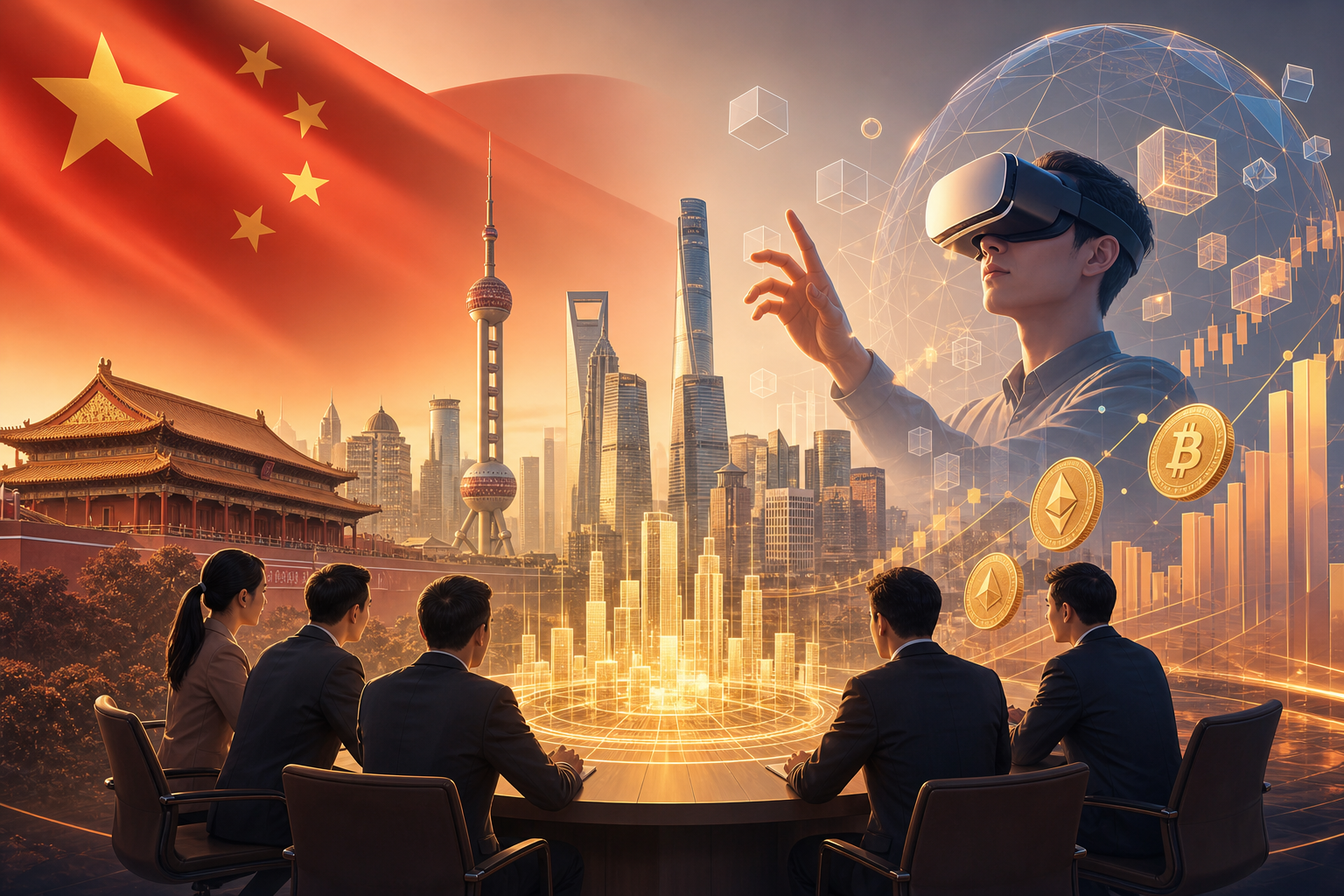
5 Innovative Metaverse Varieties Shaping Our Futuristic Digital Landscape
As is typical with any trend, the metaverse is undergoing differentiation as it branches out into various metaverse experience types, each with its own utility and use cases.
Metaverses based on Augmented Reality (AR), Mixed Reality (MR), and Virtual Reality (VR) have already emerged as catalysts for transformation in a range of industries and interactive experiences.
Continual advancements in metaverse technologies are driving sectors to explore new realms of possibilities for development.
The metaverse, a versatile social environment, is dynamically evolving and teaching society how to interact, work, and relax in the virtual world. It offers a variety of styles, from fully immersive virtual reality to enhancing physical reality.
1. Virtual Reality (VR) Metaverse: Unlocking Access to Digital Worlds
Among the metaverse types, the Virtual Reality (VR) Metaverse offers users a unique experience – the ability to step inside a digital world. By utilizing VR headsets and haptic devices, individuals can move, interact, and engage with simulated environments as if they were real.
2. Augmented Reality (AR) Metaverse: Bridging the Gap between Digital and Physical Realms
The Augmented Reality Metaverse blends virtual and real-life worlds into a seamless experience. AR enhances real-world situations by integrating digital information and objects. It has found applications in areas such as retail, where people can visualize how specific attire would look on them or how furniture would appear in a particular room. The AR Metaverse also holds promise for navigation, education, and industrial settings where real and virtual environments converge.
3. Mixed Reality (MR) Metaverse: Combining the Best of VR and AR
The Mixed Reality (MR) Metaverse represents a remarkable fusion of VR and AR, offering users the best of both worlds. These metaverse applications stand out by seamlessly allowing virtual objects to interact with the physical world in real time. MR has made significant strides in areas like architecture and design, enabling professionals to virtually place models in real-life spaces, completely revolutionizing their work processes.
4. Social Metaverse: Redefining Human Interaction in the Digital Era
The Social Metaverse constitutes a groundbreaking leap in the way people interact online, offering avatar users a new and immersive way of connecting beyond the constraints of traditional social media platforms. In these immersive spaces, individuals can attend virtual events, collaborate on projects, and experience interactions that almost feel real.
5. Gaming Metaverse: An Arena for Digital Adventures
The gaming metaverse takes gaming to unprecedented heights, offering players an extraordinary simulation of games and reality. Rather than confining gameplay to isolated worlds that lack social interaction or promoting excessive interaction, these metaverses explore the intersection of gaming and other activities such as work, communication, and trade. The integration of blockchain and NFTs has further fueled the emergence of a new economic landscape within gaming metaverses.
Overall, these five revolutionary metaverse types are reshaping our digital future, paving the way for immersive experiences, innovative collaborations, and unprecedented opportunities for growth.