















































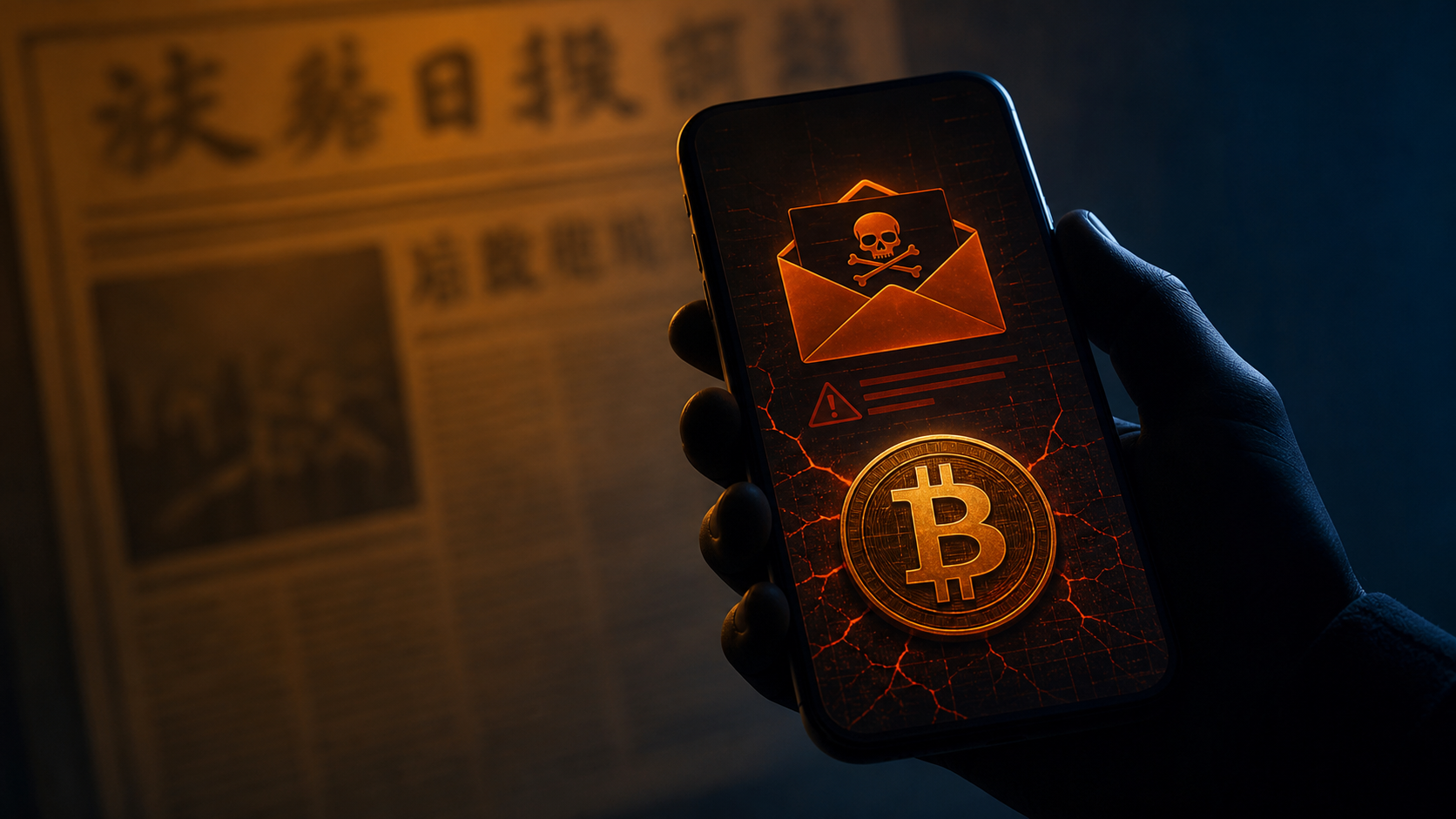
Chinese Newspaper Warns of Bitcoin Extortion Scam Using Its Name
A Chinese newspaper is warning readers that scammers are using its name in an extortion scheme. The messages threaten public exposure unless the recipient pays in Bitcoin. Why borrow a newspaper’s identity? Because a recognized outlet carries more weight than a random email account. My take: that borrowed authority is the whole trick. This is more targeted than generic phishing—cybercriminals are impersonating a real brand and going specifically after crypto holders.
How the scam works
Criminals email you while posing as the newspaper. They may accuse you of visiting illegal sites or downloading pirated content. Other fabricated crimes can appear too. Then comes the demand: pay Bitcoin—usually a small amount designed to prompt a quick decision—within hours or days. Pay up, they say, or they’ll publish their “evidence” or contact police. It’s blunt. The newspaper’s name is what gives the threat just enough credibility to cause panic.
Most phishing advice focuses on suspicious links. That’s only half right. Here, shame and fear of legal trouble do much of the work. Scammers combine real personal details with invented claims so the message feels specific rather than random. I’ll be honest: that mix can look convincing at first glance. The key difference from older phishing attempts is precision—not merely guessing, but using a real brand to manufacture authority. The newspaper confirmed it has no involvement. It told recipients to delete the messages and report them to police.
Why this matters for crypto investors
Crypto traders hold real money that can move instantly and can’t be reversed. That makes you a prime target, particularly when the threat arrives under a trusted name. Even experienced traders can pause when a message looks official. Losing the funds is bad. The psychological hit can be worse.
These scams damage the wider crypto space in several distinct ways. New investors may walk away entirely. Regulators gain more ammunition for the argument that crypto is too risky. Traders who recognize brand impersonation, meanwhile, can react faster. Counter to the usual advice, technical experience alone won’t protect you; the pressure is emotional. And because China has a large crypto trader population, the campaign could be reaching thousands of people worldwide—not merely victims in one region.
How the scam targets you
Scammers obtain email addresses from data breaches or scrape them from public sources. Then they add recognizable details: your name, a past address, perhaps a fragment pulled from social media. The message arrives under the newspaper’s identity and accuses you of criminal activity. We’ve all seen generic spam; this is more deliberate.
Next comes a concrete deadline: send Bitcoin to a specified wallet address within 24 hours, or the supposed evidence goes public—or to police. Why 24 hours? Because the shorter the window, the less time you have to think clearly or ask someone else for perspective. Shame discourages that second opinion. Some scammers even explain how to buy Bitcoin when the recipient doesn’t know how. Without the newspaper’s name, it’s another phishing email. Add the name, and suddenly it feels real.
Red flags to watch for
An unsolicited message demanding Bitcoin is enough reason to stop. Full stop. Legitimate organizations—whether news outlets or police—don’t demand cryptocurrency as payment for alleged crimes. I’d treat the payment demand itself as the first decisive red flag.
Threats backed by no actual proof are another giveaway. Scammers rely on fear and shame, not evidence. Check the sender’s full email address. A message claiming to represent the newspaper while coming from Gmail or a random domain is fake; real organizations use official email addresses. Most guides tell you to judge the logo and formatting. Don’t. Those are easy to copy.
Extreme urgency is meant to block reflection and discourage questions. Watch for requests involving personal information you haven’t shared. Treat software-download links with the same suspicion. If a message looks dubious, don’t reply and don’t click anything inside it. Instead, reach the organization’s official website through a search engine or your own saved records. Never use the link supplied in the suspicious email itself. Simple beats clever.
How to protect yourself
Don’t reply. Don’t click the links. Don’t pay. Delete the message and report it to your email provider. If you’re concerned, report it to local police as well. My view: involving another person before acting is often more useful than trying to outsmart the scam alone.
Longer-term protection is less dramatic but effective. Use a strong, unique password for every account, and turn on two-factor authentication. Keep software updated. Limit what you share on social media, because scammers harvest those personal details to make an invented threat feel tailored and real. Is that overcautious? Not when one old address can make a fake accusation seem credible.
Learn the mechanics behind phishing and social engineering. Understand spoofing too. That knowledge makes you harder to fool. A separate email address for crypto accounts can reduce exposure to broad phishing campaigns. Yes, that sounds like a small administrative nuisance. It still helps. If you’ve been targeted, report the attempt to police and relevant cybersecurity agencies so law enforcement can track recurring patterns.
The fallout from impersonation
When scammers borrow a real news outlet’s name, they weaken trust in both the outlet and email itself. People begin doubting everything. Legitimate organizations then struggle to communicate because recipients no longer know what to believe. For crypto, the effect is broader: it reinforces the narrative that the space is risky or filled with criminals. That can obstruct mainstream adoption. It may also trigger stricter regulation.
The impersonated brand pays too. It has to spend money issuing warnings and supporting investigations; repair work follows. These schemes also ignore borders: a scammer in one country can use a brand from another to target victims worldwide. As the tactics change, law enforcement and security companies must keep pace. Otherwise, they get left behind. That’s the uncomfortable part.
FAQ
What should I do if I receive a Bitcoin extortion email claiming to be from a Chinese newspaper?
Don’t reply, don’t click links, and don’t pay. Delete the message. Then report it to your email provider and local police.
How can I verify if a scam warning is legitimate?
Visit the organization’s official website and check its own announcements or press releases. Don’t rely on forwarded messages. Secondhand reports aren’t verification.
Are these scams common in crypto?
Yes. Crypto transfers can’t be reversed, making them irresistible to scammers. Staying alert remains your best defense.
What information do scammers usually have?
They may use public data or information exposed in old data breaches. Sometimes they use complete fiction. Rarely do they possess anything genuinely damaging; they’re betting that you’ll panic before checking.
Should I report these scams to law enforcement?
Yes. Report the attempt to local police and relevant national cybersecurity bodies. Those reports help authorities identify patterns and track down the criminals.
By the WebCoreLab team – running SEO and GEO as one system since 2001