















































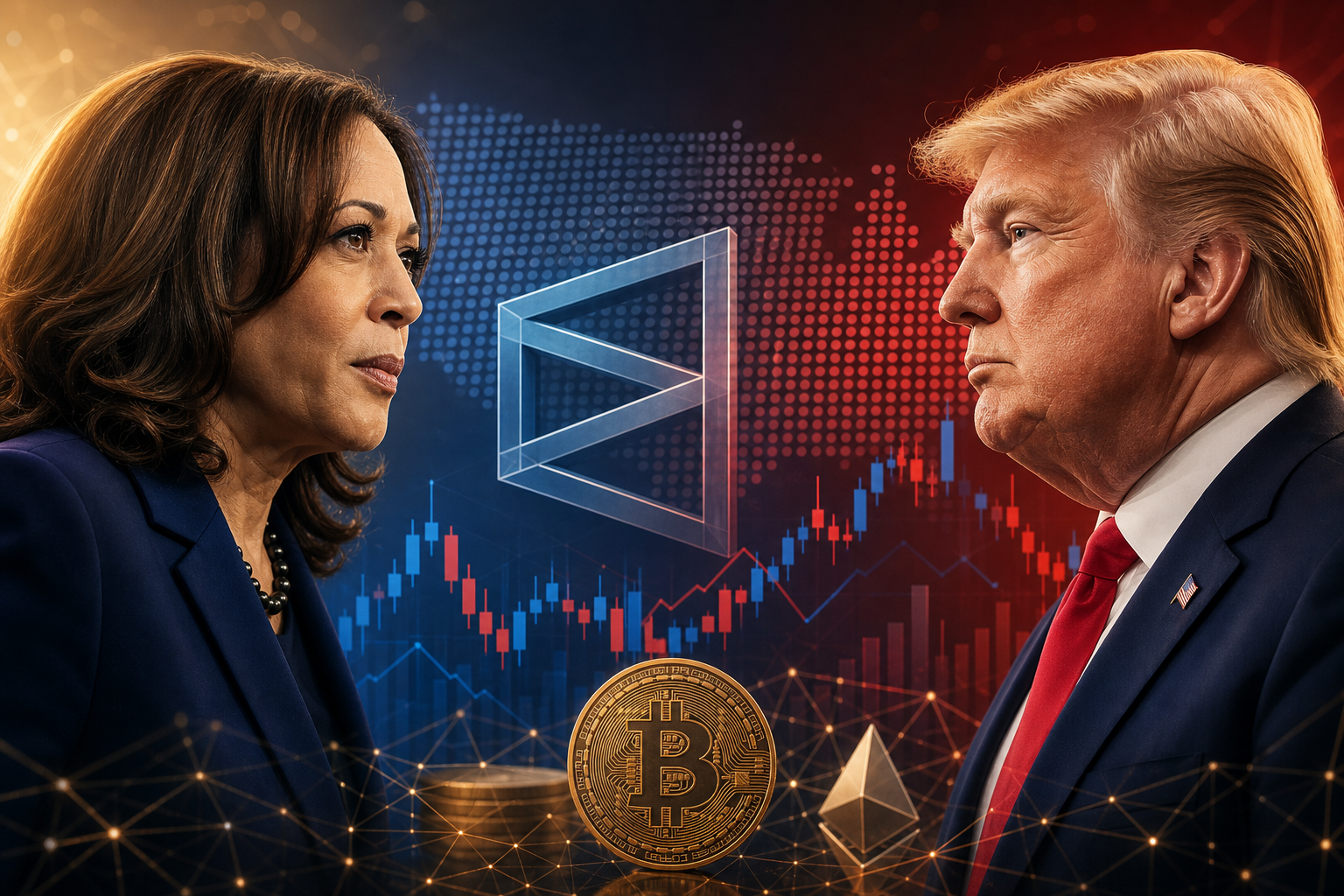
Harris vs. Trump: Polymarket Reveals a Tightly Contested Election Battle
A recent analysis of data from Polymarket, a blockchain-based prediction platform, has unveiled a closely contested race between Kamala Harris and Donald Trump. The current statistics show Harris holding a slight lead with a 50% probability, only 1% ahead of Trump at 49%. This indicates a high level of competition and suggests that the outcome is far from certain.
Polymarket operates as a prediction market platform, allowing users to place bets on various events, including political races. Its data often provides insights into public expectations and market movements. With both candidates having an almost equal chance of victory, the race remains highly unpredictable.
The significant amount of money wagered on this election through Polymarket, totaling approximately $723,677,180, underscores the importance of the election and the increasing role of cryptocurrency in political betting. It reflects global interest in the U.S. Presidential race and highlights the growing prominence of cryptocurrency in the mainstream.
Interestingly, despite Harris’s slight lead in probability, more bets have been placed on Trump. Specifically, $89.88 million has been wagered on Trump, compared to $82.88 million on Harris. This suggests that many bettors view Trump as a promising bet and potentially expect a shift in his favor as the election day draws closer.
One major factor that has attracted voters to Harris is her balanced stance on crypto regulation. She acknowledges the importance of innovation in fintech, including blockchain and cryptocurrency, while emphasizing the need for proper regulation to prevent misuse. This approach has resonated with voters who are interested in the future of digital finance and see cryptocurrency as a crucial part of the evolving financial landscape. Consequently, Harris has gained support from both progressive and moderate voters who believe in harnessing the potential of cryptocurrencies while ensuring consumer protection and economic stability.