















































Vitalik Buterin Ethereum roadmap update: a 3-4 year bet on cheaper DeFi and NFTs
Vitalik Buterin published an updated Ethereum development roadmap with a 3-4 year rebuild plan. Big claim. The basic pitch is not hard to follow: Ethereum can get cheaper and faster while keeping the parts people still come for, especially liquidity and settlement. Developers matter too. My take: DeFi and NFTs would feel it before almost anyone else.
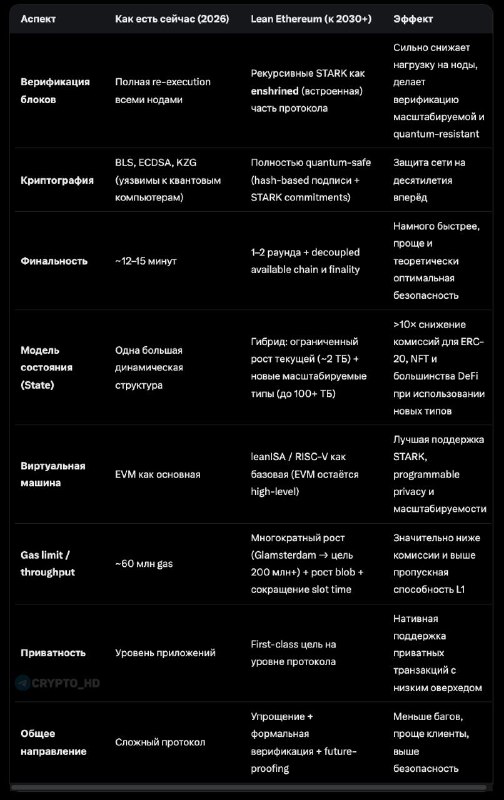
The plan is called “Lean Ethereum.” The main change sits at block verification. Instead of making nodes fully reprocess every transaction, Ethereum would bring recursive STARKs into the protocol. Most roadmap summaries will call that a scaling upgrade. That is only half right. It is also a bet that zero knowledge proof machinery should move closer to Ethereum itself, not stay parked around the edges. StarkWare helped prove this kind of zero knowledge tech in production with Starknet, though Starknet itself is not part of the roadmap.
There is a security angle too, and it is easy to underplay. The roadmap moves the network toward quantum resistant cryptography. That sounds remote until it suddenly does not. New state types are also planned, with projected fee cuts of more than 10x for ERC-20 tokens, NFTs, and most DeFi apps. Why does this matter? Because a swap that feels absurd at $12 can feel ordinary at $1. A mint killed by gas costs can start looking rational again.
The roadmap also describes a gradual move away from the current Ethereum Virtual Machine toward RISC-V or leanISA as the base virtual machine. Translation: Ethereum wants a cleaner execution layer with less baggage. I’ll be honest: this is the part casual traders may skip, but it could shape what builders can actually ship. Privacy also moves up the stack, from app-level add-on to protocol-level concern. Institutions care about that. Regular users do too, even if they never say it in those words.
Consensus would become simpler and faster. The roadmap separates availability from finality and cuts block finality to 1-2 rounds. That is not cosmetic. For traders working with latency or tight execution windows, 1-2 rounds changes how settlement risk feels. Over the next 5 years, Ethereum throughput is expected to increase several times over. The nearer checkpoint is Glamsterdam, scheduled for the second half of 2026, and that update is supposed to raise the gas limit from about 60 million to 200 million. Counter to the usual advice, this is not just something developers should watch. Ethereum has spent years losing users to cheaper Layer 1s and Layer 2s because basic activity got expensive. A 200 million gas limit would not fix every complaint, but it would be hard to dismiss.
The recursive STARK work is also a clear vote for zero knowledge proof technology. Ethereum is not leaving ZK scaling entirely to outside Layer 2 teams. It wants some of that machinery inside the protocol. Is this overkill? For a 50-page site, yes. For a global settlement network, no. Starknet is not directly involved, but Ethereum adopting technology pioneered by StarkWare still gives the wider ZK stack more credibility. That does not mean every ZK token wins. It means the category gets a stronger technical signal.
Markets usually need time to price protocol changes like this. A regulatory headline can move a token in an afternoon. Infrastructure work drags. Developers need time to build around it, and users need time to notice. The SEC’s pressure around staking showed how outside forces can hit specific protocols fast. This roadmap is different. It asks whether Ethereum can make the base network useful enough that high fees stop feeling like a permanent tax.
The 10x fee reduction target is the part I keep coming back to. Gas fees pushed out retail users, smaller NFT traders, and institutions that do not want settlement costs jumping around. If Ethereum delivers, the NFT market could get another look after the 2022-2023 collapse. DeFi would benefit too, because complex strategies are easier to run when each adjustment is not swallowed by transaction costs. More activity could bring capital back into Ethereum DeFi. It could lift TVL. It could help tokens tied to those protocols. Yes, that sounds like the bull case because it is. Ethereum still has to execute.
There is history behind the market angle. Ahead of The Merge in September 2022, ETH gained about 15% in the month before the event, despite a rough macro backdrop. That does not mean this roadmap sets up the same trade. I would not make that leap. It does mean Ethereum upgrades can matter before they ship, especially when traders believe the change will affect usage.
What this means
Buterin’s updated Ethereum roadmap points to a cheaper, more capable base layer. The recursive STARK work and fee reduction targets answer two old complaints about Ethereum: it is too expensive, and it does not scale cleanly enough for normal users. If the plan works, Ethereum has a better chance of pulling activity back from alternative Layer 1s that grew while Ethereum fees were painful. Simple as that.
Investors should watch developer activity on Ethereum, especially around ZK-rollups and DeFi apps built for lower fees. ETH could benefit if the network becomes easier to use, since more activity usually means more demand for the native token. Layer 2s are messier. Some may lose part of their pitch if the base layer gets stronger. Others, especially ZK focused teams, may end up with better alignment and more demand. My view: the split between those two groups matters more than the headline “Layer 2s win or lose.”
The next hard checkpoint is Glamsterdam in the second half of 2026. The gas limit increase to 200 million will be the first obvious test of whether this scaling plan is moving from roadmap talk into real network capacity. Traders should also watch the ETH/BTC ratio for signs of capital rotating back toward Ethereum, especially if risk assets improve. Ethereum DeFi TVL matters too. If TVL climbs after fee cuts become more concrete, that would suggest users and capital are actually returning.
For ETH itself, the 200-day moving average around $3,200 is still worth watching for renewed bullish momentum. The bigger trigger would be a dated implementation plan for the 10x fee reduction. Would that really move markets quickly? It could, because ERC-20 tokens, NFT infrastructure, and DeFi names become easier to model once the roadmap stops being a concept and starts getting dates.