
















































Vitalik Buterin’s Railgun ETH Transfer Stirs Privacy and Market Debate
Ethereum co-founder Vitalik Buterin moved 79 ETH, worth about $137k, into Railgun, a privacy protocol. Arkham flagged the transaction, and crypto Twitter did what crypto Twitter always does: it turned one wallet move into a market read. My take: the dollar amount is the least interesting part here. People were not really arguing over the $137k. They were arguing over whether privacy still belongs in crypto when regulators keep pushing the industry toward cleaner, more visible payment rails.
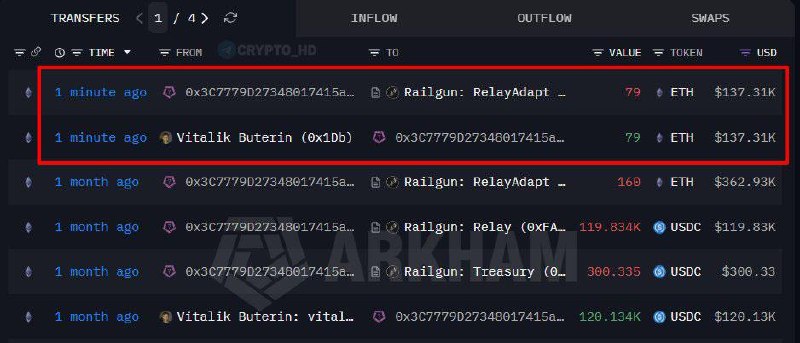
The transfer itself, 79 ETH ($137k) to Railgun, is tiny compared with Ethereum’s daily volume. Tiny. Still, people watch Buterin’s wallet almost like a public company insider filing. Similar moves have rattled Twitter before, with some users assuming he was selling ETH after years of talking about long term holding. That was usually a bad read. Counter to the usual panic read, Railgun’s role matters more than the size of the transfer: it lets users make private transactions across blockchains, so the destination says more than the number.
The reaction says more than the transaction. Privacy tools are in an awkward spot right now. Regulators, including the SEC and CFTC, have spent years scrutinizing mixers and privacy systems because of money laundering concerns. Tornado Cash is the obvious example. Sanctions and developer arrests turned a technical tool into a political fight. So when Buterin uses Railgun, even for an ordinary personal transfer, people read it as a signal. Are they reading too much into it? Probably. But the signal is still there. It can also feed the idea that privacy tools are suspicious by default, which is a bad frame for anyone building DeFi products that need user protection, usable compliance paths, and some tolerance from regulators. That tension matters more now that institutions are moving into crypto through regulated products like spot Bitcoin ETFs, where transparency is part of the pitch.
There is also the safe haven angle, though it is easy to overstate. I’ll be honest: calling a 79 ETH transfer a grand macro statement feels silly. But demand for privacy usually comes from a simple instinct: people do not want every wallet move tracked forever by governments, companies, analysts, rivals, or strangers with too much time. In rough markets or unstable political periods, that instinct gets stronger. Bitcoin is often pitched as digital gold, a hedge outside the traditional system. Protocols like Railgun offer something narrower: less exposure. Not perfect secrecy. Just less of your financial life sitting in public.
Most guides frame this as privacy versus compliance. That’s only half right. The harder question is whether crypto can give normal users basic financial discretion without creating tools regulators see as enforcement headaches. Why does this matter? Because the same public-chain transparency that helps analysts catch scams also makes ordinary users unusually exposed. This one transaction will not move ETH’s price, but it does point back to crypto’s old fight over freedom, privacy, compliance, surveillance, and visibility. Traders should watch whether other well known wallets start using privacy protocols too. One transfer is noise. A pattern would be harder to dismiss.
What this means
Buterin’s transfer looks like a quiet nod to privacy tools, not a market moving event. ETH is not going to reprice because of 79 ETH. Still, his choices get copied, debated, and overread. I would not treat that as price analysis, but I would treat it as attention risk for Railgun and similar protocols. The bigger story is familiar: crypto talks about decentralization and privacy, while regulators ask for traceability, clean audit trails, and systems they can explain in court.
Investors should watch for official comments or enforcement moves around privacy protocols after this kind of high profile use. Is this overkill for one wallet alert? For price action, yes. For regulatory positioning, no. The legal status of privacy technology still matters for DeFi, privacy coins, wallets, and apps that want mainstream users without turning every transaction into a public receipt. Railgun’s usage is worth tracking too. If volume and active users rise for more than a short Twitter cycle, that would say more than the Buterin transfer itself. The next real catalyst is not a wallet alert. It is a regulatory hearing, policy statement, or court development that directly touches digital asset privacy.