
















































Bitcoin Capitulation Final Phase: CryptoQuant Signals Possible Bottom
Bitcoin capitulation is the ugly part of a selloff. Buyers who came in higher finally stop pretending and sell at a loss. My take: it often shows up near market bottoms, but treating it like a clean buy signal is how traders get hurt.
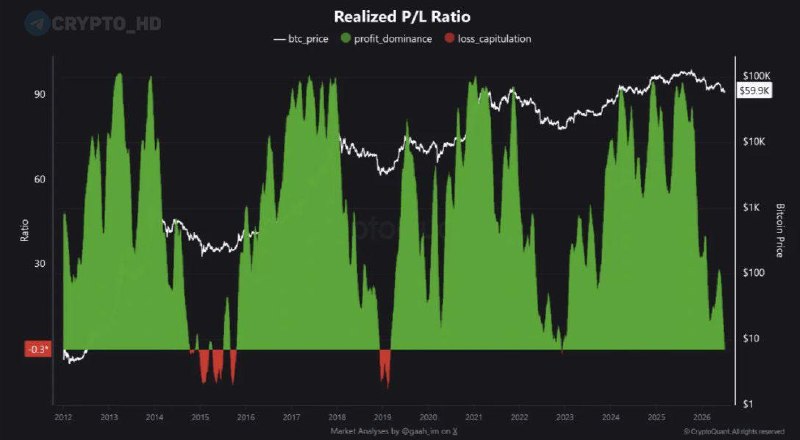
CryptoQuant data suggests Bitcoin may be close to the last stretch of capitulation. The Realized P/L Ratio has dropped to -0.35, its weakest reading in 43 months. That is not a casual dip on a dashboard. Readings this low have appeared near BTC bottoms before, which explains the attention.
The Realized P/L Ratio compares realized profits with realized losses, adjusted against Bitcoin’s total supply.
CryptoQuant says the ratio is now at a level last seen in early 2021. In plain English, holders are selling into pain, and the selling is broad enough to make the chart look bad. That is capitulation. Short version: damage is already visible. The -0.35 reading does not guarantee a bottom. Counter to the usual advice, though, a weak realized-loss print can still be useful even before price confirms it.
Interest rates and inflation still matter because Bitcoin tends to trade like a risk asset when markets get jumpy.
This signal is landing in a hard macro backdrop. The Federal Reserve has stayed tough on rates, while inflation worries are still hanging around. Investors have less patience for volatile assets in that kind of setup. BTC gets hit with the same broad risk-off trade. We have seen this movie before, at least in outline. In March 2020, during the COVID-19 crash, Bitcoin briefly dropped below $4,000 before ripping higher. Is this the same thing? No. This move is less dramatic, but the sequence is familiar: leverage gets cleared out, nervous holders sell, then the market starts hunting for a floor. Analysts still track the BTC and S&P 500 relationship because many institutions trade Bitcoin inside the broader risk bucket.
Institutional adoption means larger financial firms are getting Bitcoin exposure, usually through regulated products.
The ETF story changes the setup. U.S. spot Bitcoin ETFs launched in January 2024, giving institutions a cleaner way to buy BTC without managing wallets or custody themselves. Flows have been uneven. Some days have brought heavy outflows. Still, the market now has buyers who can step in through normal brokerage channels when prices fall. That was not true in the same way during older capitulation cycles. I’ll be honest: I would not call this a permanent floor. But it probably affects how quickly dips get bought. MicroStrategy’s earlier BTC buying also showed how visible large buyers can shift sentiment, especially when they buy into weakness.
What this means
A CryptoQuant signal is an on-chain data point from the CryptoQuant platform, usually tied to investor behavior or market stress.
CryptoQuant’s signal points to a downtrend that may be running short on forced sellers. The Realized P/L Ratio at -0.35 means holders have already taken losses in a visible way. In past cycles, that has often happened before a market bottom. Often, not always. Yes, that slightly contradicts the bullish read above. Good. It should. Markets can stay messy longer than anyone wants, and capitulation can bleed sideways before it turns. For short-term traders, this could mean sharp moves while BTC tests support. For longer-term buyers, it adds weight to a gradual accumulation plan, especially for people who already intended to hold BTC through the cycle.
Next, watch the FOMC meeting minutes for any shift in the Fed’s tone on rates. Why does this matter? Because rate language can change risk appetite fast. ETF flows matter as well. A few steady days of positive spot BTC ETF inflows would show institutions buying the dip instead of waiting it out. On the chart, I would keep the $58,000 to $60,000 area in view. A bounce and hold above that zone would help the bottoming case. Losing it would leave room for more downside, even with the capitulation signal flashing. Skip the victory lap.
FAQ
- What is Bitcoin capitulation?
- Bitcoin capitulation is a period when holders sell BTC at a loss because fear, exhaustion, or margin pressure finally takes over. It often shows up near market bottoms.
- How is the Realized P/L Ratio calculated?
- The Realized P/L Ratio compares realized profits with realized losses, then relates that figure to Bitcoin’s total supply. It shows whether holders are mostly selling in profit or taking pain.
- What does a Realized P/L Ratio of -0.35 mean?
- A -0.35 reading means a large part of the market is realizing losses. In past cycles, levels this weak have often appeared near capitulation zones.
- How do macroeconomic factors affect Bitcoin capitulation?
- Higher interest rates and stubborn inflation can pressure risk assets. When investors cut exposure, Bitcoin usually feels it fast.
- What role do spot BTC ETFs play in market dynamics?
- Spot BTC ETFs give institutions a regulated way to buy Bitcoin. That can add liquidity and may bring in buyers during steep pullbacks.
- Does a capitulation signal guarantee an immediate market reversal?
- No. Capitulation can mean selling pressure is fading, but BTC can still chop sideways or fall further before a real reversal begins.
- What indicators should traders watch after a capitulation signal?
- Watch the FOMC minutes, daily spot BTC ETF flows, plus the $58,000 to $60,000 BTC range.
- Is institutional adoption a new factor in Bitcoin capitulation cycles?
- Yes. ETFs and other regulated products give large investors easier access than they had in earlier cycles. That may affect how quickly Bitcoin recovers after selloffs.
- Why does the 43-month gap matter for the -0.35 Realized P/L Ratio?
- It means this level is rare. The market has not shown this much realized-loss pressure in more than three and a half years.
- How is the Realized P/L Ratio different from other market indicators?
- Price indicators show where BTC is trading. The Realized P/L Ratio shows whether investors are actually selling at a profit or a loss, which gives a closer look at market stress.