
















































Michael Saylor: Bitcoin Offers Hope, Economic Opportunity for All
Michael Saylor says Bitcoin offers hope and economic opportunity to everyone. That is still the line he circles back to. Saylor, one of Bitcoin’s most visible corporate backers, recently repeated his view that Bitcoin is not just a trade. My take: he is really arguing that Bitcoin is an exit from a financial system many ordinary people no longer trust. You may buy that. You may not. But the argument lands differently now that spot Bitcoin ETFs and public companies are buying Bitcoin instead of arguing about it from the sidelines.
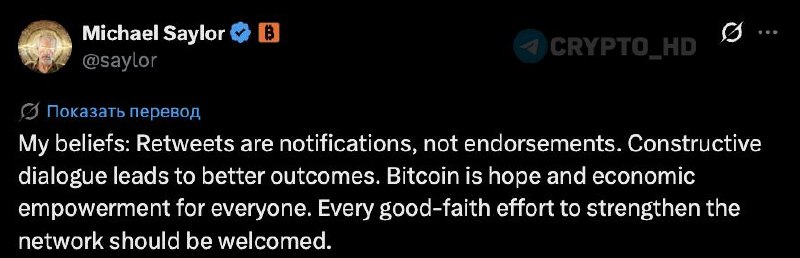
According to Michael Saylor, “Bitcoin is hope and economic opportunity for everyone. Any good faith efforts to strengthen the Bitcoin network should be welcomed.” Short quote. Big signal. Saylor does not usually toss out language like this by accident, and MicroStrategy has spent years making Bitcoin the center of its treasury strategy. So when he talks about strengthening the network, investors hear more than a slogan. They hear the same bet he has backed with real money. A lot of it. Why does this matter? Because his comments arrive while the crypto market is tracking rate expectations, ETF flows, and another wave of institutional interest. The timing is hard to ignore.
MicroStrategy’s Bitcoin holdings show how far corporate adoption has moved beyond theory. This is where the adoption signal stops being abstract. MicroStrategy held more than 214,400 BTC as of April 2024, making it the largest corporate Bitcoin holder. Sit with that number for a second. This is not a tiny experimental allocation buried in a filing. It is a treasury decision worth billions of dollars. Saylor’s argument is that Bitcoin can sit on a balance sheet as a reserve asset, not just jump around on retail trading apps. Most guides frame this as “corporate adoption.” That is only half right. When a public company goes that far, traditional finance has to respond, even if plenty of people still roll their eyes. Other companies have looked at Bitcoin too, usually in smaller amounts, as a possible inflation hedge or store of value. The gold comparison is tired. It also refuses to die.
Bitcoin’s fixed supply and decentralized design are still the center of the bull case. Saylor’s phrase about “strengthening the Bitcoin network” points to development, custody, mining, security, and infrastructure. Not glamorous. Still important. The macro flow story is messier: Bitcoin often trades like a risk asset, yet its fixed supply gives it a different pitch from stocks or bonds. When central banks fight inflation or move rates, investors start looking for alternatives, and Bitcoin gets pulled into that conversation fast. In March 2022, when U.S. CPI hit 8.5%, interest in Bitcoin as an inflation hedge picked up, even though the price was anything but calm. Yes, this contradicts the clean “digital gold” story a little. Bear with me. Bitcoin can be a hedge in theory and still punish anyone who buys at the wrong time. Saylor’s “hope” language speaks to people who want protection from monetary policy, currency debasement, and the old banking system. The Federal Reserve still matters here. Lower rates tend to help risk assets. Tighter policy can make Bitcoin’s path much rougher.
What this means
Saylor’s message keeps the bullish Bitcoin story alive, especially for institutions. He is not saying anything radically new. That matters less than people think. Markets remember repetition, and Saylor has been unusually consistent for someone who has put billions behind the view. His comments support the idea that Bitcoin is moving further into mainstream finance through corporate treasuries, spot ETFs, custodians, and public company balance sheets. I’ll be honest: I would not treat one quote as a price catalyst. That feels too tidy. But it does reinforce the larger story many long term holders already believe: Bitcoin is becoming easier for institutions to own, explain, and defend. Counter to the usual advice, the quote itself may matter less than the fact that Saylor keeps saying the same thing while MicroStrategy keeps holding. ETF inflows, regulatory decisions, and corporate buying will likely matter more than any single statement, but Saylor still has a real effect on the mood around BTC.
Investors should watch corporate treasury updates, regulation, Fed decisions, and spot Bitcoin ETF flows. The next FOMC meeting was scheduled for June 11-12, 2024, and rate decisions still matter for liquidity and risk appetite. ETF flows are useful too because they show demand almost in real time. Is this overkill? For Bitcoin, no. A stretch of daily net inflows above $500 million would point to strong buying pressure, and if that demand holds, traders will watch whether BTC can retest the March 2024 area near $73,000. My read: flows are cleaner than vibes, but they are not destiny. They can reverse fast. Bitcoin has a way of making confident people look foolish.
Frequently Asked Questions (FAQ)
Q: What is Michael Saylor’s primary message about Bitcoin?
A: Saylor’s main message is that Bitcoin gives people hope and economic opportunity, and that serious efforts to strengthen the network should be welcomed.
Q: How much Bitcoin does MicroStrategy hold?
A: MicroStrategy reported holding more than 214,400 BTC as of April 2024.
Q: Why is MicroStrategy’s Bitcoin acquisition strategy significant?
A: It shows a public company using Bitcoin as a treasury reserve asset instead of treating it only as a speculative trade.
Q: How does Bitcoin act as an inflation hedge?
A: Bitcoin has a fixed supply, so central banks cannot expand it the way they can expand fiat money. That is why some investors look at it during inflationary periods, though its price can still be extremely volatile.
Q: What economic events should investors monitor regarding Bitcoin?
A: Investors should watch FOMC rate decisions and daily spot Bitcoin ETF flows, since both affect liquidity, risk appetite, and institutional demand.