
















































Peter Schiff’s Crypto Market Analysis: Trump Memecoins, Bitcoin Risks, and MicroStrategy’s Pivot
Peter Schiff says the TRUMP and MELANIA memecoins look like a “legal bribe” for Donald Trump, who, by Schiff’s estimate, made about $1.4 billion from crypto projects in 2025. Heavy charge. And not the kind that sits neatly in a crypto-price note. My take: Schiff is trying to tie two tokens, one political brand, Bitcoin’s downside risk, and MicroStrategy’s balance sheet into the same warning label.
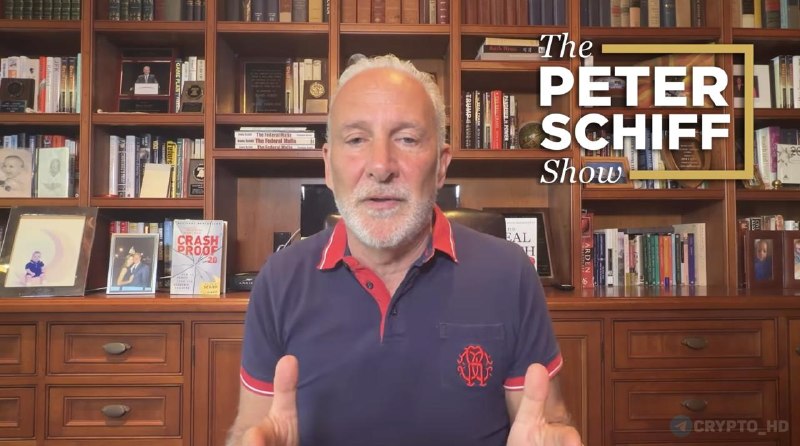
Schiff, a longtime Bitcoin bear, says the market is “underestimating risks for BTC” and expects a “new wave of sales” as corporate demand weakens. He argues that weaker corporate buying will keep dragging on Bitcoin. The sharper part is political. Schiff says TRUMP and MELANIA are not normal investments; he sees them as a way to buy “access to the president and his entourage,” or, in his words, a “legal way to ‘bribe the president'” without handing over cash directly. He also says Donald Trump earned roughly $2.2 billion in 2025, with about $1.4 billion of that coming from crypto projects. Most crypto commentary treats memecoins as goofy market theatre. That’s only half right when the issuer is tied to the White House.
If regulators start viewing political memecoins as pay-for-access tools, TRUMP and MELANIA could face much tougher scrutiny. This is where the story gets uncomfortable fast. A token linked to a political figure is already a legal headache. A token framed as a workaround for bribery laws is worse. Why does this matter? Because the SEC, CFTC, or congressional committees would not need to prove every buyer had corrupt intent to start asking whether politicians should be allowed to profit from tradeable digital assets while in office. I’ll be honest: I would not wave that off as just Schiff being Schiff. Politically themed tokens could become a distinct enforcement target if this argument keeps spreading. Liquidity can vanish in hours in that corner of crypto. Buyers chase the chart, then disappear when legal risk shows up. We saw a version of this with staking products and exchanges under SEC pressure, when enforcement headlines hit related tokens almost right away. The risk is not only TRUMP and MELANIA. It could hit the wider memecoin market, which depends more on attention and timing than on cash flow, product use, governance rights, or durable demand.
Schiff also says MicroStrategy has “effectively abandoned the principle of ‘never selling BTC'” by creating ways to sell Bitcoin. Here he is attacking one of Bitcoin’s cleanest institutional stories. For years, Michael Saylor’s company has been treated as the corporate Bitcoin buyer: buy, hold, repeat, borrow, buy again. Schiff says that story has changed. According to him, MicroStrategy has “already created a mechanism” to sell BTC so it can rebuild dollar reserves, buy back shares, and meet investor obligations. That is not a footnote. If true, it cracks the simple HODL narrative that made MicroStrategy a symbol of corporate Bitcoin conviction. Schiff goes further and says the “largest buyer of BTC is gradually turning into the largest seller.” MicroStrategy reportedly holds more than 226,314 BTC. Even a small sale from a stack that large would matter, especially if another corporate treasury copied the move. Counter to the usual Bitcoin-bull framing, corporate adoption is not a one-way valve. Boards can change posture. Debt comes due. Investors ask for cash.
Schiff also points to a weak June employment report as evidence that the U.S. economy is slowing, and he expects the Federal Reserve to cut rates. Outside crypto, his macro view is gloomy and fairly blunt. He says the June jobs report was worse than expected, with earlier months revised lower. More than 700,000 people left the labor market, and full-time employment fell by 514,000 in one month. Schiff reads that as a warning sign for the U.S. economy. His next step is predictable: he thinks the Fed will cut rates and may return to “printing money.” Is that automatically bullish for Bitcoin? No. Lower rates can help risk assets because cash and bonds look less attractive, but rate cuts during a weakening economy are not the same thing as easy-money euphoria. Sometimes investors buy Bitcoin when money gets loose. Sometimes they sell volatile assets and move into cash, Treasuries, or gold. Crypto bulls often skip that part. Fed easing helped earlier crypto rallies. A real downturn could still overpower it. Schiff’s Bitcoin crash call fits neatly into that setup.
What this means
Schiff is describing a crypto market squeezed by politics, corporate balance sheets, and a weaker economy. The “legal bribe” claim around TRUMP and MELANIA could pull regulators toward politically themed tokens and force harder questions about digital assets as fundraising tools. Bitcoin has a separate problem. If MicroStrategy is moving from pure accumulation to a strategy that permits selling, the market may need to rethink the assumption that corporate holders only add to their stacks. Yes, this complicates the easy bullish story from two paragraphs ago. That’s the point. Conviction is easy to market. Debt, reserves, buybacks, and investor obligations are harder to ignore. If other companies reach the same conclusion, Bitcoin could face selling pressure from the same corporate category that once supported the bullish case.
Investors should watch regulators, MicroStrategy’s disclosures, and the next round of U.S. economic data. I would put those in that order. Any official comment on politically themed tokens would matter, especially from the SEC, CFTC, or lawmakers. MicroStrategy’s next earnings call matters too because the market will want a direct answer on whether its Bitcoin strategy has changed. Watch $60,000. A clean break below that area would make the institutional demand story look weaker. The next U.S. jobs reports and the next FOMC meeting matter as well. A rate cut may give Bitcoin a short bounce, but the reason for the cut matters more. If the Fed is cutting because the economy is cracking, Schiff’s bearish case will sound less fringe than Bitcoin bulls would prefer.
FAQ
Q: What is Peter Schiff’s main concern regarding TRUMP and MELANIA memecoins?
A: Schiff says the tokens work like a “legal bribe” for Donald Trump by giving buyers access and creating financial benefit without a direct cash payment.
Q: How much did Donald Trump reportedly earn from crypto projects in 2025, according to Schiff?
A: Schiff says Trump made about $1.4 billion from crypto projects in 2025.
Q: What does Schiff claim about MicroStrategy’s Bitcoin strategy?
A: Schiff says MicroStrategy has “effectively abandoned the principle of ‘never selling BTC'” and has created ways to sell Bitcoin to manage reserves and investor obligations.
Q: What macroeconomic prediction does Schiff make based on recent employment data?
A: Schiff expects the Federal Reserve to cut rates after a weaker-than-expected June jobs report.
Q: What is the potential impact of MicroStrategy’s alleged shift on the Bitcoin market?
A: If MicroStrategy becomes a seller, it could add serious selling pressure and weaken the belief that corporate Bitcoin holders will keep accumulating no matter what.