















































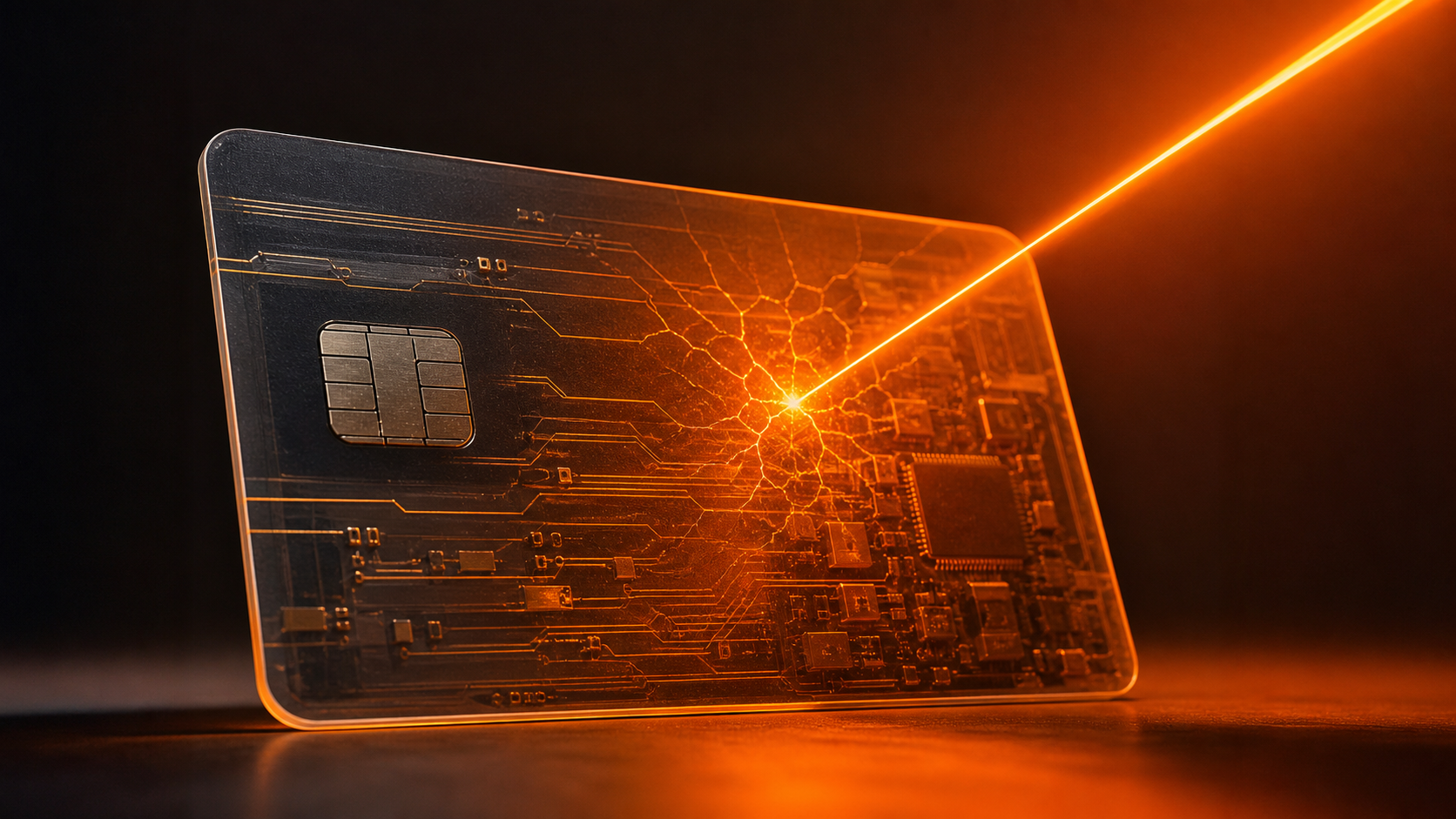
Tangem wallet laser vulnerability: hardware security under pressure
Ledger’s Donjon team says it found a serious laser attack against Tangem wallets. Plain version: if someone has the card, a serious lab setup, and enough hardware security skill, they could bypass the password and move the funds. Not a street-theft trick. Not a YouTube tutorial attack. My take: this does not mean every Tangem user should panic, but it does weaken the easy comfort line that “offline” automatically means safe.
Donjon described a laser method for bypassing password protection on Tangem cards. The researchers used one precise laser pulse to reset the password on a Tangem card, then set a new one. After that, they had full wallet access and could withdraw the funds. Ledger says the issue affects all Tangem cards now in circulation. It also cannot be fixed with a firmware update, even if password recovery is turned off in the app. That last part matters.
This is not phishing. Nobody is draining wallets through a fake support account, a poisoned browser link, or a bad wallet-connect prompt. The attacker needs the card in hand, lab equipment that Ledger estimates at about $250,000, and real experience with hardware attacks. So yes, the threat is narrow. But narrow is not the same as irrelevant. Why does this matter? Because for most users the risk starts only after the card is stolen or lost, while for larger holders the mere existence of the exploit changes the trust calculation.
The timing is awkward. Crypto markets are already dealing with regulatory pressure, including SEC actions involving staking services, exchanges, and decentralized finance. On March 15, ETH reportedly dipped 3.5% to $3,050 after news of increased regulatory focus on DeFi. The Tangem issue is not the same category of risk. Counter to the usual advice, though, investors do not always keep technical security and regulatory pressure in clean separate folders. Security scares stack. They remind people that strong security claims can still fail under specialist testing, especially for institutions and large holders. We have seen that mood before: after a major exchange hack on May 19, 2021, BTC fell about 8% to $52,000.
This could also affect how money moves inside crypto, though probably quietly. Interest rates still drive risk assets. Weak security infrastructure makes some investors slower to add exposure. Bitcoin has sometimes traded like a haven during geopolitical stress; during the January 2020 Soleimani strike, BTC gained 8%. Hardware flaws create a different worry. If investors start doubting cold storage, some may keep more funds on exchanges for liquidity, while others may shift part of their allocation into traditional havens such as gold, which rose 1.2% to $2,050 an ounce during that same period of geopolitical tension. Is this overkill? For a small holder, probably. For a fund with custody committees and risk memos, no. The market reaction may be muted at first, but a slow loss of trust would matter more, especially if BTC struggles to break the $61.4K resistance area.
What this means
The Tangem vulnerability shows that hardware security is never really finished. Researchers probe. Manufacturers patch what they can. Then a new attack appears. Most guides say hardware wallets are the safe endgame. That’s only half right. This one is expensive and difficult, but it still breaks the myth of the “unhackable” wallet. I’ll be honest: I expect more pressure on hardware wallet makers to publish clearer audits and say plainly what their devices can and cannot defend against.
For investors, the practical point is blunt: physical security matters. A cold wallet is only cold if nobody else can get to it. The direct effect on BTC or ETH may be small because this attack is hard to execute, but perception still matters. Yes, that sounds softer than a price chart. It is not. If large investors start treating hardware wallets as less reliable, that could hurt institutional adoption and risk appetite.
Next, watch how Tangem and other wallet makers respond. Look for statements from security firms and wallet vendors. Watch regulators too. On the market side, BTC holding above $60,000 still matters. A clean break below that level could point to wider unease. The next FOMC meeting on May 1 also matters, since rate decisions still move crypto along with other risk assets. More hardware exploit news would make those macro moves feel sharper. My read: one lab attack may not move the market, but a pattern of hardware failures would.
FAQ: Tangem wallet laser vulnerability
- What is the Tangem wallet laser vulnerability?
- It is a hardware exploit reported by Ledger’s Donjon team. The attack uses a precise laser pulse to bypass password protection on Tangem cards and gain wallet access.
- Who discovered this vulnerability?
- Ledger says its internal security research team, Donjon, discovered the vulnerability.
- How does the laser attack work?
- The attacker uses one precise laser pulse to reset the password on a Tangem card. After that, the attacker can set a new password and access the funds.
- What equipment is needed for this attack?
- Ledger’s Donjon team says the attack needs specialized lab equipment costing about $250,000, plus hardware attack expertise.
- Does this vulnerability affect all Tangem cards?
- Yes. Ledger’s Donjon team says all Tangem cards currently in circulation are affected.
- Can the vulnerability be patched with a firmware update?
- No. Ledger’s Donjon team says a firmware update cannot fix it, even if password recovery is disabled in the app settings.
- What is the risk for an average user?
- For most users, the main risk is losing the card or having it stolen. The attack requires physical access and expensive specialist equipment.
- How does this impact the broader crypto market?
- It adds another security concern for investors. The market impact may be limited, but weaker trust in hardware wallets could affect institutional adoption and risk appetite.
- What should Tangem users do?
- Tangem users should keep their cards physically secure and watch for official updates from Tangem about the issue.
- Are other hardware wallets affected by similar vulnerabilities?
- This specific attack targets Tangem cards, but it puts pressure on the whole hardware wallet industry to prove its devices can survive serious lab testing.