















































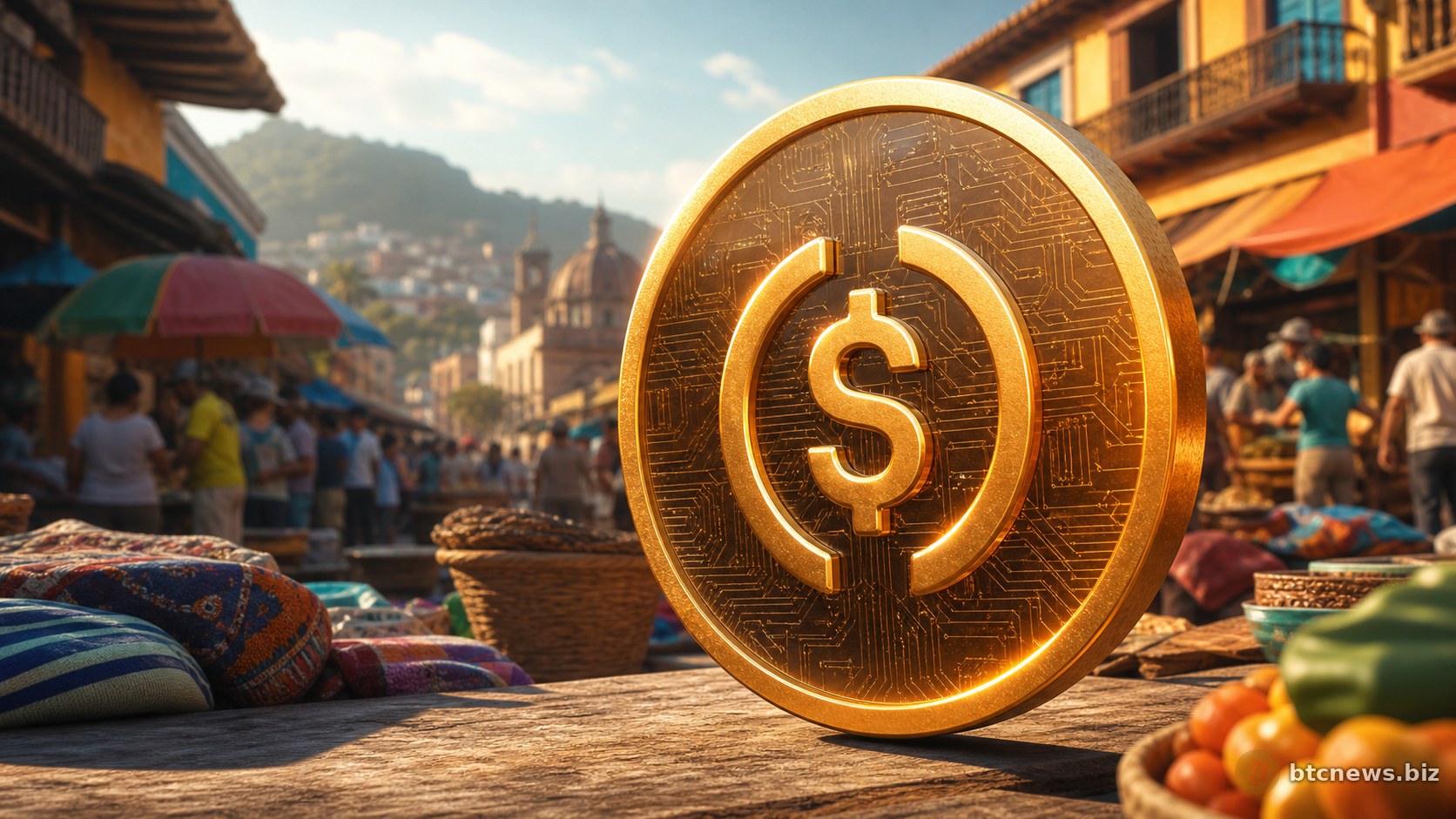
LatAm’s $1.5 Trillion Stablecoin Surge Shows Real Demand
Latin America processed $1.5 trillion in stablecoin transactions between 2022 and 2025, according to a new Rain report. That number is too big to wave away. My take: this is not another neat crypto-cycle headline. It points to something more basic. People are using digital dollars because local currencies and banks are not doing enough. Money transfer systems are failing them too.
Rain’s “State of stablecoins in Latin America” report reflects what the crypto card infrastructure provider sees in its own market. The $1.5 trillion figure is huge, sure, but the motive behind it is the real story. In much of LatAm, stablecoins are not mainly a DeFi toy. They are not just an arbitrage trade either. They are a workaround. In Argentina and Venezuela, where the peso and bolivar have lost value quickly, people have a blunt reason to look for dollar exposure. I would too. Honestly, calling that “crypto adoption” almost makes it sound too optional.
That makes this a real
The
Rain puts it this way: “The use cases that have taken hold across Latin America, and the infrastructure being built to support them, represent some of the clearest real-world examples of stablecoins meaningfully impacting how consumers and businesses operate financially.” Put less formally: people are using these tools because they solve problems they have right now. I’ll be honest: that is the part the industry should talk about more.
What this means
The $1.5 trillion in LatAm stablecoin volume suggests crypto adoption is moving into basic financial plumbing. Stablecoins are not just a bridge between crypto and fiat. In parts of Latin America, they are becoming a savings tool and payment rail. They are also a way to access dollars when the banking system makes that difficult. Investors watching crypto infrastructure should pay attention, especially to card companies and neobanks focused on emerging markets.
For traders, this demand matters because it is not only tied to risk appetite. Some stablecoin supply is being held and spent because people need dollars, not because they are waiting to buy the next token. Is this overkill to track? No, not when Colombia cardholders grew 64 times since the start of 2025 and Bolivia spending rose more than 6x in 2025. Watch the market caps of USDT and USDC, especially if growth keeps coming from regions like Latin America. Regulation matters too. Governments may support these tools, limit them, or bring them under stricter licensing rules. Yes, that complicates the clean adoption story. It should. Colombia and Bolivia deserve closer attention given the growth numbers Rain reported.
FAQ
Q: What is the total stablecoin transaction volume in Latin America between 2022 and 2025?
A: Rain says Latin America processed $1.5 trillion in stablecoin transactions between 2022 and 2025.
Q: What is driving stablecoin adoption in Latin America?
A: Economic instability is a major driver, especially in countries dealing with high inflation or weak local currencies. People are also using stablecoins for cheaper cross-border transfers and easier access to dollars.
Q: How do stablecoins affect cross-border transfer fees in LatAm?
A: Rain says stablecoins can cut cross-border transfer fees by up to 92%, which can make remittances and trade payments much cheaper.
Q: Which countries in LatAm are showing major growth in stablecoin usage?
A: Rain says its cardholders in Colombia grew 64 times since the start of 2025, and spending in Bolivia increased more than 6x in 2025.
Q: How do stablecoins work as a “safe haven” in Latin America?
A: Dollar-pegged stablecoins give people a way to hold value when local currencies are falling quickly. In that situation, they are less of a trade and more of a practical shelter.
Q: What does this stablecoin growth mean for the broader crypto market?
A: It shows demand for stablecoins outside trading. That demand can support liquidity across exchanges, DeFi platforms, and payment infrastructure.
Q: What should investors and traders watch regarding stablecoins in LatAm?
A: Watch USDT and USDC market caps, crypto card and neobank growth in emerging markets, and new rules in countries such as Colombia and Bolivia.