
















































Michael Green calls Bitcoin crash inevitable as passive investing distorts markets
Strategist Michael Green argues Bitcoin’s pricing model is broken at the structural level, and that the system eventually buckles because its costs and utility do not line up. On the New Era Finance Podcast, Green said Bitcoin drifted away from the peer-to-peer cash design Satoshi wrote about and became something else: a macro-correlated speculative asset. My take: the timing is what makes the argument sting. BTC has spent months trading like a risk asset, not like a clean monetary escape hatch.
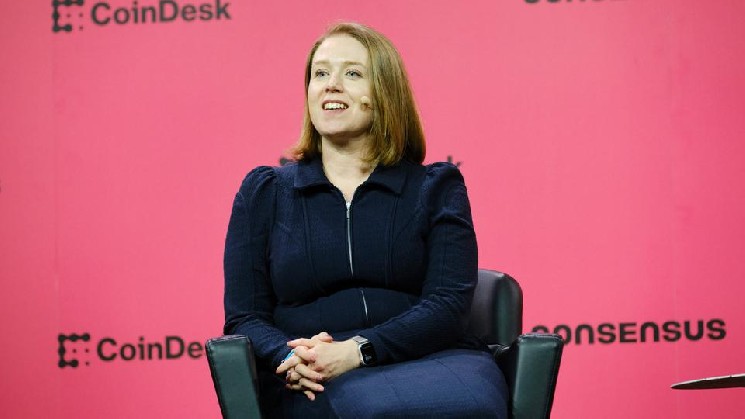
Green used the podcast to attack two ideas. First: comparing Bitcoin to gold, or pricing it off scarcity, is “a simple illusion.” Second: the asset wandered far from its founding promise. “Bitcoin has failed to be an end-to-end payment system and has transformed into a speculative monster,” he said. His evidence was blunt: huge electricity consumption, without the transaction volume that would justify it. Most Bitcoin defenses start with scarcity. That’s only half the argument, and Green is aiming at the other half.
“This system will eventually collapse,” Green said. “People think I want it to collapse; honestly, I don’t even care. I just know the system’s inherent fragility and its uselessness relative to its cost.” Cold framing. No short call. No price target. Just a verdict on the cost-to-utility ratio.
Passive investing now controls more than 50% of US equity market flows, and Green says that dominance has turned markets into a “thoughtless system” that amplifies correlated volatility. Index funds and similar vehicles command the majority of flows, so large groups of holders move the same way at the same time. Why does this matter? Because BTC and ETH increasingly sit in the same risk-on/risk-off bucket as tech equities. When passive flows reverse, correlated assets get sold together. Bitcoin’s correlation to the Nasdaq has been the story of this cycle. Not its decoupling.
Bitcoin’s “digital gold” thesis is a marketing layer rather than a fundamental valuation driver, according to Green. The safe-haven angle takes a hit here. His complaint is not that scarcity is fake; it is that scarcity, by itself, does not create enough usage to justify the valuation. Yes, this sounds like it contradicts the usual Bitcoin pitch. That is the point. If Green is right, BTC’s response to geopolitical or fiscal shocks may keep tracking risk assets instead of gold. And here’s the part I keep coming back to: gold has been making fresh highs while Bitcoin has chopped sideways at lower ranges. That divergence fits Green’s read more cleanly than the digital-gold pitch does.
Green didn’t stop at crypto. He turned to younger generations locked out of housing and pinned it on “poorly designed financial policies.” The older generation, he argued, isn’t holding houses and shares out of greed but out of fear. An inadequate social security system pushes retirees to “insure themselves” by sitting on assets. That bid props up prices and shuts younger buyers out. Apply the same logic to financial assets and the fragility argument becomes less abstract.
AI is reshaping the labor market the way the Industrial Revolution did, producing a 25% drop in hiring rates for workers in their 20s while raising the value of professionals over 55, according to Green. Crypto operators should read this part twice. I would not treat it as a side comment. The retail demographic that fueled the 2020-2021 crypto bull was under-30 traders with disposable income from a hot job market, and that is the exact cohort getting squeezed now. Less hiring at the entry level means less marginal capital flowing into exchanges, ETFs, and on-chain speculation. Slow drag. Not a flash crash. But it is the kind of pressure that will not show up cleanly on a 4-hour chart.
Here’s what gets me about Green’s framing. He isn’t predicting a date, a level, or a catalyst. He is describing a system he views as structurally unsound and saying he is indifferent to the timing. Is that useful for traders? Annoyingly, yes. It is harder to trade than a price call, but also harder to dismiss. Traders looking for a clean “buy the dip” signal won’t find one in this interview.
What this means
Green’s critique sharpens a split between Bitcoin and gold that has shaped the current cycle. BTC trades as a leveraged Nasdaq proxy instead of an uncorrelated store of value, and the gap is already visible on the tape. Counter to the usual advice, the key question is not whether Bitcoin is scarce. It is whether scarcity still matters when the asset behaves like high-beta tech. If passive-flow dominance keeps amplifying correlated moves, BTC’s behavior will keep looking like a leveraged Nasdaq bet. The longer that holds, the harder it gets to sell institutional desks on the “digital gold” allocation thesis. ETH and the broader altcoin complex inherit that beta, with extra volatility layered on top. Watch the BTC-gold correlation closely. If gold keeps making highs while BTC underperforms on the same macro inputs, Green’s “speculative monster” framing wins the narrative round.
The near-term confirmation signals are concrete. The next FOMC decision matters for any shift in rate expectations that would move passive flows. CME Bitcoin futures positioning shows institutional posture. ETF net flow data is where the passive-investing dynamic Green attacks meets crypto directly. I’ll be honest: that is the cleanest scoreboard. A sustained run of ETF outflows alongside Nasdaq weakness would confirm his thesis more clearly than another bearish podcast clip. A decoupling, with BTC holding while equities slip, would be the cleanest rebuttal. Either way, the “will bitcoin crash this year” question now has a more interesting framing than a simple price target. It is a question about whether the asset’s reason for existing still matches its market behavior.