
















































Banks move from stablecoin “if” to “how” as crypto gets a real banking test
Banks are done treating stablecoins like some strange crypto side project. The question now is how to use them. This week, Standard Chartered (STAN) and BNY, both global systemically important banks, expanded support for Circle Internet’s (CRCL) $USDC. That matters. My take: this is not proof that every crypto argument was right. It is proof that slow-moving banks do not add minting, redemption, and custody support just to look busy. For crypto investors, the read is pretty direct: $USDC is starting to look less like a trading token and more like payment infrastructure that big institutions can work with.
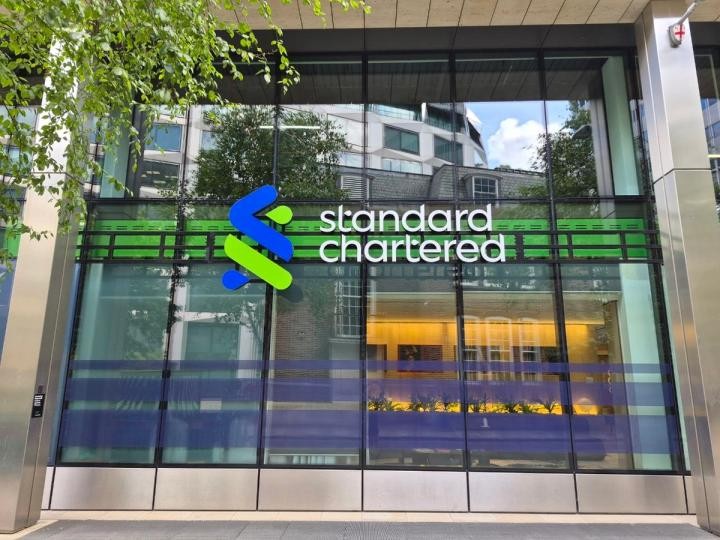
Standard Chartered will give institutional clients direct access to mint and redeem $USDC. BNY recently expanded its $USDC custody, minting, and redemption services. BNY oversees about $59 trillion in assets under management, so this is not a tiny fintech pilot. Not even close. These banks are not rushing to launch their own stablecoins first. They are plugging into Circle’s network. That is the part worth watching. Chainalysis has estimated that stablecoin settlement volumes could reach a quadrillion dollars a year by 2030. It is a huge number. Almost silly huge. Why does this matter? Because numbers that large make conservative institutions ask whether ignoring the rails is now the bigger risk.
This is a real adoption signal for crypto, though I would not call it a victory lap. Most crypto commentary treats bank involvement as automatic validation. That is only half right. When banks listed as global systemically important by the Bank for International Settlements’ Basel Committee start integrating a digital asset, the market pays attention, but the bar also gets higher. Stablecoins are no longer just where retail traders park cash during crypto selloffs. They are getting closer to the plumbing of finance. For traders, the cleanest read is more liquidity and more practical use for $USDC. That could help $ETH too, since $USDC is used heavily across DeFi. If institutions get comfortable with stablecoins first, they may get less nervous about other digital assets later. Maybe. That still depends on regulation, risk desks, and whether the products hold up when markets get ugly.
The language inside banking has changed. Andrew MacKenzie, founder and CEO of Agant, put it bluntly: “Banks aren’t asking whether they’ll use stablecoins anymore. They’re deciding how they’ll use them.” I will be honest: that line sounds like conference-stage messaging, but it also matches what the Standard Chartered and BNY moves show. Regulation is doing a lot of the work, especially in Europe under the Markets in Crypto-Assets framework, or MiCA. Circle CEO Jeremy Allaire has pointed to $USDC’s years of liquidity, banking relationships, and regulatory approvals after the launch of rival OpenUSD, backed by Coinbase (COIN), Stripe, and BlackRock (BLK). Strip out the corporate gloss and the message gets simpler. Banks want tokens with rules, known counterparties, operational history, and fewer surprises for compliance teams. Spot Bitcoin ETFs helped pull more institutions toward $BTC, which recently traded above $61.4K. Stablecoins could have a similar effect on the rest of the market, probably with fewer headlines and less noise.
Adrian Cachinero Vasiljevic of Steakhouse Financial made the sharper point: “The network is what creates the value. The stablecoin itself becomes almost secondary.” I think that is close to the whole story. A stablecoin without distribution is just a token with a promise attached. $USDC already has exchange support, payment links, DeFi usage, and regulatory relationships. New entrants still matter. Counter to the usual advice, being first is not enough here. The Euro On-Chain (EUOC), being developed by 37 European financial institutions, shows that banks outside the dollar system want their own choices, especially when dollar-pegged stablecoins make up more than 99% of total stablecoin market cap. OpenUSD points the same way. More competition is coming. The winners will probably be the coins that let institutions move money in and out without making compliance teams miserable.
What this means
Stablecoins are leaving the crypto-only corner and moving into the parts of finance where dull details matter: settlement, custody, treasury operations, payments. That is not as exciting as a new token launch, but it is more useful. Standard Chartered and BNY are giving $USDC a bank-grade route into institutional workflows. Is this boring? Yes. That is partly the point. If that spreads, $USDC demand could rise, and more capital could enter crypto through cleaner on-ramps instead of the old mix of exchanges and offshore rails.
Investors should watch which banks announce stablecoin services next. $USDC’s on-chain activity and market cap matter too, especially against Tether’s $USDT, since JPMorgan has already pointed to regulation as one reason the market may shift. Euro stablecoins are worth watching as well. Yes, this slightly undercuts the dollar-heavy $USDC story above, but that tension is real. If EUOC or similar tokens gain traction, stablecoin adoption may become less dollar-heavy over time. The other big variable is regulation from the SEC, CFTC, and their peers abroad. Clearer rules would not make stablecoins risk free, but they would make it easier for large institutions to participate. That could matter for $BTC, $ETH, and the wider crypto market more than another hype cycle.