
















































Binance’s super app ambition: stablecoins reshape growth, challenge Coinbase
Binance does not want to be only a crypto trading venue. That part is obvious now. It is pushing deeper into payments and financial services because stablecoins are one of the rare crypto products people actually use for ordinary money movement. Shunyet Jan, Binance’s head of spot trading and derivatives, described that direction around the exchange’s ninth anniversary. My take: the logic is blunt. If users already keep crypto on Binance, why send them somewhere else to pay, spend, invest, or transfer money?
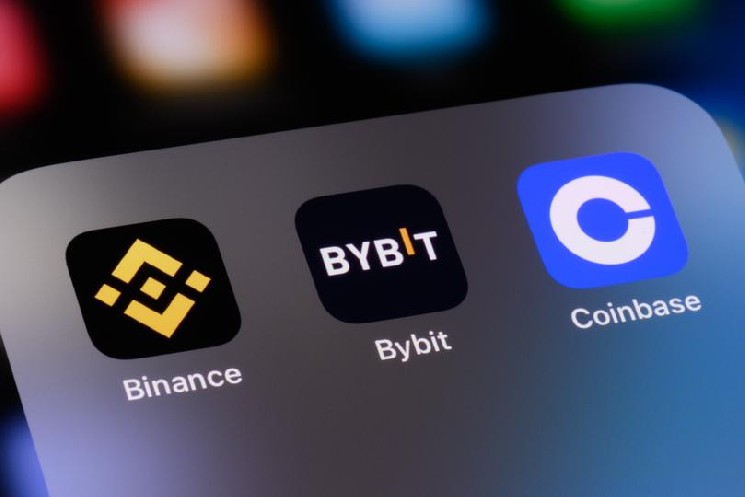
Trading still matters. A lot. But stablecoins change the pitch. They are simply better suited to payments and transfers than most volatile tokens. Jan said, “We’re trying to not just be a crypto exchange, but be a super app that involves payment.” That line is doing real work. It tells investors Binance does not want to be valued only on trading fees. Payments are a much larger market, and Binance wants crypto closer to the way people already handle money.
Coinbase has been making a similar argument for years. In 2023, CEO Brian Armstrong said he wanted Coinbase to become a “super app” like Tencent’s WeChat, which has about 1.4 billion users. He repeated that goal in 2025, pointing to more financial services built around crypto. I’ll be honest: this does not read like branding to me. Most exchange strategy talk sounds bigger than it is. This feels different. If Binance and Coinbase keep chasing the same model, they probably see trading as too small on its own. The bigger target is routine money movement: deposits, cards, transfers, payments. Then come the dull banking features people use every week. If that happens, BTC and ETH could benefit too, mainly because easier fiat access usually brings more liquidity into the market.
Jan’s timing is interesting. Banks and payment firms are taking stablecoins more seriously as settlement infrastructure, not just exchange plumbing. Why does this matter? Because settlement is where stablecoins stop sounding like a crypto talking point and start looking like financial infrastructure. The appeal is easy to understand: faster transfers and lower costs, especially across borders. Fewer middlemen too, when the system actually works. Binance has spent the past year adding products beyond spot and derivatives trading, including tokenized stocks, ETFs, and other financial services. It wants users to stay in one app for trading, payments, cards, and investing. Jan made the point in personal terms: “I think a lot of the Binance employees and myself included keep most of our assets on the exchange because we could do whatever we need. I could make payments, I could use my debit card to spend whatever I need wherever I want.” Yes, that is a sales pitch. It is also the plan in plain sight. Binance wants the exchange account to feel like a primary financial account.
This creates a problem Binance cannot avoid: regulation. The more Binance and Coinbase move into payments and financial services, the more they look like companies that need bank-style oversight. That means licenses, consumer protection rules, AML controls, local compliance teams, and country-by-country fights. Painful, expensive work. Counter to the usual crypto optimism, scale may make this harder before it makes it easier. Still, if they can get through it, crypto becomes less cut off from the financial system. Stablecoins would likely see more demand, more on-chain activity, and more interest from institutions that still treat crypto as a risky asset class instead of a working payments rail.
What this means
Binance’s push toward a crypto “super app” shows where the industry wants to go next: less casino, more utility. Speculation is not going away. It never does. But stablecoins give exchanges a practical reason to build payments, cards, savings-style products, and other services around crypto balances. Is this overkill? For a trading-only business, maybe. For an exchange trying to become a financial account, no. For investors, the question is which platforms can connect traditional finance with digital assets without getting buried by compliance costs or trust issues. My take: Binance and Coinbase will fight hard for this market because the prize is bigger than trading volume.
Traders should watch how regulators respond, especially on stablecoin rules and cross-border payments. The clearest signals are stablecoin transaction volume and payment partnerships from major exchanges. Product launches that make crypto easier to spend or move matter too. USDT and USDC market cap still matter because they show whether stablecoin demand is growing beyond trading. Yes, this partly contradicts the “less casino, more utility” point above. Bear with me: trading liquidity still funds the transition. Clear rulemaking or a major enforcement action in the U.S., Europe, or Asia could speed this up or stop it quickly. That would hit the broader crypto market and names like BNB and COIN directly.