
















































USD/JPY Intervention Speculation: What It Means for Crypto’s Macro Flow
A sudden move in USD/JPY has traders asking a blunt question: did the US and Japan enter the currency market? If they did, officials are clearly worried about the yen and the state of the global economy. Why does that matter for crypto? Because the fallout would reach liquidity quickly, forcing Bitcoin’s safe-haven claim into another uncomfortable test. I’ll be honest: that claim looks far less settled during real stress than it does in a tidy market narrative.
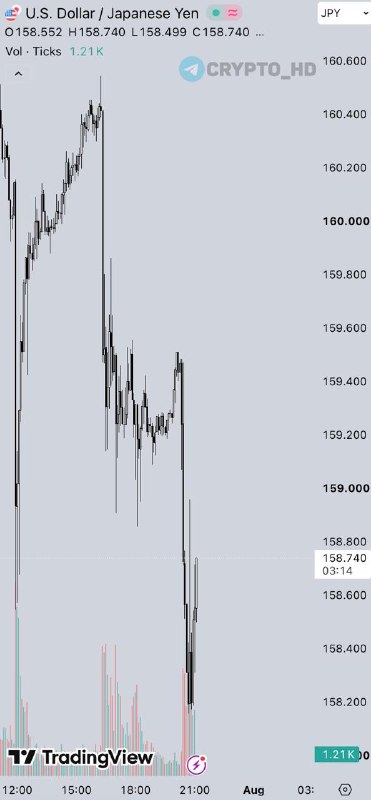
For now, intervention is still a rumor. Full stop. The move was big enough to spark talk that the United States and Japan acted together to prop up the yen after its long slide against the dollar. Most guides say traders should wait for official confirmation. That’s only half right. Markets rarely wait, and traders are already repositioning in case a coordinated response took place.
Currency intervention can rapidly change liquidity conditions and investors’ appetite for risk, putting crypto directly in the firing line. Action from Washington and Tokyo could indicate that officials are more concerned about inflation or financial stability than their public comments suggest. Investors might seek safety. They might also dump risky assets to raise cash. The circumstances decide which reaction wins, and Bitcoin—inconveniently for anyone selling a simple story—has filled both roles. My take: treating BTC as permanently “risk-on” or permanently defensive is a category error.
The recent record does not offer a clean answer. During the easy-money years of 2020 and 2021, BTC climbed to a record near $69,000 in November 2021 as investors searched for alternatives to weakening fiat currencies. Then policy reversed. Central banks raised rates in 2022, liquidity faded, and Bitcoin fell from about $48,000 in March to below $17,000 by December. That sequence matters more than the slogan.
That puts the “digital gold” argument back on the table. Gold remains the traditional refuge during financial stress, although some investors now describe Bitcoin in similar terms. BTC gained more than 30% in one week during the March 2023 banking crisis and briefly moved above $28,000. Impressive? Absolutely. Proof? No. I would not build the entire safe-haven case around one week, however dramatic it looked.
If the USD/JPY move signals wider economic trouble, Bitcoin could attract buyers seeking an alternative to banks and national currencies. Counter to the usual advice, though, coordinated intervention would not automatically help BTC. It might instead warn of tighter financial conditions, prompting investors to sell BTC and ETH; smaller coins could follow. ETH tends to track Bitcoin but moves more sharply: a 1% change in BTC can mean a roughly 1.5% to 2% move in ETH. That gap gets painful fast.
What this means
Possible intervention in USD/JPY suggests officials are becoming uneasy about currency stability and inflation. Confirmation—particularly evidence that the two countries acted together—would probably increase volatility across several markets. Is Bitcoin protection in that scenario? Maybe, but crypto traders must also consider the less flattering answer: it may be another asset sold as leverage drains from the system. To my eye, that distinction is the whole trade.
Watch what the yen does next. If intervention steadies USD/JPY, other markets may calm down as well. If the pair keeps swinging despite official action, confidence could unravel quickly. Yes, that sounds contradictory: intervention can stabilize markets or frighten them. Bear with me—the market’s response matters more than the intervention headline itself. A crypto selloff would become more likely, although Bitcoin may fare better than ETH and smaller altcoins if investors stay with the best-established crypto asset.
Statements from the US Treasury and the Bank of Japan could confirm what happened. For Bitcoin, nearby support sits at $60,000; the main resistance is around $65,000. A sustained move above $65,000 would favor the bulls. A drop below $60,000 could open the way to further losses. These levels are simple. The macro backdrop isn’t.
The next FOMC minutes may provide a clearer view of US monetary policy. CME Bitcoin futures can help show how institutions are positioned, but I would not overread a single trading session; it rarely says much on its own. What carries more weight in the coming weeks? Proof of intervention, or signs of wider financial strain—not the original rumor.