















































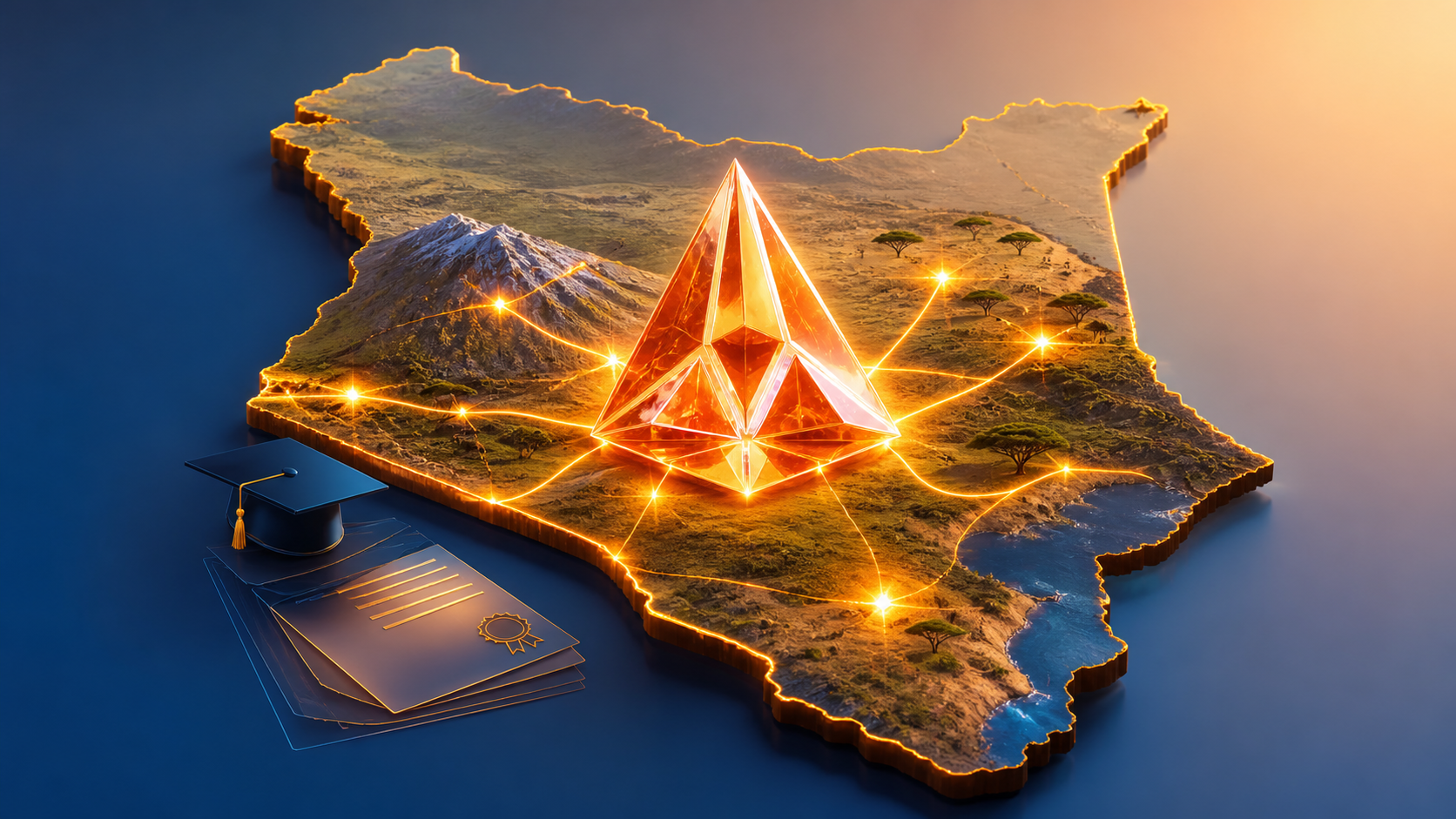
Kenya moves 15 million education records to Avalanche blockchain
Kenya’s government is transferring its national education records to the Avalanche blockchain. The Kenya National Examinations Council (KNEC) has secured more than 15,000,000 records dating to 1989; eventually, the database could hold about 35,000,000 documents. This is no small pilot. My take: for the crypto market, the interesting part is seeing a public blockchain used for something other than processing trades.
The goal is practical. Employers and schools should be able to verify diplomas, certificates, and other qualifications more quickly. Nearly 1,000,000 people graduating in 2025 are expected to receive electronic certificates with no paper copies. Why does that matter? Because electronic-only delivery makes verification part of the actual education system, not a side experiment. Kenya is also drawing on previous work by Securitize, giving the government an existing model for storing records on a blockchain.
Crypto investors will probably read this as an adoption signal. More than 15,000,000 records are already included, with another 20,000,000 potentially coming later. That scale goes well beyond the usual trial project. Still, let’s be blunt: it does not mean AVAX is about to rally. Government use may increase activity on Avalanche and attract developers. Token prices, however, still depend on liquidity and demand, plus conditions across the wider market. AVAX recently traded near $35.00. A smooth rollout could strengthen its longer-term investment case even if traders barely react at first. We have seen that pattern before. The early Ethereum business experiments of 2017 and 2018 offer a loose comparison: plenty seemed unremarkable when announced, yet some helped Ethereum find uses beyond retail speculation.
The project may also affect the macro flow of investment into emerging markets. Governments stuck with slow, scattered databases have an obvious reason to test systems that simplify record checks. Most crypto commentary treats blockchain as the natural answer. That is only half right. A blockchain is not inherently cheaper or safer than a competently managed central database; the architecture, operating costs, access controls, and rollout details will decide that. If Kenya gets those pieces right, foreign investors and technology partners may pay attention. Public blockchains could also look a little less experimental. I’ll be honest: that reputational shift may matter more than any short-term token move.
Crypto traders usually watch Federal Reserve decisions and inflation data more closely than education databases. Fair enough. But this project tells a quieter story about where the technology is appearing in routine government work. Success could steer some investors toward networks people can use, rather than tokens supported mostly by publicity. Is that guaranteed? Not remotely. El Salvador’s decision to adopt Bitcoin as legal tender in September 2021 briefly helped lift BTC above $50,000, but Kenya’s education database is a very different project. Comparing the two too closely would be a reach.
What this means
Other governments may learn from Kenya’s experience. If the rollout succeeds, officials could become more comfortable considering blockchain for identity documents or land registries. Supply chain records may be tested as well. Each use, though, comes with its own legal issues and technical constraints. Counter to the usual advice, copying Kenya’s technology would not be enough; another country would also need verification rules, reliable administration, user support, and a workable legal framework.
The near-term crypto implication is limited but real: a public agency is treating blockchain as infrastructure instead of a speculative asset. As the database grows, Avalanche could see more traffic. Developer interest may follow. Whether that moves AVAX over the next few quarters is much harder to call. Expanding the system from 15,000,000 to 35,000,000 documents will test how it handles a public dataset at this size. The announcement is easy. The test is what counts.
What Kenya delivers next is worth watching. The 2025 electronic certificate rollout should show whether graduates can use the system without unnecessary friction—and whether schools and employers can verify records without delays. That matters more than a polished press release. If other Kenyan agencies announce related projects, the idea may be gaining ground inside the government. Comparable agreements elsewhere in Africa would carry even more weight. From an investor’s perspective, those are stronger signals than launch-day enthusiasm.
Traders may also watch AVAX around the $40.00 resistance level. Holding above that price could indicate stronger momentum. Yes, that sounds at odds with the caution above, but bear with me: a price level can be technically relevant without the education database being its cause. Blaming a move above $40.00 on this project alone would still be a stretch. Crypto prices almost never follow one neat explanation.
FAQ: Kenya education records on Avalanche blockchain
Q: Why is Kenya moving its education records to the Avalanche blockchain?
A: Kenya wants employers and educational institutions to verify academic credentials more quickly. In practice, the system should let them authenticate diplomas and certificates electronically.
Q: How many Kenyan education records are currently secured on Avalanche?
A: According to the Kenya National Examinations Council, more than 15,000,000 records dating to 1989 are already held on the blockchain.
Q: How large could the database become?
A: It could grow to about 35,000,000 documents. That is roughly 20,000,000 more than it contains now.
Q: When will graduates begin receiving electronic certificates only?
A: Nearly 1,000,000 members of the 2025 graduating class are expected to receive certificates exclusively in electronic form.
Q: What could this mean for the crypto market?
A: It gives investors a specific example of blockchain technology handling public records. I would treat that as evidence of practical adoption, not a market-wide trading signal. The project may draw attention to networks with working applications, but one government database will not determine the direction of the wider crypto market.
Q: How could Avalanche and AVAX benefit?
A: Storing the records could increase activity on Avalanche. It may also attract developers who work on government record systems. That could improve the longer-term argument for owning AVAX, although a price increase remains far from certain.
Q: Is this the first government blockchain project for official records?
A: No. Governments and private companies have tested blockchain record systems before. What makes Kenya’s effort unusual is its size: more than 15,000,000 education records are already included.
Q: Could other countries follow Kenya’s example?
A: They could, particularly if graduates and employers use the system without delays or verification mistakes. Other governments may then consider similar databases for identity papers or land ownership records. Particular supply chains are another possible use.
Q: What should investors watch now?
A: Start with the electronic certificate rollout for the 2025 graduating class. That is the first real test. Investors can also track announcements from other Kenyan agencies and new Avalanche agreements elsewhere in Africa. Finally, they can watch whether AVAX stays above $40.00.