














































Kalshi’s legal fights put crypto derivatives on notice
“Kalshi’s court fights are testing how much room U.S. regulators will give prediction markets and crypto-style derivatives.” Kalshi and the prediction market industry are in lawsuits across the U.S. The question sounds simple: gambling product, or legitimate derivatives trade? It is not simple. The same fight hangs over crypto projects built around synthetic assets, perpetuals, leverage, and market access that does not fit neatly into old categories. My take: treating this as a niche prediction-market story is a mistake. The rulings could decide who gets access to these markets, and where.
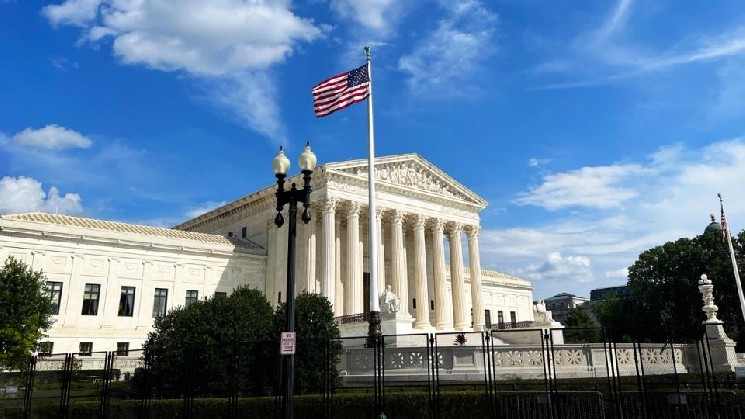
“Kalshi is trying to prove that it belongs in regulated finance, not state gambling enforcement.” Kalshi, one of the best-known U.S. prediction market companies, is betting a lot on the courts. Maybe everything. The event-contract industry has grown fast and spent heavily on public marketing, especially around sports. But it still needs U.S. courts to say plainly that the model is legal. Most guides frame this as a CFTC-versus-states turf fight. That is only half right. The Commodity Futures Trading Commission, or CFTC, seems more open to that argument than many state regulators, but Kalshi’s problem is that states are not waiting. The latest fight reached a Minnesota courtroom on Thursday, where lawyers for Kalshi’s side and the state argued over whether Minnesota can ban prediction markets as illegal activity.
“State actions against Kalshi show how blurry the line remains between finance and illegal betting.” For crypto investors, this is the part to watch. State regulators still see a gray area between financial products and gambling, and they are acting on that view. A few days earlier, Kalshi lost in the Nevada Supreme Court when it tried to block an order forcing it to cut off Nevada customers from much of its trading. Three Nevada justices denied the emergency motion on Wednesday, saying they were “not persuaded.” Short sentence, big signal. Kalshi could also face trouble if it missed a court deadline to geofence the business. Why does this matter? Because a state-by-state crackdown could hit crypto platforms with similar products, giving users uneven access and draining liquidity from derivatives tokens such as GMX or dYdX.
“Ohio and Michigan are pushing harder, with sports betting at the center of the fight.” The pressure picked up again this week. On Monday, Kalshi sued Ohio’s gaming regulator after the state accused the company of running an unlicensed sports betting operation. The CFTC had already made parallel arguments in court. One day later, a Michigan court gave state gaming regulators a temporary two-week restraining order that stops Kalshi from offering, advertising, or helping provide sports betting there. Michigan Gaming Control Board Executive Director Henry Williams put it bluntly: “Kalshi is targeting Michigan’s most vulnerable residents with sports betting dressed up as investing, and without intervention, the harm will keep getting worse.” I will be honest: that line is built to travel. It sounds familiar to anyone who follows crypto enforcement, where regulators often start with consumer harm and then move toward stricter KYC, AML checks, geographic blocks, and product limits. For DeFi, that runs straight into the usual promise of open, global access.
“The CFTC wants these markets handled federally, which would give crypto derivatives a cleaner path.” Prediction platforms do have one clear opening. The CFTC and its chairman, Mike Selig, argue that Kalshi and similar companies fall under the agency’s authority as the federal derivatives regulator. In lawsuits against several states, the CFTC says prediction market contracts are closer to hedging tools than casino bets. It has compared them to contracts an agricultural business might use to manage future crop price risk. Counter to the usual advice, “just register somewhere” is not the full answer here. If courts agree, crypto derivatives platforms could get a clearer route through U.S. regulation. That could help projects like Synthetix. It could also matter for traditional venues such as CME, which already lists Bitcoin and Ethereum futures. A CFTC win would not fix the market overnight. Still, institutions tend to wait for cleaner rules before putting serious money to work.
What this means
“These lawsuits could decide how the U.S. treats event contracts, crypto derivatives, and products that sit between trading and betting.” The Kalshi cases are about classification. Is this finance, gambling, or something in between? The answer will shape how much room prediction markets and decentralized exchanges have in the U.S. Yes, this sounds procedural. It is not. If states win broad authority, the result could be a patchwork of bans and permissions. That would be a mess for global crypto protocols, which are not built to run smoothly under 50 different state rulebooks. Some teams would probably leave or avoid the U.S. market. Capital usually takes the easier route.
“Crypto investors should watch these cases because CFTC authority could change the path for regulated crypto derivatives.” Crypto investors should keep an eye on the Minnesota, Ohio, Michigan, and Nevada fights, especially any ruling that draws a line between the CFTC and state gaming commissions. Is this overkill for token traders? No, because legal access often becomes liquidity, and liquidity becomes price behavior. A CFTC win could support a more regulated derivatives market and may bring more institutional interest into tokens such as GMX and dYdX. A run of state bans would point the other way: less access, less liquidity, more price volatility, and harder U.S. distribution. My read is pretty blunt here. The next useful signals will come from court dates in Minnesota, Ohio, and Michigan, plus any new CFTC filings or statements. This is legal plumbing, yes. But in crypto, legal plumbing often decides who gets to trade.