















































Tether Evo’s BCI Research: Another Way Into Crypto?
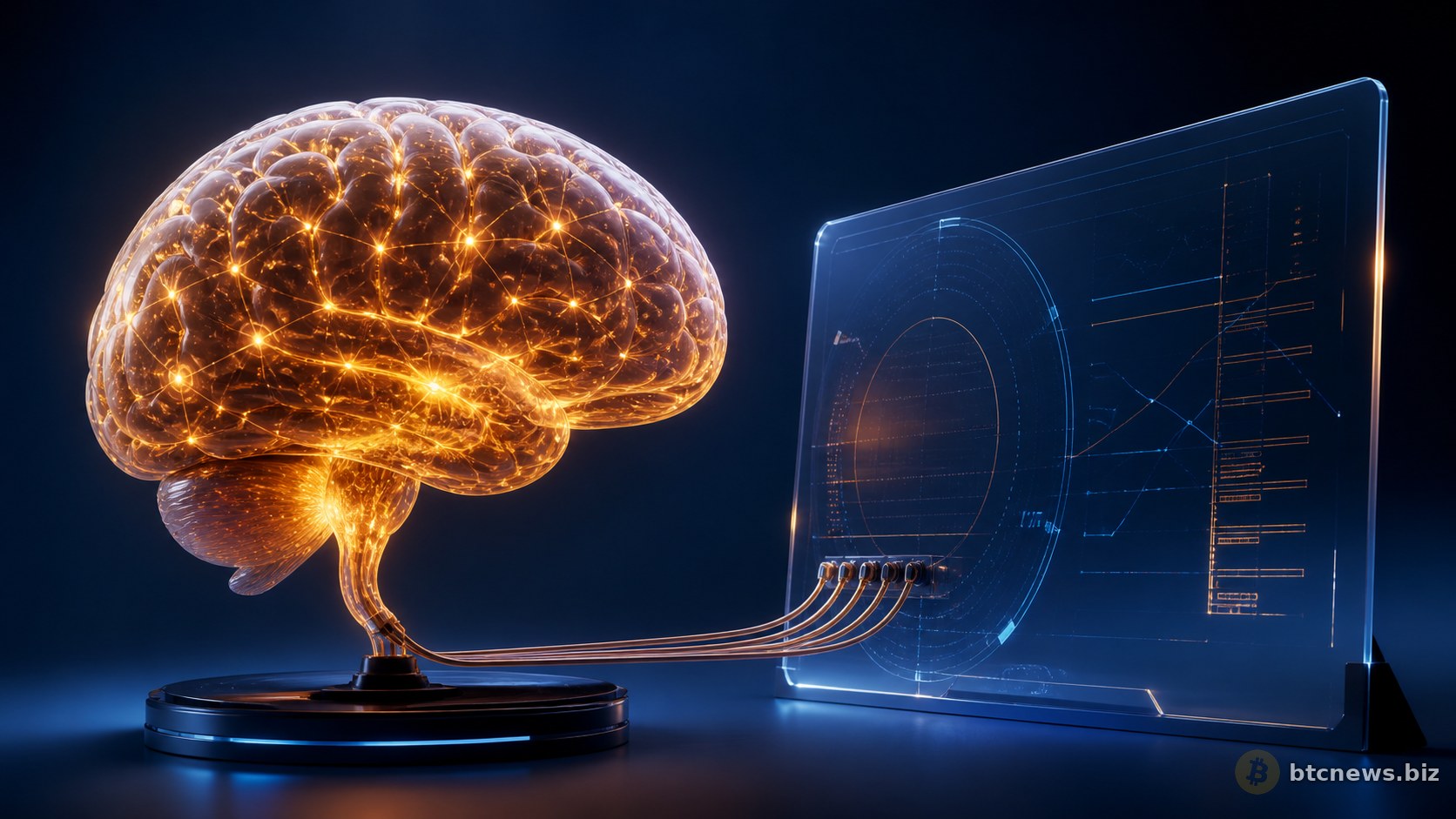
Tether Evo, Tether’s AI and neuroscience research arm, published three peer-reviewed papers on brain-computer interfaces (BCIs) on August 4, 2026. The research tests whether one BCI can decode speech, vision, and music across different people. Why does this matter? Because a method that survives outside a controlled lab could change how people use digital assets—and how they protect deeply personal data. My take: that “if” is enormous. These are research papers, not products.
Tether Evo worked with the University of Rome Tor Vergata (UniTOV) on two of the papers. The target is precise: a single model that reads brain activity from multiple people without separate calibration for every user. Each brain produces slightly different signals, which makes that technically difficult. Calibration leaves current BCI systems slow to set up and difficult to scale. A shared model could make them less cumbersome. Eventually, neural input might control digital systems without a keyboard or touchscreen. No mouse, either.
For now, the goal is to help people recover lost senses or the ability to communicate. The crypto connection comes later. Someone might use neural input to approve a transaction or verify their identity. It could also activate a smart contract on blockchain infrastructure supported by Tether. Most futuristic takes jump straight to thought-controlled wallets. I’ll be honest: that skips several hard steps. Such wallets are probably a long way off. Still, simpler interfaces have brought people into crypto before—PayPal’s decision to add crypto services is one example. A reliable neural interface would be a far bigger change, though any claim that it might send Bitcoin (BTC) or Ethereum (ETH) to record highs is pure speculation.
Privacy may be the more compelling issue. Tether Evo says “nothing is more private than your own information” and describes an “on-device AI stack” that needs “no permission on any device.” If neural data stays on the user’s device, the system would fit crypto’s emphasis on personal control. Counter to the usual advice, keeping data local does not automatically make a system safe. That assumes it works as advertised. Brain data is extraordinarily sensitive. A leak could reveal much more than a stolen password, and nobody can reset their brain afterward. That risk is different.
Tether Evo argues that people need more control over their information as online services become increasingly centralized. If its BCIs let users manage digital assets without uploading neural data to a remote server, crypto would gain another privacy argument. Is that argument entirely new? No. Bitcoin (BTC) has already drawn buyers during periods of trouble in traditional finance. During the banking turmoil in early 2023, BTC gained more than 30% within weeks and traded above $28,000. Credible protections for BCI data could add to that appeal. I would not call crypto the last refuge of digital freedom—that is overblown—but there is a genuine connection here.
The papers contain some solid results. A model described in the Journal of Neural Engineering decoded speech-related neural data across several people after training on their combined signals. In the UniTOV vision study, researchers used 200 milliseconds of neural activity to reconstruct images seen by macaques with 70% accuracy. The reconstructions retained shape and color. They also preserved content. For the music paper, five people underwent fMRI scans while listening to 540 songs across 10 genres, after which the model attempted to identify features of what they heard. Small samples matter. Controlled experiments also cannot answer how well the methods will work in daily life. Even so, to my eye, this is legitimate laboratory research rather than a product pitch wearing a lab coat.
One model, many brains.
Tether Evo just published 3 new peer-reviewed papers showing how a single BCI model can generalize across different people in 3 areas:
Speech: Translating neural data to text in minutes
Vision: Reconstructing images from primate spiking data…– Tether (@tether) August 4, 2026
What this means
Tether Evo is betting that screens and keyboards will not always be our main way of using computers. If researchers can decode brain activity across users without lengthy calibration, BCIs might offer another way to use decentralized applications or prove identity. Authorizing transactions is another possibility. Most coverage treats that prospect as a market catalyst. That is only half right. The papers do not point to an immediate price move; they suggest that neural interfaces could someday sit on top of networks such as Ethereum (ETH) and Solana (SOL). First, developers need to turn the research into safe hardware and software that ordinary people can use. That part does not exist yet.
The next meaningful evidence needs to be a product. Not another paper. A working prototype or developer kit would tell us far more than another ambitious announcement. So would an integration within Tether’s ecosystem. Partnerships or open-source releases could show whether independent researchers can reproduce the results and extend the work. My take: reproducibility is the sharper test. There is no reliable launch date, which is hardly surprising for BCI research at this stage.
Traders should treat the story carefully. A prototype that lets someone interact with a blockchain application through neural input could attract investment to BCI and decentralized identity projects. Human-computer interface projects could benefit too. But here is the less exciting possibility: it might fail a privacy review, struggle outside the lab, or never become a consumer product. Does that make the research irrelevant? No—it makes the market case premature. Future announcements from Tether Evo should reveal whether these papers lead to usable technology. For now, I’d wait. The market argument is interesting, but it remains mostly theoretical.