
















































NYLIM Exec: Tokenization’s Next Frontier is Personalized Portfolios, Not Just Faster Settlement
New York Life Investment Management (NYLIM) is making a sharper claim than the usual tokenization pitch: the real prize may be personalized portfolios, not just faster trade plumbing.
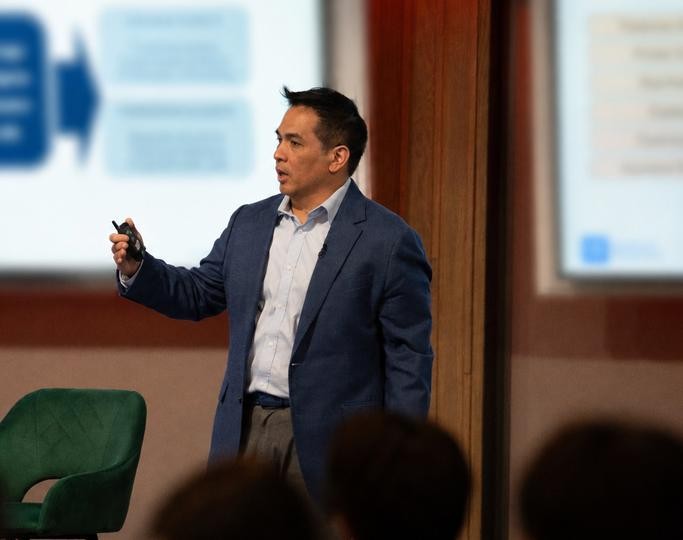
That is not the default Wall Street sales deck. Most tokenization talk still circles the same two ideas: faster settlement and fewer operational headaches. Round-the-clock trading gets tossed in too. Thomas Sy, head of multi-asset solutions at NYLIM, is pointing somewhere less shiny but more consequential: blockchain could help firms build portfolios around individual investors at a scale the current system handles badly. My take: this is the part worth watching. Faster settlement helps. Personalized products change what gets sold.
According to Thomas Sy, tokenization’s biggest opening is personalized portfolios at scale, which the traditional financial system still struggles to deliver.
Sy’s team oversees about $11 billion inside NYLIM’s $807 billion asset management arm. His argument is practical, not ideological. Blockchain may let a firm run highly tailored portfolios for many individual investors without burying itself in extra operations. Is that less exciting than 24/7 markets? Maybe. Is it more useful? Probably. It also lands at a moment when Wall Street is putting actual budget behind tokenized assets, not just issuing conference-stage predictions. Citi has projected that tokenized real-world assets could grow from about $30 billion now to $5.5 trillion by 2030.
NYLIM’s partnership with Centrifuge (CFG) is meant to put customization inside the asset itself, which could lower back-office costs and make portfolios easier to build.
NYLIM recently partnered with Centrifuge (CFG) to bring one of its high-yield corporate bond strategies on-chain. For NYLIM, this is not simply a blockchain wrapper around an existing fund. Sy is talking about portfolio assembly. Customized strategies can combine ETFs and bonds. Add private credit and the operational load gets uglier fast. “The end goal is to embed the customization within the asset itself, rather than the customization sitting around the operations around the different assets,” he said. Counter to the usual advice, the back office may be the actual product story here. If that design works, transfer agency, settlement, and other back-office costs could fall. Sy said investors might see expenses drop by 10% or 20%.
For crypto markets, personalized tokenized portfolios would be a real adoption signal because they put blockchain to work outside speculation.
This matters because NYLIM is not a crypto-native startup trying to make a token launch sound institutional. It is a large asset manager testing whether blockchain can make a normal financial product less clumsy. That distinction is important. Moving from tokenized funds to redesigned portfolio construction points to a harder, more serious use of the technology. Why does this matter? Because the goal is not only to move money faster. It is to make products that would be too expensive to run cleanly in the old system. For traders, the near-term read is blunt: more attention may move toward real-world asset infrastructure, including protocols like Centrifuge. CFG is up 15% over the last month as the RWA trade has picked up again. ETH could also benefit if more of this activity settles on Ethereum or Ethereum-linked infrastructure. Watch the rails.
According to Thomas Sy, stablecoins are the first practical bridge for traditional finance to use on-chain markets, and they may drive demand for yield-bearing tokenized assets.
Sy also pointed to stablecoins as the first bridge for institutions moving on-chain. The stablecoin market now tops $300 billion, with more use in cross-border payments. Once firms hold those balances, the next question is obvious: why leave the money idle? “Stablecoins were probably one of the biggest unlocks in the past two years,” Sy said, adding that they became “the gateway to get them onchain.” That is where tokenized yield products come in. Banks, payment firms, asset managers, and treasury teams may look for on-chain bonds, private credit, or other real-world assets that fit their compliance needs. I’ll be honest: this is where the tokenization story stops sounding like a demo and starts sounding like balance-sheet management. That could pull liquidity from the stablecoin market into DeFi protocols built for institutions. It could also make USDC and USDT more useful as settlement and treasury assets, instead of just trading pairs.
What this means
NYLIM’s strategy suggests traditional finance is starting to treat blockchain as product infrastructure, not just a faster settlement layer.
The important shift is the use case. NYLIM is not only talking about digitizing assets that already exist. It is asking whether tokenization can support customized investment products at scale. Yes, this partly contradicts the easy narrative that settlement speed is the main institutional hook. Bear with it. A portfolio that can be customized inside the asset is a more mature version of institutional crypto adoption, and frankly a more convincing one. For crypto investors, the likely winners are protocols that can handle real-world asset tokenization, compliance, reporting, institutional settlement, and messy handoffs with traditional systems. Centrifuge has the direct NYLIM connection, so CFG will probably stay in the conversation. Other RWA protocols and smart contract platforms could also get attention if asset managers keep moving this way.
Investors should watch asset manager tokenization plans, tokenized real-world asset volume, institutional stablecoin use, and regulation.
The next signals should be specific. More announcements from major asset managers matter, especially when they focus on portfolio customization rather than simple fund tokenization. Track tokenized real-world asset volume, with private credit and corporate bonds as the cleaner tells. Institutional stablecoin usage matters too, because idle stablecoin balances create demand for yield products. RWA DeFi total value locked is useful, but noisy. Regulation is the other big piece. Is another polished pilot enough? No. Clearer rules around institutional participation in tokenized markets would probably matter more.