















































Upbit Adds Nine Altcoins as DeFi and RWA Tokens Get Fresh Attention
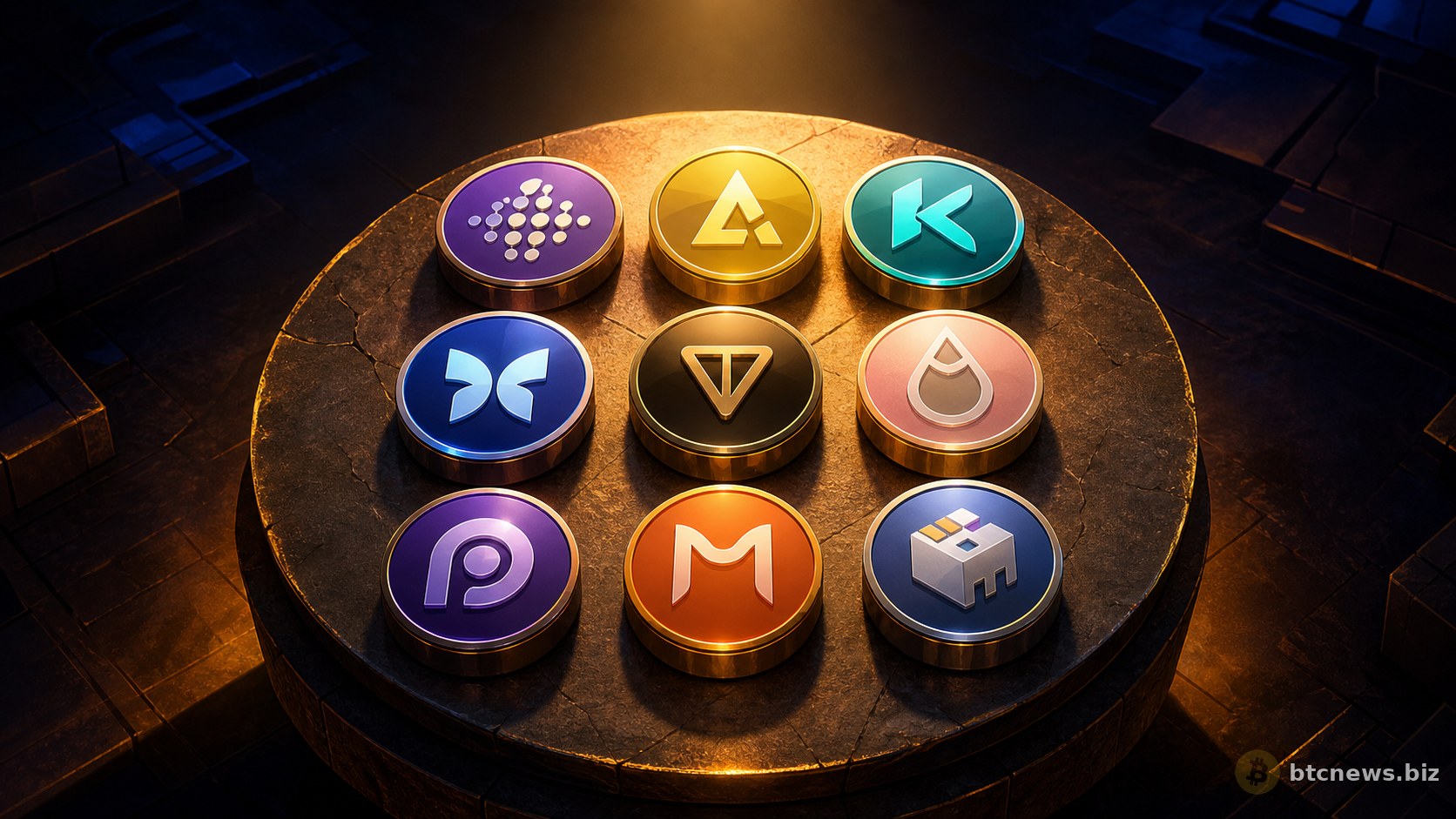
Upbit added nine altcoins to its BTC and USDT markets on June 19 at 3:00 PM. The South Korean exchange listed PEAQ, Litentry (LIT), Kamino Finance (KMNO), Morpho ($MORPHO), Gram ($GRAM), Lido DAO ($LDO), Pax Gold ($PAXG), Osmosis (OSMO), and Amp ($AMP). Nine listings in one shot is not background noise. My take: the basket is more interesting than any single ticker. It points to DeFi, liquid staking, tokenized assets, Cosmos exposure, Solana-linked liquidity, and a few older market names that still have trading life left.

Upbit is one of South Korea’s biggest crypto exchanges, so listings there can matter. Users can now trade the nine assets against Bitcoin and Tether ($USDT). A listing is not a thesis. We have all seen the same pattern: hard first move, loud posts, then a fade before the chart even settles. Still, South Korean exchanges can move prices fast because local retail demand is deep, active, and sometimes intense. Why does this matter? Because for these nine tokens, the real test is not the announcement. It is whether Upbit brings durable liquidity after the first few candles.
Several of the new listings fall into DeFi, liquid staking, and tokenized real-world assets. Lido DAO ($LDO) is the obvious headline name. It remains one of the main projects tied to Ethereum liquid staking, and an Upbit listing gives Korean traders a cleaner route into that trade. With Ethereum recently holding near $3,500, $LDO may draw fresh interest from people watching staking yields. Morpho ($MORPHO) is different. It is a DeFi lending protocol, and its listing says something narrower but still useful: on-chain lending has not disappeared, even while regulators keep pressure on centralized lenders around the world.
Pax Gold ($PAXG) adds a different trade to the batch. $PAXG is backed by gold, so it gives traders direct gold exposure without leaving crypto markets. Bitcoin still gets called digital gold. I’ll be honest: that label looks shaky every time Bitcoin trades like a high-beta tech stock. $PAXG is more literal. During the January 2020 Soleimani strike, Bitcoin rose 8% within 72 hours, which gave the safe-haven argument some support. But that is only half the story. $PAXG is a separate bet for investors who like crypto rails but want the underlying asset to be gold, especially when macro news turns ugly or markets start cutting risk.
Upbit also posted extra notices for $AMP and $GRAM, which traders may want to read before trading opens. Skip this step at your own risk. Notices like these often show up around tokens that could see heavy early volume or sharp price moves. Does that guarantee a wild launch? No. It just means traders should check the fine print before the first serious move hits. Osmosis (OSMO), a decentralized exchange in the Cosmos ecosystem, and Kamino Finance (KMNO), a liquidity protocol, widen the list beyond Ethereum-adjacent DeFi. Counter to the usual read, this is not just a staking-and-lending update. Upbit is also leaving room for multi-chain trading across Cosmos, Solana-linked liquidity, and other markets outside Ethereum.
What this means
Upbit’s new listings show a market that still cares about DeFi, staking, and tokenized assets. The additions of $LDO and $MORPHO suggest traders have not given up on decentralized finance, even with SEC scrutiny still hanging over parts of crypto. $PAXG brings in the RWA angle from a cleaner direction: not private credit, not tokenized treasuries. Just gold on-chain. Yes, that sounds less fashionable than the broader RWA trade, but it may be easier for traders to understand in a risk-off tape. For traders, the useful signal comes from liquidity and price action on the $BTC and $USDT pairs. If volume holds after the first day or two, these listings may mean more than the usual listing pop.
Investors should watch volume, spreads, and early price action after the June 19 3:00 PM launch. PEAQ, LIT, KMNO, $MORPHO, $GRAM, $LDO, $PAXG, OSMO, and $AMP will all get tested quickly. $PAXG is especially worth tracking during stress in traditional markets, since it could show whether Korean crypto traders actually want a gold-backed token when risk comes off. $LDO matters for another reason. If easier access on Upbit lifts demand, it could support the liquid staking trade around Ethereum. Is that too much to read from one exchange listing? Maybe. But big pumps or sharp dumps in the first few sessions may say less about fundamentals than retail positioning, and that is still useful information. I would treat the first 48 hours as a positioning signal, not a valuation verdict. Crypto often tells you what people want before it tells you what anything is worth.